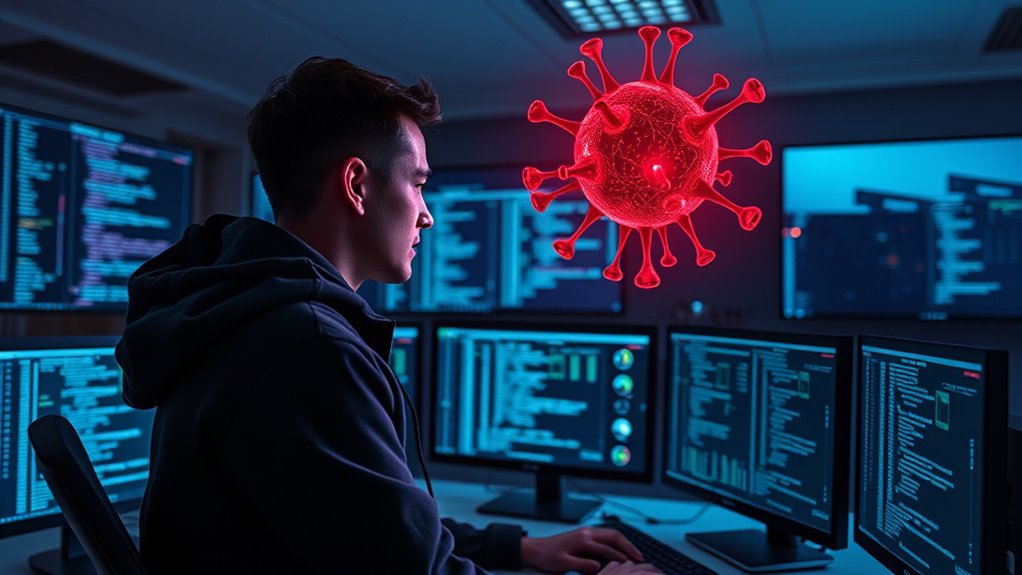

AI-powered cyber attacks are advancing rapidly, making traditional defenses less effective. Hackers now automate spear-phishing, craft deepfakes, and modify tactics in real-time, increasing their success rates. While awareness is growing, many organizations still lack advanced tools to detect AI-driven threats. Staying protected requires understanding these evolving risks and adopting strong, layered security measures. To better grasp how these threats operate and prepare effectively, explore the emerging strategies highlighted in this overview.

Get the latest gadgets delivered free — and shop member deals
- Fast, free delivery on millions of items
- Access to Prime Big Deal Days deals on October 6–7
- Prime Video, Amazon Music and more included
Key Takeaways
- AI enables large-scale, personalized phishing campaigns that can target thousands rapidly, increasing breach risks.
- Deepfake technology creates convincing fake content, complicating verification and trust in communications.
- Automation accelerates attack processes, making threats more frequent, sophisticated, and harder to detect.
- Evolving AI tactics blur authenticity lines, challenging traditional security measures and detection methods.
- Staying informed and implementing advanced security tools are essential to defend against AI-driven cyber threats.

As artificial intelligence continues to advance, cybercriminals are increasingly leveraging it to launch more sophisticated and automated attacks. You might think that traditional cybersecurity measures are enough, but AI-driven tactics are changing the game entirely. One of the most prevalent methods is automated phishing, where malicious actors use AI to craft convincing, personalized messages at scale. Instead of generic emails, they send tailored communications that appear genuine, making it harder for you to distinguish real from fake. These automated phishing campaigns can target thousands of individuals in seconds, increasing the chances you’ll fall for them. The AI systems analyze publicly available information about you, such as social media profiles or recent activities, to make their messages more believable. This personalization boosts the success rate, leading to compromised credentials, financial loss, or data breaches. Additionally, cybercriminals are harnessing deepfake deception—using AI-generated audio, video, or images that convincingly mimic real people. They might create a deepfake of a CEO requesting sensitive data or approving a transaction, exploiting your trust and bypassing usual skepticism. Because deepfakes can be incredibly realistic, they can deceive even the most cautious employees or individuals, amplifying the threat. With AI’s ability to generate near-perfect imitations, these attacks can be launched rapidly and at scale, making traditional verification methods less effective. You might be aware of suspicious emails or messages, but deepfake deception can make it almost impossible to tell what’s real. Cybercriminals also employ AI to automate the entire attack process, from reconnaissance to exploitation, reducing the need for manual effort and increasing attack frequency. This automation means you’ll need to be more vigilant than ever, as attacks become more frequent and more convincing. Your usual security protocols might not be enough to catch these advanced tactics, especially when AI can adapt and refine its methods in real time. As AI technology evolves, so do the strategies used by cybercriminals, and the line between genuine and malicious content blurs further. To protect yourself, you need to stay informed about these emerging threats and adopt multi-layered security measures. Recognize that automated phishing and deepfake deception are no longer isolated incidents—they’re part of a broader trend of AI-powered cyber threats designed to exploit your trust and vulnerabilities. The key is skepticism, verification, and leveraging advanced security tools that can detect AI-generated content. As much as AI enhances our lives, it also arms cybercriminals with new weapons. Being prepared means understanding these tactics and not letting your guard down in an increasingly AI-driven cyber landscape. Additionally, the ongoing development of cybersecurity measures emphasizes the importance of understanding emerging Cybersecurity vulnerabilities to better defend against these AI-enabled attacks.
AI cybersecurity detection tools
As an affiliate, we earn on qualifying purchases.
As an affiliate, we earn on qualifying purchases.
Frequently Asked Questions
How Quickly Can AI Adapt to New Cybersecurity Defenses?
AI can adapt to new cybersecurity defenses quite rapidly thanks to machine learning and adaptive algorithms. When a new defense is implemented, AI systems analyze the changes, identify vulnerabilities, and adjust their tactics within hours or days. This swift adaptation enables cyber attackers to stay ahead, making it essential for security teams to continuously update and improve their defenses, ensuring they remain resilient against evolving AI-driven threats.
What Industries Are Most Vulnerable to Ai-Driven Cyber Attacks?
You’re most vulnerable in sectors like finance and healthcare, where sensitive data and critical systems are prime targets. These industries face subtle risks from AI-driven cyber threats that can bypass traditional defenses, putting your personal and financial information at stake. Staying vigilant, updating security protocols, and investing in advanced AI cybersecurity measures become essential. If you ignore these risks, you risk exposing yourself to sophisticated attacks that could compromise your trust and security.
Can Ai-Generated Attacks Bypass Current Detection Systems?
Yes, AI-generated attacks can bypass current detection systems, especially if those systems lack advanced AI ethics and adaptive learning. Attackers can use AI to craft more convincing phishing or malware, making attack attribution harder. To stay protected, you need to update your security measures regularly, incorporate AI-aware detection tools, and understand emerging AI threats. Staying informed helps you anticipate and defend against sophisticated, AI-driven cyber threats effectively.
What Legal Measures Exist to Combat Ai-Powered Cyber Threats?
Legal frameworks are evolving to address AI-powered cyber threats, but regulatory challenges remain. You should stay informed about new laws and international agreements that aim to hold attackers accountable and promote cybersecurity standards. Governments are working to improve legislation, but enforcement can be slow due to technical complexities. By understanding these legal measures, you can better protect your organization and advocate for stronger policies to combat AI-driven cybercrime.
How Can Organizations Proactively Defend Against Ai-Enhanced Hacking?
You can proactively defend against AI-enhanced hacking by implementing regular ethical hacking exercises to identify vulnerabilities. Stay ahead with advanced threat intelligence tools that monitor evolving AI threats. Educate your team on AI-driven attack tactics and foster a security-first culture. Combining these strategies helps you detect, respond to, and mitigate AI-powered cyber threats, ensuring your organization remains resilient against sophisticated cyber adversaries.
As an affiliate, we earn on qualifying purchases.
Conclusion
You must stay alert, stay informed, and stay prepared. As AI advances, so do the threats, and complacency is not an option. Protect your data, defend your systems, and educate yourself to face these evolving dangers. Because in this fight, awareness is your armor, vigilance is your weapon, and action is your best defense. Don’t wait for an attack to realize the importance of being proactive—because your security depends on it.
phishing email protection software
As an affiliate, we earn on qualifying purchases.
As an affiliate, we earn on qualifying purchases.
multi-layer cybersecurity solutions
As an affiliate, we earn on qualifying purchases.
As an affiliate, we earn on qualifying purchases.
Fall Picks
fall essentials
As an affiliate, we earn on qualifying purchases.