
TL;DR

Get the latest gadgets delivered free — and shop member deals
- Fast, free delivery on millions of items
- Access to Prime Big Deal Days deals on October 6–7
- Prime Video, Amazon Music and more included
Vitriform3D, a startup, has developed a patent-pending binder jet 3D printing process that uses crushed recycled glass. The technology produces high-value products like countertops and tiles, promoting sustainability. Details about scalability and commercial availability are still emerging.
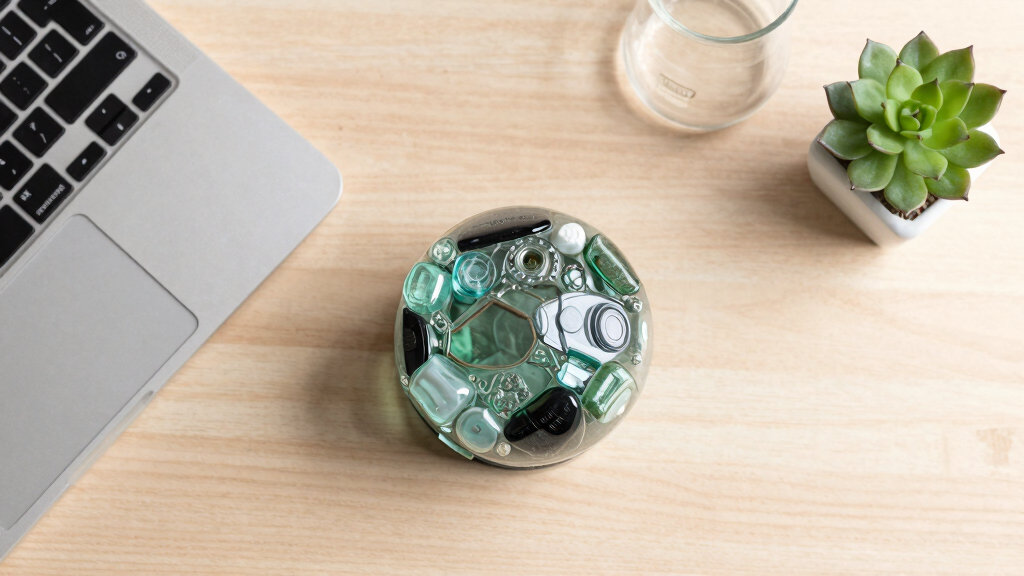
Vitriform3D, a startup specializing in sustainable manufacturing, has introduced a new binder jet 3D printing process that uses recycled glass to produce architectural and decorative products. This innovation leverages post-consumer glass waste, transforming it into high-value items such as countertops and tiles, and aims to reduce reliance on traditional manufacturing methods.
The company’s process involves crushing post-consumer glass, sometimes separating colors to enhance the aesthetic qualities of the final product. Using a patent-pending binder jet technology developed in collaboration with Oak Ridge National Laboratory’s Manufacturing Demonstration Facility (ORNL MDF), Vitriform3D applies a specialized binder agent to thin layers of glass powder, building objects layer by layer. The process is versatile, capable of using almost any powder material, but glass is particularly suited due to its physical properties and abundance.
According to Ryan Dehoff of ORNL MDF, the binder jet process involves laying down a thin layer of powder and selectively applying a binder that glues particles together, allowing the creation of complex shapes without high-temperature melting. The company reports success in producing kitchen countertops, floor tiles, and wall accents, emphasizing the potential for scalable, sustainable manufacturing. While the process is currently demonstrated at a small scale, Vitriform3D suggests it could be adapted for larger production or even desktop 3D printers.
Why It Matters
This development is significant because it offers a sustainable alternative to traditional manufacturing, reducing waste and energy consumption by repurposing glass waste into valuable products. The use of recycled glass in 3D printing could revolutionize the building and decor industries, enabling localized, on-demand production of custom materials. If scalable, this technology could lower costs and environmental impact, aligning with global efforts toward circular economies and sustainable construction.
As an affiliate, we earn on qualifying purchases.
Background
Traditional glass recycling involves sorting by color and grade, melting, and reforming, which consumes considerable energy and limits flexibility. Vitriform3D’s approach simplifies this process by crushing glass waste directly into powder, sometimes separating colors for aesthetic purposes. The company’s collaboration with ORNL MDF has provided technical validation, with the process building on existing binder jet 3D printing technology that has been used with metals and ceramics. The innovation lies in adapting this method to recycled glass, a material with unique physical and visual properties.
“We lay that powder out in a very thin sheet, and then we essentially take an ink jet head, and we put some sort of binder agent where we want to print or glue that material together.”
— Ryan Dehoff, ORNL MDF
“Our process embodies sustainability that sparkles, turning waste glass into beautiful, durable products.”
— Vitriform3D spokesperson
As an affiliate, we earn on qualifying purchases.
What Remains Unclear
It is not yet clear how scalable the process is for mass production or how cost-effective it will be at commercial scale. Details about the durability, structural properties, and long-term performance of the printed glass products remain to be validated through further testing. Additionally, the timeline for commercial deployment and potential market adoption has not been disclosed.
As an affiliate, we earn on qualifying purchases.
What’s Next
Vitriform3D plans to continue testing and refining its process, aiming to demonstrate larger-scale production capabilities. The company may seek partnerships or investment to scale manufacturing and explore commercialization pathways. Further technical validation and market analysis are expected in the coming months.
As an affiliate, we earn on qualifying purchases.
Key Questions
Can this technology produce large or complex architectural elements?
While initial demonstrations focus on small-scale items like tiles and countertops, the company suggests the process could be scaled for larger or more complex structures, pending further development.
How does recycled glass compare to traditional raw materials in 3D printing?
Recycled glass offers unique aesthetic qualities and physical properties, such as durability and color variation, making it suitable for decorative and architectural applications. Its use also promotes sustainability by repurposing waste.
What are the environmental benefits of this process?
The process reduces waste sent to landfills, cuts energy consumption compared to traditional glass recycling, and enables localized manufacturing, decreasing transportation emissions.
When might this technology be available commercially?
There is no confirmed timeline yet; the company is currently in the demonstration and validation phase, with commercial deployment possibly several years away.
Fall Picks
fall essentials
As an affiliate, we earn on qualifying purchases.