
TL;DR

Get the latest gadgets delivered free with Prime
- Fast, free delivery on millions of items
- Prime Video, Amazon Music and more included
- Member-only deals all year
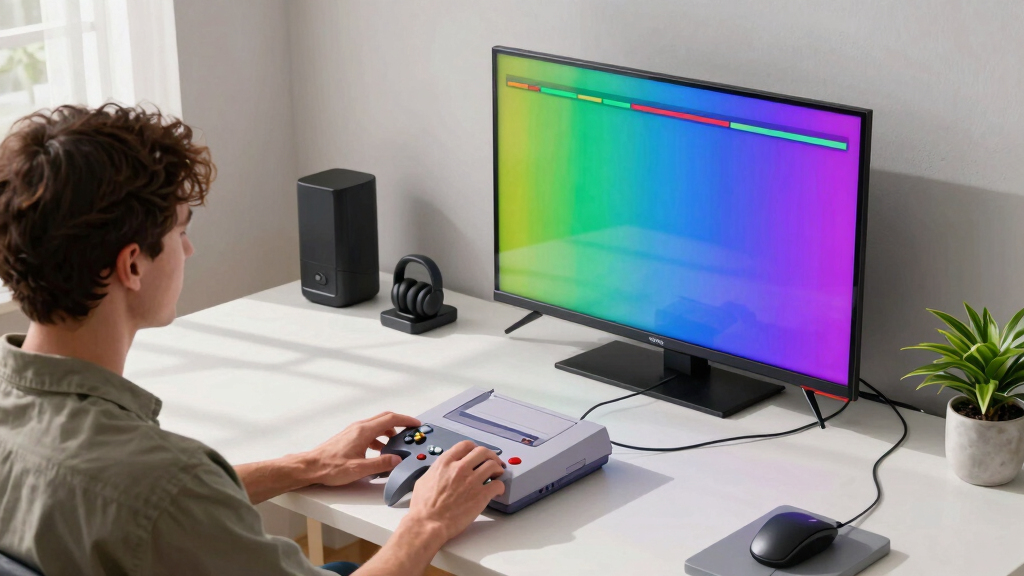
Developers have demonstrated a method to implement additive blending on the Nintendo 64 by leveraging its RDP’s capabilities and custom microcode. This allows for brighter explosion effects and more vibrant visuals, previously thought difficult due to hardware constraints.
Developers have demonstrated a technique to implement additive blending effects on the Nintendo 64, a feature that was previously considered nearly impossible due to hardware limitations. This breakthrough allows for brighter explosions and visual effects, potentially enhancing the visual fidelity of N64 games.
The method involves configuring the Nintendo 64’s Reality Display Processor (RDP) to perform additive blending using its color combiner, which was traditionally limited to certain modes. By drawing onto a 32-bit RGBA buffer and then copying to a 16-bit display buffer, developers can achieve additive effects without wrap-around artifacts. This process leverages the RSP’s vector instructions to efficiently convert 32-bit colors to 16-bit, overcoming CPU processing bottlenecks. The approach was refined with modern tooling, including a custom microcode language called RSPL, enabling practical implementation in real-time rendering scenarios.
Why It Matters
This development is significant because it unlocks new visual effects for N64 games, particularly for explosions, magic spells, and plasma effects that benefit from additive blending. It also demonstrates how modern techniques can extend the capabilities of classic hardware, potentially influencing future emulation and homebrew projects. The ability to produce brighter, more vibrant effects enhances the aesthetic possibilities on a console long considered limited in this regard.
Nintendo 64 microcode development kit
As an affiliate, we earn on qualifying purchases.
As an affiliate, we earn on qualifying purchases.
Background
Historically, the Nintendo 64’s hardware supported additive blending but was practically unusable due to the lack of proper clamping and the complexity of configuring the RDP’s color combiner. Unlike the PlayStation, which natively supported multiple blend modes, the N64’s fixed-function pipeline made such effects difficult. Recent efforts by developers and enthusiasts have focused on exploiting the RDP’s flexible blending capabilities through custom microcode, allowing effects like additive blending to be simulated with greater fidelity. This approach builds on prior knowledge of the N64’s graphics pipeline but applies modern microcode and optimization techniques to overcome longstanding limitations.
“We’ve managed to set up the RDP to perform true additive blending without wrap-around artifacts, opening new possibilities for visual effects.”
— Anonymous N64 developer
“Using custom microcode and the RSP’s vector instructions, we can convert 32-bit colors to 16-bit in a fraction of the time, making real-time effects feasible.”
— HailToDodongo, N64 microcode expert
As an affiliate, we earn on qualifying purchases.
What Remains Unclear
While the technique has been demonstrated successfully in controlled tests, it remains unclear how widely it can be adopted across different games or hardware revisions. The performance impact of drawing onto 32-bit buffers and converting colors in real-time may vary, and compatibility with existing game engines has yet to be tested extensively.
Nintendo 64 graphics enhancement hardware
As an affiliate, we earn on qualifying purchases.
As an affiliate, we earn on qualifying purchases.
What’s Next
Developers and hobbyists are expected to experiment with this approach for integrating additive blending into more complex scenes and titles. Future updates may include optimized microcode, broader compatibility, and potential integration into emulators or homebrew tools, expanding the visual capabilities of the N64 platform.
N64 additive blending effects software
As an affiliate, we earn on qualifying purchases.
As an affiliate, we earn on qualifying purchases.
Key Questions
How does this technique improve visual effects on the N64?
It allows for true additive blending, making explosions, magic effects, and plasma visuals brighter and more vibrant without artifacts like wrap-around, previously a major limitation.
Does this method require special hardware or modifications?
No hardware modifications are needed. It relies on custom microcode and software techniques that can be implemented on standard N64 hardware with the right development tools.
Will this affect game performance?
Drawing onto a 32-bit buffer and converting colors introduces some overhead, but with optimized microcode, the performance impact can be minimized to acceptable levels for real-time rendering.
Can this technique be used in commercial game development?
While technically feasible, integrating this into commercial titles would require significant development effort and testing. Currently, it is more likely to be used in homebrew projects and emulation enhancements.
Halloween Picks
halloween
As an affiliate, we earn on qualifying purchases.