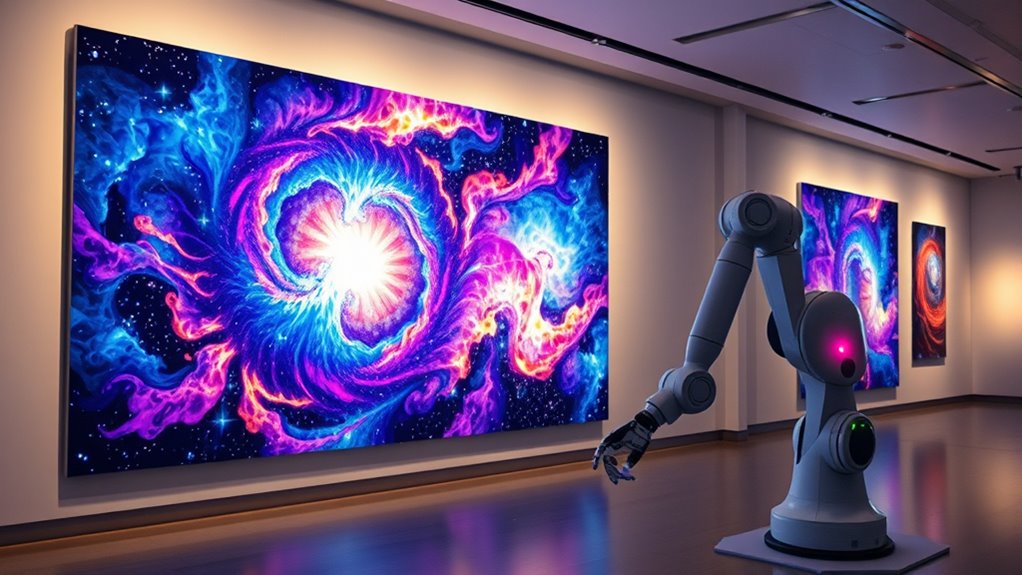
AI-generated art blurs the lines between creativity and computation, challenging your traditional view of artistic expression. While algorithms produce visually stunning work by analyzing vast datasets, some argue it lacks genuine emotion or personal touch. Others see it as an expanded tool for creativity, pushing boundaries beyond human limits. As this technology evolves, questions about authenticity and the role of artists grow more complex—exploring these ideas further can change how you see art itself.
Key Takeaways
- AI-generated art challenges traditional notions of creativity by producing original works through complex algorithms.
- Ethical concerns arise over using existing artworks without artist consent and questions of intellectual property rights.
- The debate centers on whether AI art possesses emotional depth or personal expression comparable to human-created art.
- AI expands creative possibilities but raises questions about authenticity, effort, and the true meaning of artistic effort.
- Societal perceptions of art are shifting as AI blurs the line between technological computation and human creativity.
Have you ever wondered how computers can create stunning, original artwork? It’s a fascinating intersection of technology and creativity that challenges our traditional notions of art. As AI algorithms generate images, paintings, and sculptures, questions about ethical implications and artistic authenticity come to the forefront. You might find yourself asking whether these pieces can truly be considered art or if they’re just clever simulations. The debate hinges on whether AI can possess the soul or emotional depth that humans bring to their work, or if it’s simply a product of complex programming. Critics worry that relying on machines for creative output could undermine the value of human artistry, raising concerns about originality and the true meaning of creativity. When an AI produces a piece, it’s often trained on vast datasets of existing artworks, which prompts questions about ethical implications—specifically, the ethics of using other artists’ work to teach machines without their consent or compensation. Some argue this diminishes the artistic authenticity of AI-created art, as it lacks the intentionality and personal expression that define human artistry. Yet, others see AI as a tool that can expand creative possibilities, enabling artists to explore new aesthetics and push boundaries they might not reach alone. For many, the question isn’t just whether AI can produce beautiful images but whether those images hold genuine artistic value. The concern about authenticity isn’t just philosophical; it affects how society perceives and values art. If a computer can generate art that’s visually stunning, does that diminish the effort and skill traditionally involved? Or does it open up a new domain of creative collaboration? Ethical considerations also extend to issues like color accuracy, as precise color reproduction can significantly impact the visual quality and realism of AI-generated images. These questions make it clear that AI-generated art isn’t just about algorithms; it’s about redefining what we consider genuine art and who gets to be an artist. As you observe these developments, it’s important to recognize that AI challenges us to reconsider long-held beliefs about creativity, authenticity, and ethics in art. Whether you see this technology as a threat or an exciting frontier, it’s undeniable that AI is reshaping the creative landscape, prompting us to rethink what it truly means to create.
Frequently Asked Questions
Can AI Truly Experience Inspiration Like Human Artists?
You might wonder if AI can genuinely experience inspiration like human artists. While AI uses machine intuition to generate creative outputs, it lacks emotional authenticity. It doesn’t feel or reflect on experiences the way humans do, so it can’t truly experience inspiration. Instead, AI mimics creativity based on data patterns, making its “inspiration” more computational than emotional. You’ll find its art impressive but fundamentally different from human-driven inspiration.
How Do Ai-Generated Artworks Impact Traditional Art Markets?
AI-generated artworks markedly impact traditional art markets by influencing market valuation and artist legitimacy. As you explore these pieces, you’ll notice that AI art often challenges conventional notions of originality, sometimes lowering prices but also elevating new forms of creativity. This shift prompts collectors and critics to reconsider what defines an artist’s authenticity, making the market more dynamic and diverse, yet complex in evaluating true artistic value.
Are AI Art Creations Considered Original or Derivative?
You might see AI art creations as both original and derivative. While they can showcase authentic originality through unique algorithms and data inputs, they often build on existing styles and concepts, making them seem derivative. It’s a blend of creative authenticity and computational influence. Ultimately, whether you consider them truly original depends on how you value human insight versus machine-generated processes in the artistic expression.
What Ethical Concerns Arise From AI Art Production?
You should consider ethical concerns around AI art, like copyright concerns and authenticity debates. You might worry about who owns the rights to AI-produced works, especially if they use existing artists’ styles or works without permission. Additionally, you could debate whether AI art genuinely reflects human creativity or if it’s just computation, raising questions about the authenticity and value of such creations in the art world.
Will AI Eventually Replace Human Artists Entirely?
No, AI won’t completely replace human artists. While machine learning enables AI to generate impressive art, it lacks true artistic autonomy and emotional depth. You’ll still value human creativity, intuition, and personal expression that AI can’t replicate. Instead, AI becomes a tool to enhance your work, inspiring new ideas. Your unique perspective and emotional connection to art remain irreplaceable, ensuring human artists stay essential in the creative process.
Conclusion
Ultimately, whether AI-generated art is seen as true creativity or just clever computation depends on how you view the spark of inspiration. Like a river flowing through a digital landscape, it blends human imagination with machine precision. You might find yourself standing at a crossroads, marveling at the beauty born from code or questioning if it’s truly art. Either way, this fusion reshapes your understanding of creativity’s endless horizon.