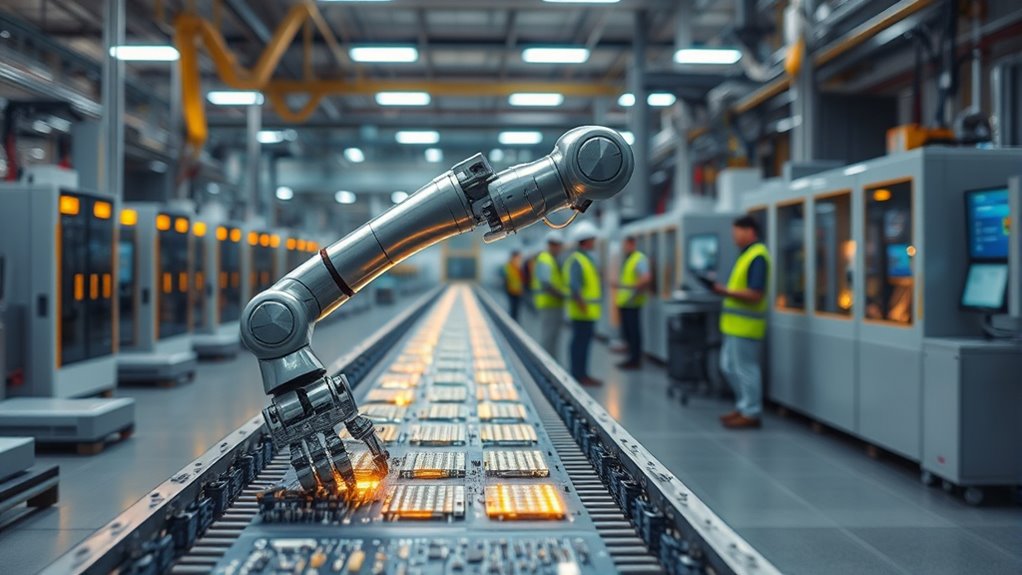

AI is transforming manufacturing by automating routine tasks with robots and intelligent systems, helping you increase efficiency, reduce errors, and lower costs. It allows machines to work alongside humans, taking on repetitive jobs so your workforce can focus on more complex, strategic activities. Predictive maintenance powered by AI keeps equipment running smoothly, minimizing downtime. If you want to explore how AI continues reshaping factory roles and workflows, there’s more to discover ahead.
Key Takeaways
- AI-driven automation streamlines factory processes, increasing efficiency, accuracy, and reducing labor costs.
- Robotics handle repetitive tasks, allowing workers to focus on strategic activities and innovation.
- Predictive maintenance uses sensor data to prevent machine failures, minimizing downtime and repair costs.
- The adoption of AI and robotics enhances product consistency, quality, and overall manufacturing scalability.
- Sensor technology improves real-time data collection, boosting AI’s predictive capabilities and operational decision-making.

Have you ever wondered how artificial intelligence is transforming manufacturing? It’s changing the way factories operate, making processes more efficient, accurate, and cost-effective. One of the key ways AI is doing this is through robotic process automation, where machines handle repetitive tasks that once required manual labor. These robotic processes can assemble components, package products, or manage inventory with minimal human intervention. As a result, you’ll notice a significant boost in productivity, fewer errors, and faster turnaround times. AI-powered robots don’t tire or lose focus, which means consistent quality and throughput. This shift isn’t about replacing humans entirely but empowering the workforce to focus on more complex, strategic tasks that require creativity and judgment.
Another powerful application of AI in manufacturing is predictive maintenance. Gone are the days of scheduled repairs that often happen too late or too early, wasting resources or risking unexpected breakdowns. Instead, AI systems analyze data from sensors embedded in machinery, monitoring vibrations, temperature, and other essential signs in real-time. When the system detects anomalies or patterns that suggest a machine might fail soon, it alerts you before a costly breakdown occurs. This proactive approach minimizes downtime, extends equipment lifespan, and saves money on emergency repairs. Predictive maintenance allows you to plan maintenance activities more efficiently, reducing disruptions to production schedules and ensuring that your factory runs smoothly. Additionally, implementing sensor technology can improve your ability to gather real-time data, further enhancing predictive capabilities.
Frequently Asked Questions
How Does AI Impact Factory Safety Protocols?
AI improves your factory safety protocols by enhancing hazard detection, allowing you to identify risks faster. It actively monitors worker safety through real-time data analysis, alerting you to potential dangers before accidents happen. By automating safety checks and predicting hazards, AI helps you create a safer work environment. This proactive approach reduces injuries, keeps workers safer, and guarantees that safety standards are consistently met.
What Are the Initial Costs of Implementing AI Systems?
The initial costs of implementing AI systems include a thorough cost analysis and infrastructure investment. You’ll need to budget for hardware upgrades, software licensing, and integration expenses. Training your staff and ensuring compatibility with existing systems also add to the costs. While these upfront investments can be significant, they often lead to long-term savings and efficiency gains by streamlining operations and reducing errors.
How Do Workers Adapt to Ai-Driven Changes?
You adapt to AI-driven changes by embracing continuous learning and skill enhancement. While automation may cause job displacement, you can focus on worker skill enhancement to stay relevant. Implementing job displacement strategies, such as retraining programs, helps you shift seamlessly. Instead of resisting, you leverage AI as an opportunity to develop new expertise, making your role more valuable and ensuring you remain integral to the evolving manufacturing landscape.
What Industries Benefit Most From AI Automation?
You benefit most in industries like automotive, electronics, and pharmaceuticals, where AI-driven automation excels. With predictive maintenance, you reduce downtime and extend equipment lifespan. Supply chain optimization helps you manage inventory efficiently and respond swiftly to market changes. These technologies streamline operations, cut costs, and boost productivity, ensuring you stay competitive. Embracing AI in these sectors allows you to innovate faster and deliver higher-quality products to your customers.
How Is AI Regulation Evolving in Manufacturing?
AI regulation in manufacturing is evolving like a ship steering uncharted waters. You’ll see increased focus on ethical considerations and the development of international standards to guarantee safe, fair AI deployment. Governments and industry groups collaborate to create guidelines that balance innovation with responsibility. As a result, you’ll notice tighter controls and clearer compliance requirements, guiding you to adopt AI responsibly while safeguarding workers and consumers alike.
Conclusion
So, enjoy your shiny new robot colleagues—they’ll handle your tasks flawlessly while you marvel at your “advanced” factory. With AI taking over, you’ll soon have plenty of time to ponder the true meaning of a “human touch.” Just remember, when your job disappears, at least you’ll have the robot to keep you company. Who knew that automation would turn the factory floor into the ultimate playground for machines? Cheers to the future!