
Augmented reality workspaces are revolutionizing how you work by blending digital and physical environments seamlessly. You can interact with virtual objects, collaborate with colleagues as if they’re in the same room, and explore immersive 3D models for design and analysis. With features like holographic teamwork and integrated visualization tools, your workspace becomes more flexible, engaging, and efficient. Want to discover how these innovations will reshape your daily tasks? Keep going to explore the future office in detail.
Key Takeaways
- Digital and physical environments seamlessly blend with virtual interfaces and holograms, enhancing accessibility and interaction.
- Remote collaboration is improved through shared virtual workspaces and avatars, enabling real-time teamwork across distances.
- Immersive 3D visualization allows users to explore, manipulate, and design models in a virtual space, boosting creativity and accuracy.
- Home theatre projectors and dynamic visuals make presentations more engaging, fostering immersive collaborative sessions.
- Future AR workspaces will be flexible, adaptive, and task-oriented, transforming traditional offices into highly interactive, efficient environments.
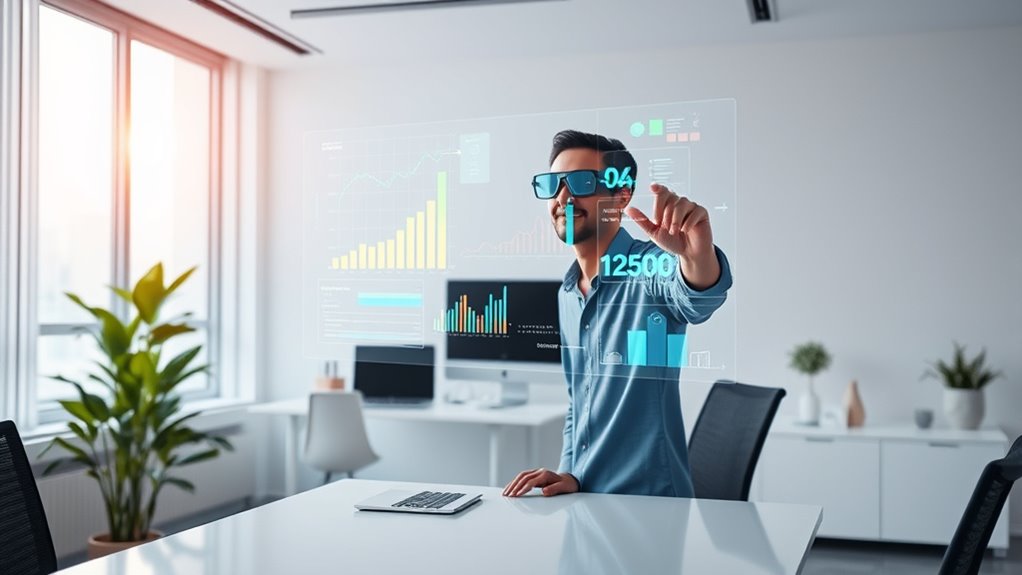
Have you ever imagined a workspace where digital information seamlessly blends with your physical environment? With augmented reality (AR), this isn’t just a dream anymore—it’s becoming a reality. In an AR workspace, you can project virtual interfaces, data dashboards, or 3D models right into your physical surroundings, creating an environment where digital and real-world elements coexist fluidly. This technology revolutionizes how you engage with information, making your workflow more intuitive and interactive. Instead of switching between multiple screens or devices, AR allows you to manipulate virtual objects directly within your physical space. Whether you’re reviewing complex design schematics or analyzing data trends, the immersive design facilitates a deeper understanding and enhances productivity.
Virtual collaboration takes on a new dimension with AR. You can connect with colleagues globally as if they were right beside you, sharing a virtual workspace that overlays onto your physical office. Imagine holding a virtual meeting where everyone’s avatars and shared data appear as holograms, enabling real-time interaction with 3D objects and documents. This immersive approach breaks down geographical barriers and fosters a sense of presence, making remote teamwork feel more natural and engaging. You can brainstorm, troubleshoot, or review projects together, all within a shared augmented environment that responds to your gestures and voice commands. This heightened level of interaction keeps teams aligned and accelerates decision-making processes.
Immersive design is at the core of these AR workspaces, transforming how you visualize and manipulate information. Instead of static screens or 2D images, you’re immersed in a 3D space where you can walk around, zoom in, or rotate objects to gain different perspectives. For example, architects or engineers can walk through virtual models of buildings or machinery, identifying potential issues before they’re built. This level of engagement reduces errors, saves time, and enhances creativity. As you become more comfortable with AR, you’ll find it easier to experiment with designs or workflows, because the technology responds instantly to your movements and commands.
Furthermore, integrating home theatre projectors into your workspace can enhance your visual experience, making presentations and collaborative sessions more engaging and immersive. Ultimately, augmented reality creates a workspace that’s flexible, interactive, and deeply integrated with your tasks. It transforms traditional offices into dynamic environments that adapt to your needs, whether you’re collaborating with team members, analyzing data, or designing new concepts. As AR technology advances, expect your work environment to become even more seamless, immersive, and tailored to boost efficiency. This isn’t just the future of work; it’s a revolution in how you interact with digital and physical worlds every day.
Frequently Asked Questions
How Secure Are Augmented Reality Workspaces Against Cyber Threats?
AR workspaces can be quite secure if you follow proper cybersecurity protocols. You should guarantee data encryption is in place to protect sensitive information from cyber threats. Regular updates and strong authentication methods help prevent unauthorized access. While no system is completely invulnerable, implementing these security measures minimizes risks, making your augmented reality workspace safer for daily operations. Stay vigilant and maintain robust cybersecurity practices to stay ahead of potential threats.
What Is the Cost of Implementing AR Technology in Offices?
Think of it as building your own Batcave; the cost of implementing AR technology varies based on your needs. You’ll need to contemplate hardware, software, setup, and training expenses. Conducting a detailed cost analysis helps you stay within your budget considerations while maximizing benefits. While initial investments may seem high, the enhanced collaboration and productivity can justify the expense, making AR a smart, forward-looking choice for your office.
How Does AR Impact Employee Productivity and Collaboration?
AR boosts your productivity and collaboration by making virtual training more engaging and accessible, allowing you to learn new skills quickly. It also enhances remote collaboration, giving you a shared workspace where you can interact with colleagues as if you’re in the same room. This technology reduces misunderstandings, streamlines workflows, and keeps you connected, ultimately improving your efficiency and teamwork regardless of physical distance.
ARe There Any Health Concerns Related to Prolonged AR Headset Use?
Back in the day, you might worry about health issues with prolonged AR headset use. Yes, you could experience eye strain or motion sickness after extended sessions. These concerns are real, but manufacturers are improving device comfort and reducing these risks. To stay safe, take regular breaks, adjust the fit, and limit continuous use. Staying mindful helps you enjoy AR’s benefits without risking your health.
What Industries ARe Most Likely to Adopt AR Workspaces First?
You’ll likely see manufacturing and automation industries adopt AR workspaces first because they benefit from remote training and precise, real-time guidance. These sectors can streamline complex tasks, reduce errors, and improve safety with AR. As a result, companies in these fields embrace AR technology quickly, enabling workers to collaborate virtually, troubleshoot issues on-site, and optimize processes—all from a distance.
Conclusion
As augmented reality transforms your workspace, you’ll embrace enhanced collaboration, increased productivity, and seamless innovation. You’ll experience a new way to connect, a new way to create, and a new way to excel. With AR, your office becomes more adaptable, more immersive, more inspiring. So, step into this future confidently, where technology empowers you to work smarter, think bigger, and achieve more. The future of work is here—ready to shape your success.