

The new digital office is transforming your company culture by integrating advanced technologies that boost collaboration, automate routine tasks, and promote flexibility. You can work seamlessly from anywhere using virtual tools like messaging, video calls, and cloud sharing, making teamwork more spontaneous and transparent. Smart office solutions create comfortable, adaptable spaces, while real-time data analytics support faster decision-making. Embracing these changes fosters an innovative, agile environment—continue exploring how tech is shaping the future of work.
Key Takeaways
- Technology fosters a more open, agile, and transparent organizational culture through seamless communication and real-time collaboration.
- Smart office solutions automate routine tasks, freeing employees to focus on innovation and strategic work.
- Virtual collaboration tools break down geographical barriers, enabling flexible work environments from anywhere.
- Data-driven insights and automation promote continuous improvement, experimentation, and quick decision-making.
- Embracing digital tools encourages a tech-savvy, adaptable mindset, positioning innovation as central to company culture.
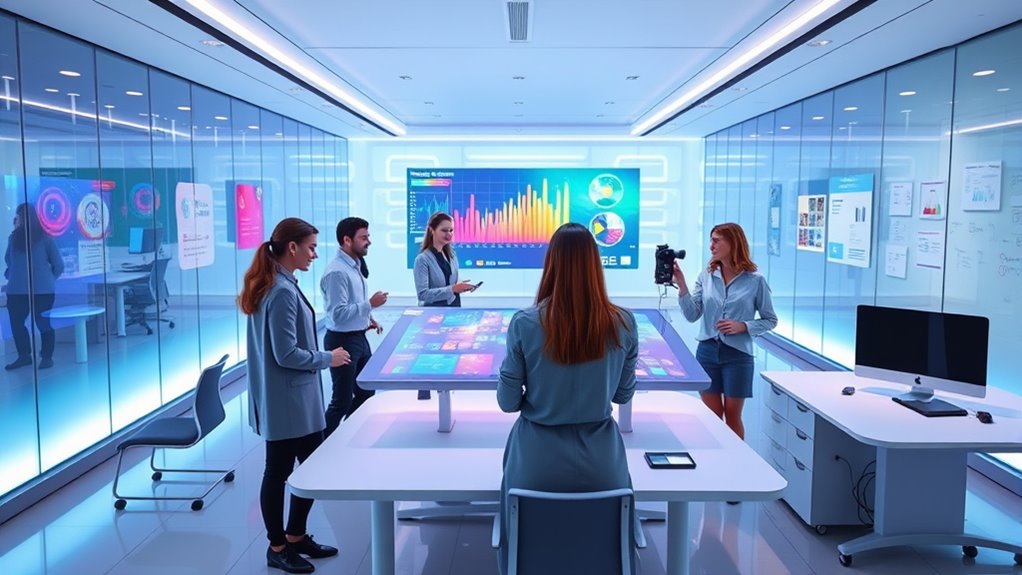
Digital office technology has transformed the way you work by streamlining daily tasks and improving efficiency. No longer are you confined to physical desks or limited by traditional office hours. Instead, you can seamlessly connect with colleagues across different locations through virtual collaboration tools. These platforms make it easy to share ideas, hold meetings, and coordinate projects in real-time, regardless of where everyone is situated. As a result, your company benefits from increased flexibility, faster decision-making, and a more dynamic work environment. Smart office solutions complement this shift by integrating hardware and software systems to automate routine processes, control lighting and climate, and optimize space utilization. This integration creates a more comfortable, responsive workspace that adapts to your needs, boosting productivity and satisfaction.
When you adopt virtual collaboration, you break down geographical barriers that once limited teamwork. You can participate in meetings from your home, a coffee shop, or on the go, without sacrificing communication quality. Instant messaging, video conferencing, and cloud-based document sharing become second nature, making collaboration more spontaneous and less hindered by delays or misunderstandings. These tools also foster transparency and accountability, as everyone stays updated on project progress and deadlines. You find yourself more engaged and empowered, knowing that your contributions are easily accessible and visible to the entire team.
Smart office solutions further enhance this digital transformation by creating an environment that responds to your needs. Imagine arriving at a workspace that automatically adjusts to your preferred temperature, lighting, or even your schedule. Sensors and automation systems work behind the scenes, reducing energy waste and ensuring a comfortable atmosphere. You can use IoT-enabled devices to book conference rooms, check equipment availability, or control your workspace remotely. This level of automation removes mundane tasks from your plate, allowing you to focus on more meaningful work. The integration of these technologies also supports a culture of innovation, encouraging you and your colleagues to experiment with new ways of working and collaborating. Additionally, automation’s role in business intelligence speeds up data analysis and enables real-time insights, further empowering your organization to make informed decisions quickly.
As you embrace these digital tools, your company culture shifts toward a more open, agile, and tech-savvy environment. You’re encouraged to communicate more freely, adapt quickly to changes, and leverage technology for continuous improvement. The digital office empowers you to work smarter, collaborate more effectively, and contribute to a culture that values innovation and flexibility. It’s a future where technology isn’t just an accessory but a core part of how your organization operates and thrives.

Leading in a Virtual World: Lead Remote Teams, Boost Productivity, and Master Virtual Collaboration
As an affiliate, we earn on qualifying purchases.
As an affiliate, we earn on qualifying purchases.
Frequently Asked Questions
How Do Digital Offices Impact Employee Work-Life Balance?
Digital offices improve your work-life harmony by offering greater digital flexibility, allowing you to tailor your work schedule around personal commitments. With tech-enabled tools, you can work remotely or adjust hours, reducing commute time and stress. This balance helps you stay productive while maintaining well-being. Embracing digital flexibility empowers you to manage your professional and personal life more effectively, leading to a healthier, more satisfying work environment.
What Cybersecurity Measures Are Essential for Digital Workplaces?
You need to prioritize cybersecurity by implementing essential measures like data encryption to protect sensitive information and access control to restrict system entry. Regularly update your security protocols, use strong passwords, and enable multi-factor authentication to prevent unauthorized access. Educate your team on cybersecurity best practices, and monitor networks continuously for unusual activity. These steps help safeguard your digital workplace from cyber threats and guarantee data integrity.
How Does Remote Work Influence Team Collaboration?
You might think remote work hampers team collaboration, but with the right tools, it actually enhances it. Virtual brainstorming sessions foster creativity, while communication technology keeps everyone connected in real-time. You can easily share ideas, give instant feedback, and build stronger relationships across distances. This flexibility often boosts productivity and innovation, proving that remote work isn’t a barrier but an opportunity for more dynamic, inclusive teamwork.
What Are the Costs Associated With Transitioning to a Digital Office?
You’ll face costs like upgrading hardware to support new digital tools and platforms, which can be significant initially. Additionally, training expenses are necessary to help your team adapt to new software and workflows, ensuring a smooth shift. While these investments can be substantial upfront, they’re essential for building an efficient digital workspace that boosts productivity and collaboration in the long run.
How Can Companies Ensure Digital Inclusivity for All Employees?
Think of digital inclusivity as a bridge spanning diverse landscapes. You can guarantee this by prioritizing digital accessibility, making sure all tools and platforms are user-friendly for everyone. Foster inclusive communication by actively listening to employees’ needs and providing training to bridge gaps. Regularly review and adapt your digital policies, turning your digital workspace into a welcoming village where every voice is heard and valued equally.

Kasa Smart Plug HS103P4, Smart Home Wi-Fi Outlet Works with Alexa, Echo, Google Home & IFTTT, No Hub Required, Remote Control, 15 Amp, UL Certified, 4-Pack, White
Voice control: Kasa smart plugs that work with Alexa and Google Home Assistant. Enjoy the hands free convenience…
As an affiliate, we earn on qualifying purchases.
As an affiliate, we earn on qualifying purchases.
Conclusion
As you embrace these digital tools, you might find that they actually strengthen your company culture rather than weaken it. Some say technology isolates us, but in reality, it can foster closer connections and collaboration when used thoughtfully. By integrating these innovations, you’re not just keeping up—you’re shaping a more dynamic, inclusive workplace. So, trust the data and your instincts; technology isn’t just changing your office, it’s helping you build a stronger, more vibrant community.

Cloud Technologies: An Overview of Cloud Computing Technologies for Managers
As an affiliate, we earn on qualifying purchases.
As an affiliate, we earn on qualifying purchases.

Onvis Smart Door & Window Sensor, Thread-Enabled HomeKit Contact Sensor, Bluetooth Wireless Low Energy , Home Automation, No Hub Required
【WHAT’S NEW】The Onvis contact sensor now is upgraded to support Thread – This allow you get instant alerts…
As an affiliate, we earn on qualifying purchases.
As an affiliate, we earn on qualifying purchases.