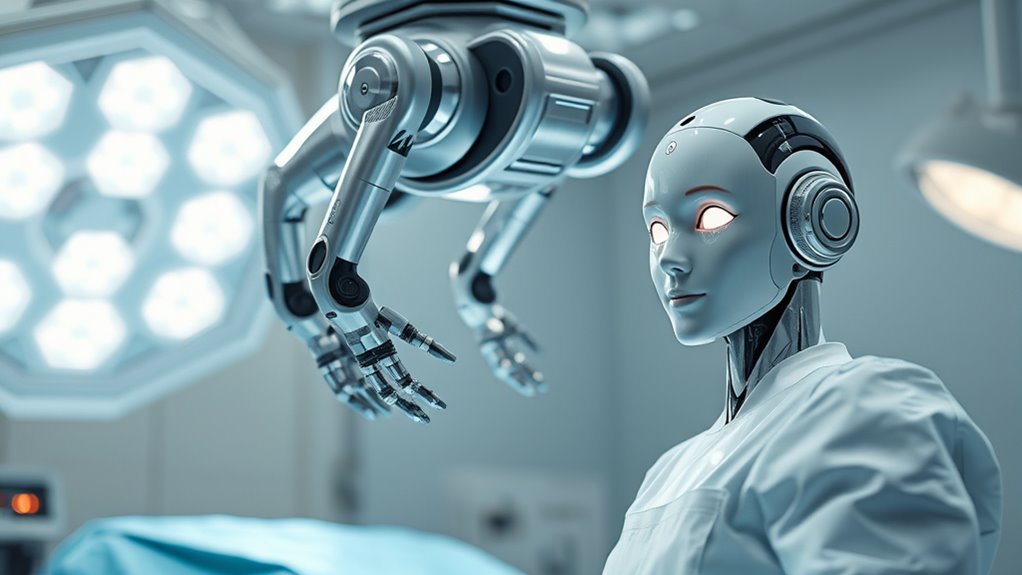

Robotics in healthcare are revolutionizing how you experience medical care. Surgical robots assist surgeons with high precision, enabling minimally invasive procedures that lead to quicker recoveries and better outcomes. Caregiving AIs and robotic assistants support patients by monitoring essential signs, dispensing medications, and ensuring safety around the clock. These advancements improve accuracy, reduce caregiver fatigue, and expand care possibilities. If you want to discover how these technologies will shape future medicine, keep exploring what’s next in healthcare robotics.
Key Takeaways
- Surgical robots assist in minimally invasive procedures, improving precision and reducing patient recovery times.
- Caregiving AIs and robots monitor vital signs, dispense medications, and support mobility, enhancing patient safety and independence.
- Robotics enable real-time imaging guidance and advanced data analysis, leading to more accurate diagnoses and surgical outcomes.
- Automated caregiving systems reduce workload on human staff, promote safety, and provide 24/7 support for elderly and disabled individuals.
- Future integration will make healthcare smarter, safer, and more accessible through intuitive, AI-powered robotic systems.
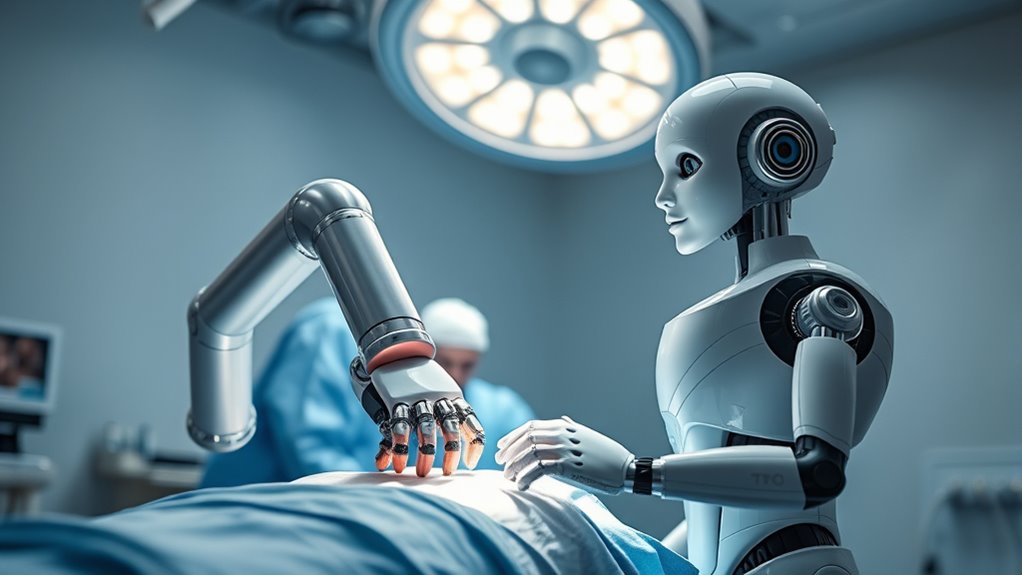
Have you ever wondered how robots are transforming healthcare? The answer lies in the incredible advances in medical robotics, which are revolutionizing how we diagnose, treat, and care for patients. These machines aren’t just futuristic concepts; they’re actively changing the landscape of medicine today. With robotic diagnostics, healthcare providers can now perform highly precise and minimally invasive assessments, leading to quicker diagnoses and better outcomes. Robots equipped with advanced imaging and AI algorithms analyze scans and data far faster than humans, identifying subtle anomalies that might otherwise go unnoticed. This means fewer errors, faster treatment decisions, and a more efficient healthcare system overall.
Medical robotics also extend into the operating room, where surgical bots assist surgeons with unprecedented precision. These surgical robots, featuring robotic arms controlled by skilled surgeons, enable minimally invasive procedures that reduce patient recovery times and minimize complications. Their precise movements, guided by advanced imaging and real-time feedback, allow for complex surgeries to be performed with greater accuracy than ever before. As a result, patients experience less pain, shorter hospital stays, and improved overall outcomes. The integration of robotics into surgery is not just about enhancing skill but also about expanding possibilities for procedures that were once considered too risky or difficult.
Beyond the operating room, robotics play an essential role in caregiving. Caregiving AIs and robotic assistants are becoming more common in hospitals and homes, helping with routine tasks and providing companionship. These robots can monitor vital signs, dispense medications, and assist with mobility, reducing the workload on human caregivers and ensuring consistent, round-the-clock support for patients. For elderly or disabled individuals, caregiving robots offer independence and safety, giving them confidence to live more comfortably while reducing the strain on family members and health services. These AI-powered caregivers are programmed to recognize emergencies and respond swiftly, providing a fundamental safety net for vulnerable populations.
The fusion of robotics in healthcare isn’t just about replacing human effort; it’s about augmenting it for better results. Medical robotics, with their robotic diagnostics and surgical capabilities, bring unmatched accuracy and efficiency. Meanwhile, caregiving AI robots enhance quality of life and reduce caregiver burnout. As technology continues to evolve, expect these tools to become even smarter, more intuitive, and more integrated into your healthcare experience. The future of medicine is here, and it’s powered by robots working alongside humans to make healthcare safer, faster, and more accessible for everyone. Incorporating advanced imaging and AI algorithms is crucial for enhancing diagnostic precision and operational success.
Frequently Asked Questions
What Are the Ethical Considerations of Using AI in Patient Care?
When using AI in patient care, you need to consider ethical issues like privacy concerns and informed consent. You should ensure patient data is protected and that patients clearly understand how AI impacts their treatment. Transparency is key, so patients can make informed decisions. By respecting privacy and obtaining proper consent, you help build trust and uphold ethical standards in healthcare.
How Do Robotic Surgical Systems Improve Outcomes Compared to Traditional Methods?
Robotic surgical systems enhance outcomes by providing precision enhancement, enabling you to perform complex procedures with greater accuracy. They facilitate minimally invasive techniques, reducing patient trauma, recovery time, and infection risks. You benefit from steadier movements and detailed visualization, leading to improved success rates. Ultimately, these systems empower you to deliver safer, more effective surgeries, transforming patient care and boosting overall health outcomes.
What Training Is Required for Healthcare Professionals to Operate Medical Robots?
You need hands-on training to operate medical robots effectively, gaining practical experience under expert supervision. This training helps you understand the robot’s functions, safety protocols, and troubleshooting techniques. Additionally, earning a technical certification demonstrates your proficiency and readiness to handle these advanced systems confidently. Continuous education and practice guarantee you’re up-to-date with the latest technology, ultimately improving patient outcomes and ensuring safe, precise procedures.
How Accessible Are Robotic Healthcare Technologies in Developing Countries?
Robotic healthcare technologies are still quite limited in developing countries due to cost barriers and infrastructure challenges. You may find that high costs prevent widespread adoption, and inadequate infrastructure, like reliable electricity and internet, hampers implementation. While some organizations work to improve accessibility, you’ll likely encounter significant barriers that slow down the integration of these advanced tools, making them less available compared to developed nations.
What Are the Potential Risks and Limitations of Caregiving AIS?
You should be aware that caregiving AIs pose risks like privacy concerns, where sensitive personal data might be mishandled or compromised. Additionally, emotional reliance on these systems could reduce human interaction, potentially impacting mental health. Limitations include their inability to fully understand complex emotional needs or adapt to unique situations. While helpful, these AIs aren’t perfect substitutes for human caregivers, and their use requires careful oversight.
Conclusion
So, here you are, trusting robots with your most delicate surgeries and daily care, thinking they’re flawless. Ironically, while these bots aim to perfect healthcare, they can’t quite replace the human touch or handle every unexpected glitch. But hey, as long as they keep making headlines, you might as well enjoy the irony—robots running the show while humans still hold the real heart. Who knew that in the future, care would be so automated, yet so unpredictably human?