
TL;DR
India’s first semiconductor fabrication plant is expected to open soon, but China is rapidly increasing its production of mature-node chips. This presents a significant challenge for India’s nascent industry, which aims to develop a domestic ecosystem.
India’s first semiconductor fabrication plant is scheduled to begin operations later this year, but the country’s emerging industry faces a significant challenge as China rapidly expands its capacity in mature-node chips, which are crucial for many electronic applications.
According to industry experts, China is increasing its capacity in producing mature-node chips, which are older but still widely used in consumer electronics, automotive, and industrial equipment. This expansion is part of China’s broader strategy to dominate the global supply chain in these segments. Meanwhile, India is investing heavily in developing a domestic semiconductor ecosystem, including its first fab plant, aiming to reduce reliance on imports and boost self-sufficiency. However, the rapid growth of China’s mature-chip capacity could undermine India’s efforts by flooding the market with cheaper, established technology.Sources from Nikkei Asia indicate that China could account for half of the world’s mature-chip capacity in the coming years, intensifying competition in this segment. Industry analysts warn that India’s new fab, which is focused on advanced and mature nodes, might struggle to compete on price and scale if China’s expansion continues unabated. The Indian government has emphasized the importance of building a resilient supply chain, but experts caution that the timing and scale of China’s growth pose significant hurdles.
Why It Matters
This development is significant because it highlights the geopolitical and economic competition in the semiconductor supply chain. India’s efforts to establish a self-reliant industry are now challenged by China’s aggressive capacity expansion, which could influence global market dynamics, pricing, and supply stability. For Indian consumers and manufacturers, this could mean higher costs or limited access to certain chip types if domestic production cannot match China’s scale.

ESD Full Frame Sensor Cleaner- Digital Camera Lens Cleaner Kit,Swabs for Cleaning Watches, PCB, SMT, Semiconductors and Electrostatic Sensitive Equipment. (Red-100Packs, High Viscosity)
Effective Sensor Cleaning: Our precision sensor cleaning swabs effortlessly lift and remove invisible dust, particles, and smudges, keeping…
As an affiliate, we earn on qualifying purchases.
As an affiliate, we earn on qualifying purchases.
Background
India’s push into semiconductors has gained momentum over recent years, with government incentives and investments aimed at creating a domestic supply chain. The country aims to reduce dependence on imports from East Asia, particularly Taiwan and South Korea, and to develop local manufacturing capabilities. Meanwhile, China has been rapidly scaling up its semiconductor industry, especially in mature-node chips, which are less technologically complex but still essential for many applications. This growth aligns with China’s broader goal to become self-sufficient in critical technology sectors amid ongoing trade tensions and global supply chain disruptions.
“China’s capacity in mature-node chips is expected to reach 50% of the global market in the coming years, which could significantly impact India’s nascent industry.”
— Industry analyst from Nikkei Asia
“While India is making strategic investments, competing with China’s scale and cost advantages in mature chips remains a major challenge.”
— Indian semiconductor industry expert
mature-node semiconductor chips
As an affiliate, we earn on qualifying purchases.
As an affiliate, we earn on qualifying purchases.
What Remains Unclear
It is not yet clear how quickly China’s capacity will reach these levels or how effectively India will be able to scale its domestic industry to compete. Details on the specific capacity figures for India’s upcoming fab and China’s exact expansion timeline are still emerging. Additionally, geopolitical factors and trade policies could influence the competitive dynamics further.

The Semiconductor Manufacturing Business: A Comprehensive Guide
As an affiliate, we earn on qualifying purchases.
As an affiliate, we earn on qualifying purchases.
What’s Next
India is expected to launch its first semiconductor fab later this year, with plans for additional capacity in the coming years. Monitoring China’s capacity expansion and market share in mature-node chips will be crucial. Policy adjustments, technological advancements, and potential international collaborations could also shape the future landscape of the industry.
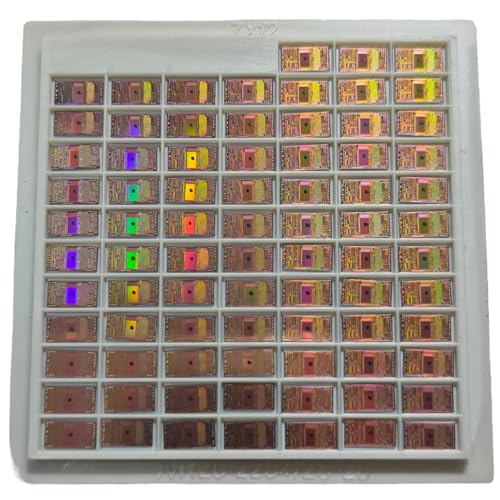
Silicon IC Die Wafer, Bare CPU Semiconductor Chip Sample with Lithography Patterns for Teaching, STEM Education, and Art Display (0.24" x 0.12" 1 Box /80 pcs)
IC Type: Semiconductor
As an affiliate, we earn on qualifying purchases.
As an affiliate, we earn on qualifying purchases.
Key Questions
What are mature-node chips, and why are they important?
Mature-node chips are older semiconductor manufacturing processes, typically 28nm or larger, used in many consumer electronics, automotive, and industrial applications due to their reliability and cost-effectiveness.
How is China expanding its semiconductor capacity?
China is investing heavily in building new fabrication plants and increasing production lines focused on mature-node chips, aiming to dominate this segment of the global market.
What challenges does India face in developing its semiconductor industry?
India faces challenges related to scale, technological expertise, and competition from established players like China, especially in cost-competitive mature-chip segments.
When will India’s first fab become operational?
The Indian semiconductor fabrication plant is expected to come online later this year, with further capacity planned in subsequent years.