
Lab-grown meat uses advanced cell culture tech to produce meat in labs, offering a sustainable and ethical alternative to traditional farming. It reduces land, water, and energy use while eliminating animal slaughter and lowering environmental impact. This innovation also enhances safety by avoiding contamination and antibiotics. As the technology advances, it could reshape how we think about food production, making more sustainable choices accessible. Keep exploring to discover how this groundbreaking food tech could change your future.
Key Takeaways
- Lab-grown meat is produced by cultivating animal cells in controlled environments, offering a sustainable alternative to traditional farming.
- Advances in biotechnology are making lab-grown meat more scalable, safer, and accessible for mainstream markets.
- This technology significantly reduces environmental impacts, including land, water, and energy consumption, while eliminating animal slaughter.
- Ethical considerations include transparency, regulation, and addressing societal perceptions about manipulating life at the cellular level.
- Future food systems may integrate lab-grown meat to enhance food security, promote sustainability, and meet growing global demand.

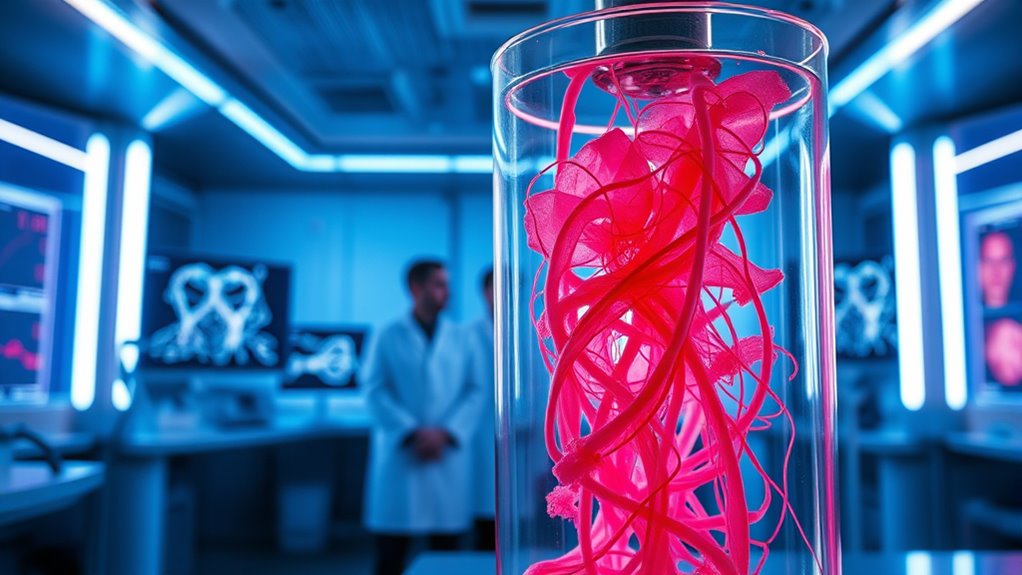
Have you ever wondered what the future of food might look like? Imagine a world where meat is produced not by raising livestock, but through a process called cell culture. This method involves taking a small sample of animal cells and growing them in a controlled environment until they develop into muscle tissue that resembles traditional meat. It’s a revolutionary concept that could drastically change how we think about food production. But as exciting as this technology is, it also raises important questions about its ethical implications. You might ask, is it right to grow meat in a lab? Does it address concerns about animal welfare? And how does it impact our relationship with food and nature? These are critical considerations as lab-grown meat moves from experimental stages to mainstream markets.
When you look at cell culture technology, it’s clear that it offers a promising solution to many problems associated with conventional meat production. It requires significantly less land, water, and energy, reducing environmental strain. Plus, it eliminates the need to kill animals, aligning with growing ethical concerns about factory farming. Instead of raising animals in large, often inhumane conditions, you’re producing meat directly from cells, which can be done in a sterile lab setting. This approach not only benefits animal welfare but also addresses the health and safety issues tied to traditional meat, such as contamination and antibiotic use. It’s a step toward a more sustainable, humane food system that responds to the planet’s rising population and limited resources.
Furthermore, advances in biotechnology are making lab-grown meat increasingly feasible and scalable, promising a future where such products could be widely available. However, the ethical implications aren’t entirely straightforward. Some argue that lab-grown meat still involves manipulating life at a cellular level, raising questions about playing God or crossing moral boundaries. Others worry about the transparency and regulation of this emerging industry—how do we ensure it’s safe, ethically produced, and accessible? You also need to contemplate cultural and societal factors; meat is deeply ingrained in many traditions and cuisines. Will lab-grown meat be accepted culturally? Will it be affordable and available to everyone or just a niche product? As you explore these questions, it becomes clear that the development of lab-grown meat isn’t just a technological breakthrough—it’s also a social and ethical challenge. Balancing innovation with ethical responsibility will determine whether this future food technology becomes a positive force for change or raises new concerns. Ultimately, the journey toward lab-grown meat involves charting complex moral terrain, but it holds the potential to reshape how you and the world eat for generations to come.
Frequently Asked Questions
How Does Lab-Grown Meat Compare Nutritionally to Traditional Meat?
Lab-grown meat offers similar nutritional composition to traditional meat, including comparable protein content. You get essential nutrients like vitamins and minerals, often with less saturated fat and cholesterol. Since the process is controlled, it can be tailored to enhance certain nutrients or reduce undesirable components. Overall, you can enjoy the same benefits of protein and nutrition from lab-grown meat, often with added health advantages.
What Are the Environmental Impacts of Producing Lab-Grown Meat?
You can expect lab-grown meat to have a lower environmental impact than traditional farming, promoting sustainable farming practices. It generally requires less land and water, reducing habitat destruction. However, energy consumption during production can be high, which might offset some benefits if not managed efficiently. Overall, with advancements, lab-grown meat could become a more eco-friendly alternative, helping you reduce your carbon footprint while supporting sustainable food choices.
Is Lab-Grown Meat Safe for People With Food Allergies?
Lab-grown meat is generally safe for people with food allergies, but you should check labeling requirements carefully. Manufacturers may include allergen information on packaging, helping you identify potential food allergy risks. Although lab-grown meat is cultivated in controlled environments, cross-contamination or added ingredients could trigger allergies. Always read labels thoroughly and consult your healthcare provider if you’re unsure about specific allergens, ensuring you avoid any adverse reactions.
How Affordable Will Lab-Grown Meat Become for Consumers?
Think of lab-grown meat as a rising star in the sky—its brightness promising to reach everyone. As pricing trends improve and production scales up, it’ll become more affordable for consumers. Market accessibility will expand, making it easier for you to choose sustainable, ethical options without breaking the bank. While initial costs are high, expect prices to drop substantially, transforming lab-grown meat into a common, budget-friendly part of your diet.
What Regulatory Hurdles Exist for Commercializing Lab-Grown Meat?
You’ll face regulatory hurdles like obtaining legal approvals from agencies such as the FDA and USDA, which ensure safety and quality standards. Additionally, labeling standards are key, as authorities decide how lab-grown meat can be marketed to consumers. Managing these regulations requires thorough testing and clear labeling to prevent misinformation, but once addressed, it paves the way for smoother commercialization and consumer acceptance of lab-grown meat.
Conclusion
As you explore the world of lab-grown meat, it’s clear that this technology is a game-changer for future food. By embracing innovation, you’re helping to shape a more sustainable and ethical food system. Remember, every new idea is a step toward a brighter, greener horizon. It’s often said that the proof of the pudding is in the eating — so, stay curious and open-minded as these advancements become part of your everyday life.