

By 2025, smart city technologies are transforming urban life through advancements in mobility, energy efficiency, and resilience. You’ll find electric and autonomous vehicles reducing traffic and pollution, while intelligent systems optimize energy use in buildings. Sensors and IoT devices make city services more responsive and efficient. These innovations aim to create healthier, more sustainable environments that adapt to growth and climate challenges. Stay with us to discover how these changes are shaping the future of urban living.
Key Takeaways
- Urban mobility is shifting towards electric, autonomous, and eco-friendly transit options to reduce congestion and emissions by 2025.
- Smart grids and IoT-enabled buildings optimize energy use, integrating renewable sources for sustainable urban development.
- Real-time data collection improves city operations, enabling adaptive traffic management and efficient waste disposal.
- Sustainability efforts focus on reducing pollution and emissions through renewable energy and smart infrastructure resilience.
- Cities are becoming future-ready with integrated technologies that enhance safety, efficiency, and quality of urban life.
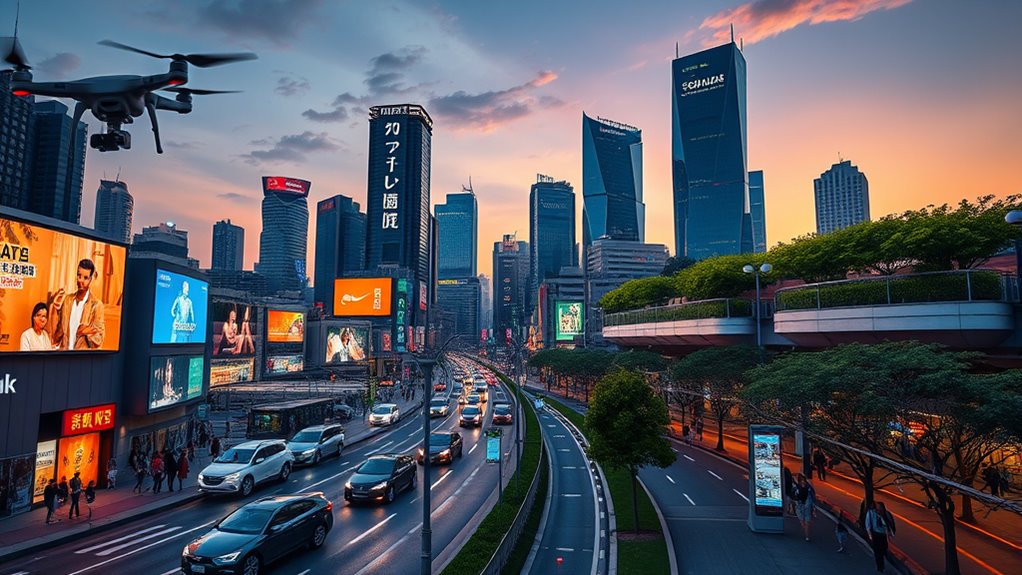
Have you ever wondered how urban areas are transforming into smarter, more efficient spaces? The rapid advancements in technology are reshaping cities, making daily life more convenient and sustainable. Central to this evolution is the emphasis on urban mobility and energy efficiency, which are key to reducing congestion, lowering emissions, and creating healthier environments for residents. As city planners and tech innovators work together, you’ll notice smarter transportation systems that prioritize seamless movement and reduced carbon footprints. Electric buses, autonomous vehicles, and improved public transit options are becoming the norm, giving you more reliable and eco-friendly ways to get around. These innovations not only decrease traffic congestion but also cut down on air pollution, contributing to better health and cleaner air for everyone.
Smart cities are transforming urban mobility with electric buses, autonomous vehicles, and eco-friendly transit options for healthier living.
Energy efficiency is another critical aspect of smart city development, and you’re likely to see it integrated into buildings, infrastructure, and city services. Smart grids, for example, optimize electricity distribution, ensuring that energy is used more effectively and waste is minimized. Buildings equipped with intelligent systems automatically adjust lighting, heating, and cooling based on occupancy and weather conditions, which helps you save on utility bills while reducing overall energy consumption. Solar panels and renewable energy sources are increasingly incorporated into urban landscapes, making cities less dependent on fossil fuels. Additionally, implementing productivity and motivation strategies can help city officials and residents stay engaged and proactive in sustainability efforts. These steps toward energy efficiency mean that your city can operate sustainably, with less environmental impact and more resilience against energy shortages.
You’ll also find that data-driven solutions play a pivotal role in creating smarter cities. Sensors and IoT devices collect real-time information about traffic flow, energy use, and public services. This data is analyzed and used to optimize city operations, making your daily experiences smoother. For example, adaptive traffic lights respond dynamically to congestion, reducing delays and improving urban mobility. Smart waste management systems track trash levels and schedule pickups efficiently, keeping your neighborhood cleaner. With these technological advancements, your city becomes more responsive to your needs and better equipped to handle challenges like population growth and climate change.
As smart cities continue to evolve toward 2025, you’ll see a more integrated approach to urban living, driven by innovative solutions that prioritize sustainability and efficiency. The focus on urban mobility and energy efficiency isn’t just about modernizing infrastructure; it’s about creating resilient communities where you can live, work, and play with less environmental impact. The seamless integration of technology into everyday life will make your city smarter, safer, and more sustainable—transforming urban spaces into future-ready habitats that serve both people and the planet.
Frequently Asked Questions
How Will Smart City Projects Be Funded Sustainably?
You can guarantee smart city projects are funded sustainably through public-private partnerships and innovative financing methods. These approaches leverage private sector investments, reduce government costs, and create shared value. By fostering collaborations, you attract diverse funding sources, including grants and impact investments. This way, you build resilient infrastructure while maintaining financial stability, ensuring ongoing development and technological upgrades without overburdening public budgets.
What Privacy Measures Protect Residents in Smart Cities?
Imagine a shield around your daily life—smart cities use data encryption to protect your personal info, safeguarding your privacy like a fortress. Residents give informed consent, ensuring you’re in control of what’s shared. These measures act as a beacon of trust, guiding your rights through the digital landscape. You stay protected, empowered, and connected, knowing your privacy is prioritized amid the city’s technological evolution.
How Will Smart Cities Address Digital Divide Issues?
Smart cities will tackle digital divide issues by promoting digital literacy programs and guaranteeing equitable access to technology for all residents. You’ll find initiatives aimed at providing affordable internet and devices, especially in underserved communities. By supporting training and outreach, smart cities help bridge gaps, empowering everyone to benefit from new urban tech. This approach ensures that innovation uplifts all residents, making urban life more inclusive and connected for you.
What Are the Potential Cybersecurity Risks Involved?
You’re right to worry about cybersecurity threats in smart cities, and they do pose serious risks like data breaches and hacking. These vulnerabilities could disrupt essential services, expose personal information, and compromise safety. To protect yourself, stay aware of potential breaches, use strong passwords, and support city initiatives that prioritize robust cybersecurity measures. Failing to address these risks could leave your city open to cyberattacks, affecting everyone’s daily life.
How Will Smart City Initiatives Impact Local Employment?
Smart city initiatives will boost urban job creation by creating new opportunities in technology, infrastructure, and service sectors. You’ll see a demand for skilled workers, which can lead to local workforce development programs that prepare residents for these roles. As smart city projects expand, you’ll benefit from increased employment, training, and economic growth, making your community more vibrant and resilient in the long run.
Conclusion
As you step into the future, remember that smart cities aren’t just about shiny tech—they’re about making your life easier and more connected. By 2025, these innovations will be as natural as breathing, transforming urban landscapes into vibrant, efficient communities. It’s like watching a symphony of progress come to life, where every note, every device, works in harmony to serve you better. Embrace this change, because the city of tomorrow is already knocking on your door.