
TL;DR

Get the latest gadgets delivered free with Prime
- Fast, free delivery on millions of items
- Prime Video, Amazon Music and more included
- Member-only deals all year
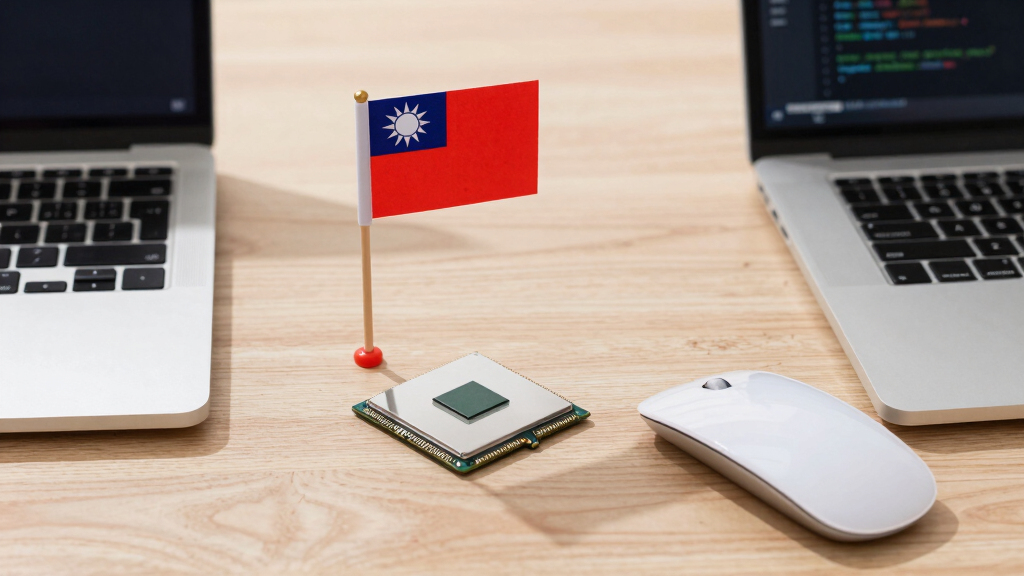
Taiwan’s foreign ministry declared the island a ‘sovereign and independent’ nation after former President Trump questioned US commitments to Taiwan. The move marks a significant escalation amid mixed US signals on Taiwan’s status.
Taiwan’s foreign ministry declared the island a “sovereign and independent democratic nation” on Saturday, explicitly stating it is “not subordinate to the People’s Republic of China,” in response to recent comments by former President Donald Trump questioning US support for Taiwan.
The statement from Taiwan’s foreign ministry came hours after Trump, during his visit to Beijing, told Fox News he opposes Taiwan pursuing formal independence and described a pending $14 billion US arms package to Taiwan as a “very good negotiating chip.” Trump also reiterated his claim that Taiwan “stole” the US semiconductor industry and expressed his desire for 40-50% of global chip production to be on American soil by the end of his term.
Meanwhile, US officials have issued mixed messages. Senator Marco Rubio stated that US policy remains “unchanged” and warned against Chinese military action, while Taiwan’s Presidential Office highlighted the consistency of US statements reaffirming support under the Taiwan Relations Act. The foreign ministry characterized recent arms sales as part of “joint deterrence against regional threats.”
Why It Matters
This development signals a potential shift in Taiwan’s stance towards asserting its independence amid rising tensions with China. It also underscores the conflicting signals from the US, which could influence regional stability and US-China-Taiwan relations. The declaration may impact diplomatic and military dynamics in East Asia, especially as US policy remains ambiguous amid rising geopolitical tensions.
semiconductor manufacturing equipment
As an affiliate, we earn on qualifying purchases.
As an affiliate, we earn on qualifying purchases.
Background
Historically, Taiwan has operated as a self-governing entity but is considered by China as a part of its territory. The US has maintained a policy of strategic ambiguity, supporting Taiwan’s defense without formal recognition of independence. Recent remarks by Trump and US officials have heightened uncertainty about future US commitments, coinciding with increased Chinese military activity near Taiwan and ongoing US-China tensions over technology and trade.
“The island is a sovereign and independent democratic nation, not subordinate to the People’s Republic of China.”
— Taiwan’s foreign ministry
“We look forward to continued cooperation under the firm commitments of the Taiwan Relations Act.”
— Karen Kuo, spokeswoman for Taiwan’s Presidential Office
“US policy remains unchanged as of today. It would be a terrible mistake for China to use force, and there would be repercussions.”
— Senator Marco Rubio
As an affiliate, we earn on qualifying purchases.
What Remains Unclear
It is unclear whether Taiwan’s declaration of sovereignty will lead to formal independence or provoke a stronger Chinese response. The US position remains ambiguous, with conflicting signals from officials, and the long-term implications of Trump’s remarks and Taiwan’s statement are still developing.
Taiwan semiconductor industry products
As an affiliate, we earn on qualifying purchases.
As an affiliate, we earn on qualifying purchases.
What’s Next
Next steps include monitoring regional reactions, potential diplomatic responses from China, and US policy adjustments. Taiwan may seek further international recognition, and tensions could escalate if China perceives this as a move toward independence.
As an affiliate, we earn on qualifying purchases.
Key Questions
Does Taiwan’s declaration mean it is now officially independent?
No, Taiwan’s government states it is a declaration of sovereignty and independence but has not formally declared independence under international law. The move increases tensions but does not change its official diplomatic status.
How might China respond to Taiwan’s declaration?
It is not yet clear, but China has previously warned against moves toward independence and could increase military pressure or diplomatic protests in response.
What is the US stance on Taiwan’s sovereignty now?
The US has reiterated that its policy remains unchanged, supporting Taiwan’s self-defense under the Taiwan Relations Act, despite conflicting statements from individual officials and Trump’s recent remarks.
Could this lead to military conflict?
While heightened tensions are possible, there is no immediate indication of an imminent military conflict. US and Taiwanese officials continue to emphasize deterrence and diplomacy.
Fall Picks
fall essentials
As an affiliate, we earn on qualifying purchases.