
TL;DR

Get the latest gadgets delivered free — and shop member deals
- Fast, free delivery on millions of items
- Access to Prime Big Deal Days deals on October 6–7
- Prime Video, Amazon Music and more included
Ongoing conflicts, including tensions in the Middle East and US-China relations, are disrupting global tech supply chains. In response, some companies are exploring space-based data centers to mitigate risks. The situation remains fluid, with key details still developing.
Recent geopolitical conflicts and supply chain disruptions are prompting tech companies to consider moving data centers to space, as terrestrial infrastructure faces increasing instability.
Multiple sources confirm that ongoing conflicts in regions such as the Middle East and escalating US-China tensions are disrupting critical supply chains for tech manufacturing. Disruptions include shortages of helium tanks, essential for advanced chipmaking, and delays in transporting key petrochemicals and metals. These issues are compounded by geopolitical actions like export controls and blockades, which have strained global supplies of materials such as helium, petrochemicals, and rare earth elements.
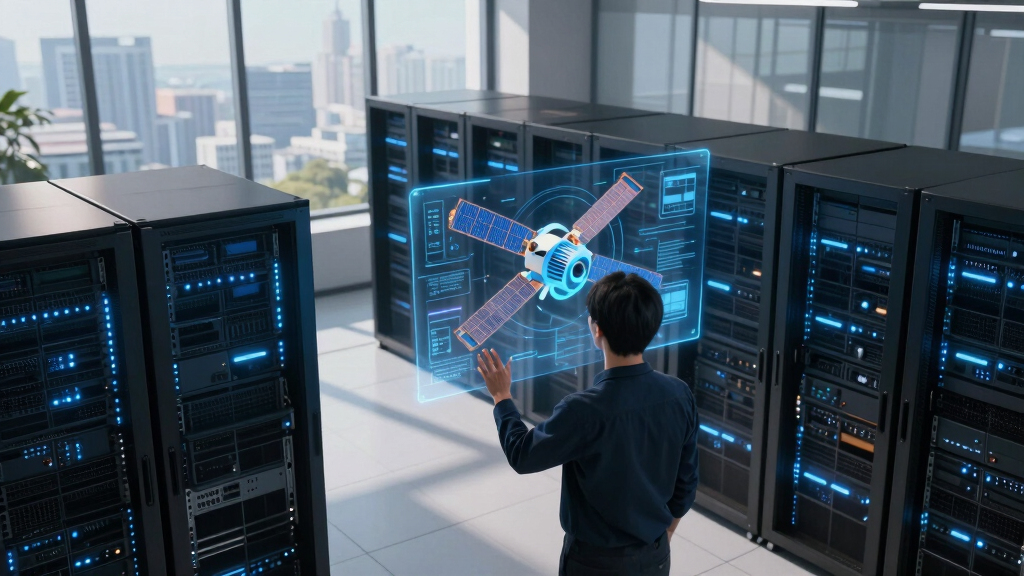
In response, some technology firms and investors are exploring alternative solutions, including the deployment of data centers in space. Reports indicate that a handful of companies are evaluating space-based infrastructure as a way to ensure data security and operational continuity amid terrestrial instability. However, these initiatives are still in early stages, with no confirmed plans for large-scale deployment yet.
Why It Matters
This development could significantly alter the future of data infrastructure, reducing reliance on terrestrial facilities vulnerable to geopolitical risks. It also highlights how global conflicts are influencing technological innovation and strategic planning, potentially reshaping the landscape of data management and cloud services.
space-based data center hardware
As an affiliate, we earn on qualifying purchases.
As an affiliate, we earn on qualifying purchases.
Background
Recent years have seen increasing geopolitical tensions impacting global supply chains, especially in critical tech materials like helium, rare earth metals, and petrochemicals. The blockade of the Strait of Hormuz and export controls by Russia have exacerbated shortages, affecting chip manufacturing and other high-tech industries. Meanwhile, the push for technological independence in China and other nations has intensified, with some companies seeking space-based solutions as a safeguard against terrestrial disruptions. The idea of space data centers is emerging as part of broader efforts to diversify infrastructure and mitigate geopolitical risks.
“The upstream petrochemicals are the foundation to all industries. Over time, the supply chain disruptions will manifest across all sectors and impact daily life.”
— Henry Ho, chairman of Taiwan’s Tung Ho Steel Enterprise
“The move to space-based data centers is still in its infancy, but it reflects a strategic shift towards safeguarding critical digital infrastructure from geopolitical risks.”
— Unnamed industry analyst
As an affiliate, we earn on qualifying purchases.
What Remains Unclear
It is not yet clear how widespread or imminent the deployment of space-based data centers will be. Specific plans, costs, and technological challenges remain undisclosed, and it is uncertain whether companies will move forward on a large scale or keep these as experimental initiatives.
space data center infrastructure
As an affiliate, we earn on qualifying purchases.
As an affiliate, we earn on qualifying purchases.
What’s Next
Next steps include further technological development, pilot projects, and feasibility studies by tech firms and space agencies. Monitoring announcements from key players and government agencies will be crucial to assess how quickly this concept advances.
As an affiliate, we earn on qualifying purchases.
Key Questions
What are space-based data centers?
Space-based data centers are facilities located in orbit or on celestial bodies, designed to host digital infrastructure outside Earth’s terrestrial environment, potentially offering resilience against terrestrial conflicts and natural disasters.
Why are companies considering moving data centers to space?
Companies see space as a way to avoid disruptions caused by geopolitical conflicts, natural disasters, and supply chain issues affecting terrestrial infrastructure, thereby ensuring continuous data access and security.
Are space-based data centers technically feasible now?
While the concept is in early development, significant technological challenges remain, including power supply, cooling, communication latency, and cost. Pilot projects are likely to determine feasibility in the coming years.
What are the risks of moving data centers to space?
Risks include high costs, technological complexity, potential communication delays, and vulnerability to space debris or radiation. These factors must be addressed before large-scale deployment.
Fall Picks
fall essentials
As an affiliate, we earn on qualifying purchases.