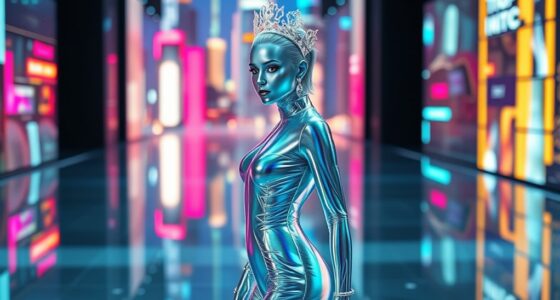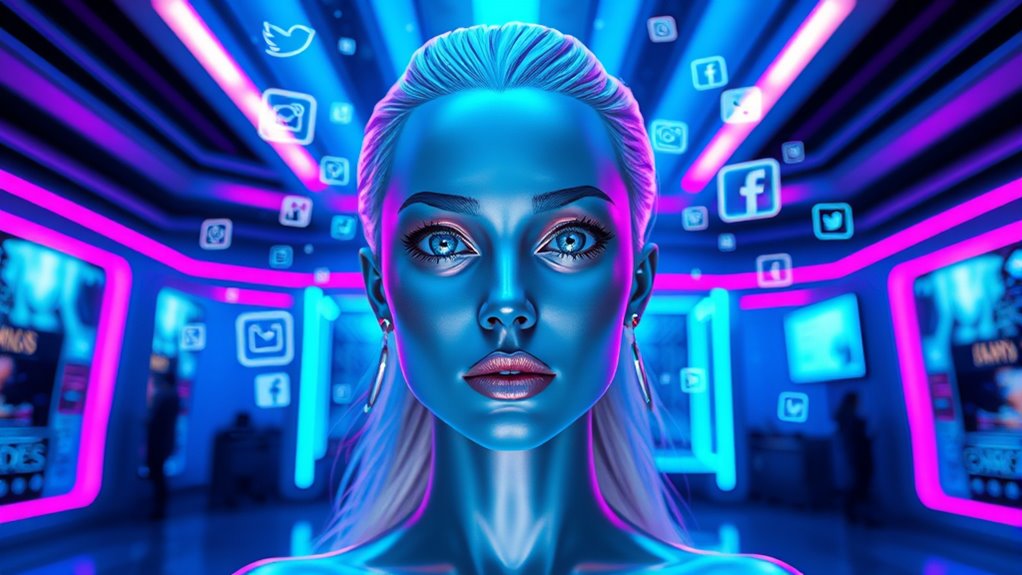

AI-powered virtual influencers are revolutionizing social media and branding by offering customizable, consistent personalities that engage audiences differently. While they open new marketing opportunities, ethical concerns about transparency and authenticity remain. As these digital personas become more sophisticated, their role in shaping the future of branding grows. If you want to understand how these evolving AI personalities could impact your strategies and reputation, there’s more to explore below.
Key Takeaways
- Virtual influencers are AI-created personas transforming social media marketing with customized, consistent branding and rapid campaign adaptation.
- Their rise raises ethical concerns about transparency, authenticity, and potential audience deception.
- Brands leverage virtual influencers for controlled messaging, style testing, and seamless campaign management.
- Ethical guidelines are essential to ensure responsible AI use and maintain audience trust amid increasing digital personas.
- The future of virtual influencers depends on balancing innovative opportunities with transparency and ethical standards.
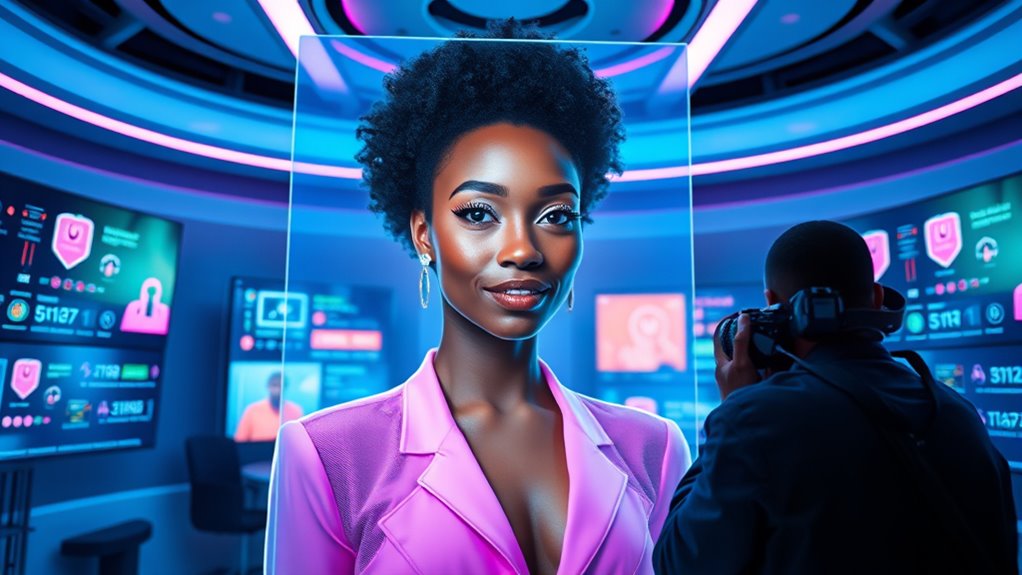
As technology advances, virtual influencers—AI-created personalities—are transforming the landscape of social media and branding. These digital characters, often indistinguishable from real people, are gaining popularity among audiences and brands alike. But as you observe this shift, you might wonder about the ethics concerns that come with AI personalities. Unlike human influencers, virtual ones are controlled entirely by their creators, raising questions about transparency, authenticity, and accountability. Are followers truly aware that these influencers are computer-generated? If not, does this mislead audiences? Many critics argue that undisclosed AI identities could erode trust, especially if virtual influencers are used to promote products or ideas without clear disclosure. It’s essential for brands and creators to navigate these ethics concerns carefully, ensuring honesty and transparency to maintain credibility and avoid potential backlash.
When it comes to brand collaboration, virtual influencers present unique opportunities and challenges. They can be designed to perfectly align with a brand’s aesthetic, values, and messaging, offering a level of customization that’s hard to match with human influencers. You might find that brands are increasingly excited to work with these AI personalities because they can be controlled to deliver consistent messaging, never tire, and even adapt quickly to changing campaign goals. However, this also introduces questions about authenticity. Audiences can be skeptical of virtual influencers, especially if their personalities feel overly manufactured or disconnected. As a brand, you must decide whether collaboration with AI personalities enhances your image or risks alienating your audience. Transparency about the virtual nature of these influencers is essential; otherwise, your brand might face accusations of deception, which could damage your reputation more than a traditional influencer campaign.
Moreover, the collaboration process itself can be more streamlined with virtual influencers. You can simulate different scenarios, test various styles, and fine-tune messaging before launching campaigns. This flexibility is appealing, but it also raises the importance of ethical considerations around creating personas that might influence consumer behavior without the same accountability as human influencers. As you explore partnerships with virtual influencers, you need to weigh the benefits of control and customization against the potential ethical pitfalls. Additionally, the increasing use of digital personas highlights how rapidly the field is evolving and the need for ethical guidelines to ensure responsible use. Ultimately, the rise of AI personalities in branding demands a careful balance—leveraging their advantages while upholding transparency and ethical standards to foster genuine connections and trust with your audience.

The New Content Creation Empire: Building Your Virtual AI Influencer (The Anonymous Influencer Series Book 1)
As an affiliate, we earn on qualifying purchases.
As an affiliate, we earn on qualifying purchases.
Frequently Asked Questions
How Do Virtual Influencers Impact Traditional Celebrity Endorsements?
Virtual influencers change traditional celebrity endorsements by emphasizing digital authenticity and brand transparency. You might find that brands prefer virtual influencers because they control their messaging and image, reducing risks associated with real personalities. This shift influences your perception of authenticity, making you more cautious about trusting endorsements. As virtual influencers become more prevalent, they challenge celebrities’ roles, prompting you to contemplate how transparency impacts your connection to brand messages.
Can Virtual Influencers Develop Genuine Emotional Connections With Audiences?
You might wonder if virtual influencers can create genuine emotional connections, and the answer is yes, but it depends. Their ability to display emotional authenticity can foster audience trust, making followers feel connected. When virtual influencers share relatable stories or respond authentically, they build stronger bonds. However, because they’re artificial, some audiences may remain skeptical, so maintaining emotional authenticity is key to developing real connections.
What Are the Ethical Considerations of Using AI Personalities in Marketing?
You need to consider privacy concerns when using AI personalities in marketing, ensuring you protect user data and maintain trust. Authenticity dilemmas also arise, as audiences may question whether virtual influencers are genuine or manipulated. Balancing innovative engagement with ethical practices is essential, so you should be transparent about AI use and prioritize ethical standards to foster authentic connections while respecting privacy.
How Do Virtual Influencers Influence Youth and Social Behavior?
Imagine virtual influencers as digital mirrors, shaping your youth’s social behavior through their curated digital identities. They influence peer influence by setting trends and ideals, often blurring reality. Studies show that teens spend more time engaging with these AI personalities, which can impact their self-esteem and values. You might find yourself mimicking their style or opinions, unknowingly aligning your social identity with virtual figures.
Will Virtual Influencers Eventually Replace Human Content Creators?
Virtual influencers likely won’t fully replace human content creators because digital authenticity and creator authenticity remain essential. You can see that while AI personalities offer consistent, curated content, they lack the genuine emotion and personal connection that humans bring. As a result, you’ll continue to value authentic, relatable creators who can evoke real emotions. Virtual influencers will coexist, but human creators will still lead in authenticity and emotional resonance.

Avatar Na’vi Jewelry Making Kit by CRA-Z-Art, Make Your Own Bracelets, Necklaces & Songcord, Beads, Charms, Threads & Paints, Creative Craft Kit for Kids Ages 6+
CREATE AUTHENTIC NA’VI-INSPIRED JEWELRY: Design bracelets, necklaces, and your very own Songcord using colorful beads, wooden pieces, acrylic…
As an affiliate, we earn on qualifying purchases.
As an affiliate, we earn on qualifying purchases.
Conclusion
As you step into this digital landscape, virtual influencers are like stars guiding us through a new universe of possibilities. They blend technology and creativity, reshaping how we connect and influence. While they may seem artificial, they hold the power to inspire, entertain, and even challenge our perceptions. Embrace this evolution, because in the vast galaxy of social media, AI personalities are lighting the way to the future.

The Ed Branding Book: How to Build Educational Leadership with Social Influence
As an affiliate, we earn on qualifying purchases.
As an affiliate, we earn on qualifying purchases.

Freelance Doesn't Mean Free. Funny Coffee & Tea Mug For Freelancer, Virtual Assistant, Graphic Designer, Visual Artist, Content Writer, Copywriter, Blogger, Influencer & Programmer (11oz)
THE PERFECT GIFT IDEA: The perfect gift can be hard to find, but with this unique, not-sold-in-stores coffee…
As an affiliate, we earn on qualifying purchases.
As an affiliate, we earn on qualifying purchases.