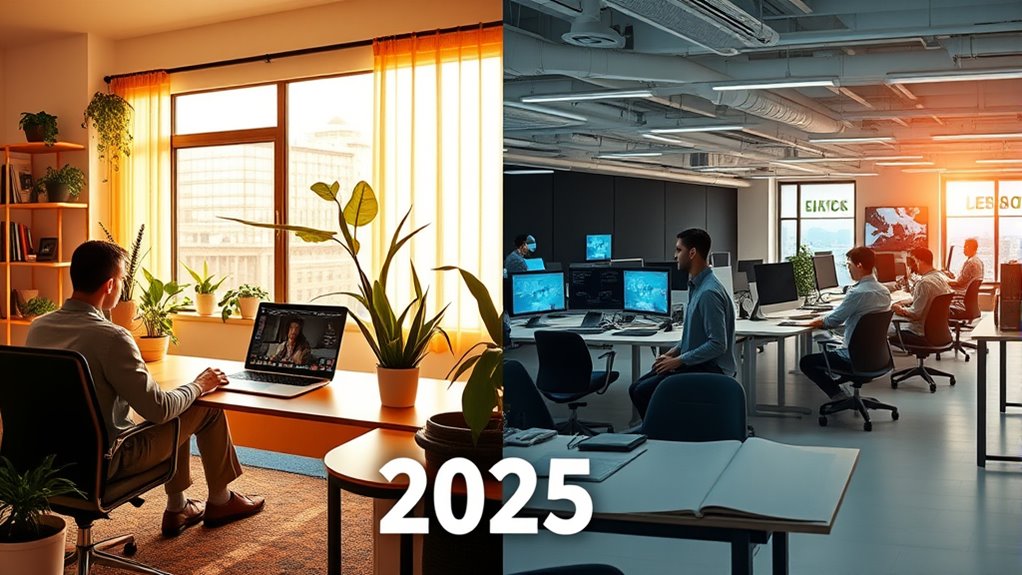

By 2025, your work culture has shifted to a flexible, tech-driven environment. Remote and hybrid setups rely heavily on digital collaboration tools like Slack, Teams, and advanced projectors that boost engagement. You now experience a stronger focus on work-life balance, setting personal boundaries and embracing flexible schedules. While remote work offers autonomy, maintaining team cohesion requires intentional virtual activities. Understanding these evolving dynamics can help you adapt better to the future of work.

Get the latest gadgets delivered free — and shop member deals
- Fast, free delivery on millions of items
- Access to Prime Big Deal Days deals on October 6–7
- Prime Video, Amazon Music and more included
Key Takeaways
- Work culture has shifted towards greater flexibility, emphasizing remote work options and personalized schedules.
- Digital collaboration tools have become essential for maintaining team cohesion and transparency remotely.
- Virtual meetings with advanced projector technology have enhanced remote engagement and presentation quality.
- Emphasis on work-life balance has increased, supporting mental health and personal boundaries across organizations.
- Trust and autonomy are prioritized over micromanagement, fostering a more inclusive and adaptable work environment.
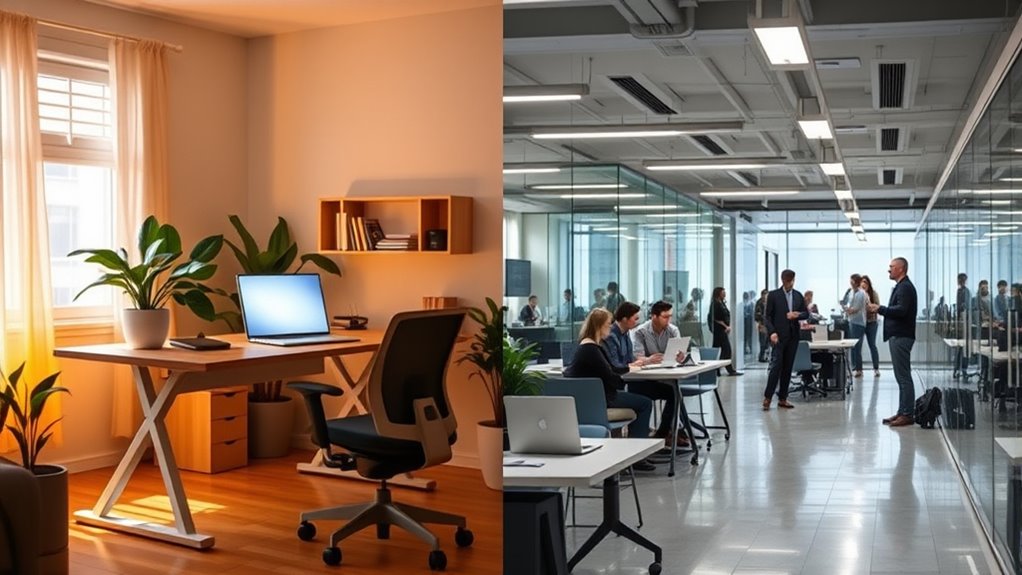
As we approach 2025, the landscape of work is undergoing a significant transformation, driven by technological advancements and shifting employee expectations. You now find yourself steering a hybrid environment where digital collaboration tools are essential. These tools make it easier to connect with colleagues regardless of location, fostering seamless teamwork and reducing the barriers traditionally associated with remote work. With platforms like Slack, Microsoft Teams, and Zoom, collaboration feels more immediate and dynamic, enabling you to participate in discussions, share files, and brainstorm ideas in real time. This shift not only keeps projects on track but also promotes a culture of transparency and inclusivity.
Digital tools like Slack, Teams, and Zoom enhance remote collaboration and foster transparency in the evolving hybrid work environment.
At the same time, the focus on work-life balance has never been more prominent. You’re encouraged to set boundaries that suit your personal life while still meeting professional goals. Remote work offers the flexibility to start your day earlier or finish later, depending on your needs, which helps you manage family responsibilities, hobbies, or self-care more effectively. Companies recognize that supporting your work-life balance boosts productivity and job satisfaction, so many now offer flexible schedules, wellness programs, and mental health resources. This evolution in work culture means you’re less tethered to a traditional 9-to-5 routine and more empowered to craft a schedule that aligns with your lifestyle.
However, this shift isn’t without its challenges. You might sometimes feel isolated or struggle to maintain a sense of team cohesion without face-to-face interaction. That’s where digital collaboration becomes vital—not just for getting work done but for fostering a sense of belonging. Regular virtual check-ins, online social events, and collaborative platforms help bridge the gap, making you feel connected even when you’re physically apart. The evolving work culture by 2025 emphasizes trust and accountability over micromanagement, giving you more autonomy while still ensuring your contributions matter. Additionally, advancements in projector technology like high refresh rates and low input lag are transforming how remote teams present ideas and conduct virtual meetings, enhancing overall engagement.
This new balance between remote and office work is shaping a more adaptable workplace. You’re no longer confined to a single location or rigid schedule; instead, you have the tools and support to thrive in a flexible environment. As the lines between work and personal life continue to blur, the emphasis on digital collaboration and work-life balance will determine how successfully you and your organization steer this ongoing change. In this evolving landscape, your ability to adapt and leverage these new norms will be key to your success and well-being.
advanced digital projectors for remote meetings
As an affiliate, we earn on qualifying purchases.
As an affiliate, we earn on qualifying purchases.
Frequently Asked Questions
How Have Hybrid Work Models Impacted Employee Productivity?
Hybrid work models boost your productivity by blending the best of both worlds. You can leverage digital collaboration tools to stay connected and streamline teamwork, no matter where you’re working. This flexibility also enhances your engagement, making you more motivated and focused. As a result, you’re able to accomplish tasks more efficiently, balancing work and personal life while contributing effectively to your organization’s goals.
What Technology Innovations Have Shaped Remote Work by 2025?
You’re living in a world where virtual collaboration tools seem to connect you instantly across continents, making distance vanish. Cloud computing revolutionized remote work by offering limitless storage and seamless access to files, so you can work from anywhere. These innovations make remote work feel as natural as sitting at your desk, boosting efficiency and creativity. You’ve become part of a truly global, tech-powered workforce that’s unstoppable.
How Has Work-Life Balance Evolved in Office Versus Remote Settings?
You now enjoy better work-life balance with flexible schedules, allowing you to tailor your day around personal needs. In remote settings, you can set clearer work life boundaries, reducing burnout. Meanwhile, office environments encourage routine but can blur boundaries with constant connectivity. Overall, remote work fosters a healthier balance, giving you control over your time, while office work offers structure that helps separate work from personal life.
What Are the Long-Term Health Effects of Remote Work?
They say “you are what you repeatedly do,” so consider the long-term health effects of remote work. You might face ergonomic challenges without proper setup, risking posture issues and musculoskeletal problems. Social isolation can also lead to mental health struggles like loneliness or anxiety. To stay healthy, prioritize ergonomics, stay socially connected, and take regular breaks. Long-term, these habits can protect your physical and mental well-being in a remote work environment.
How Do Company Cultures Differ Between Remote and Traditional Offices?
You’ll notice that company cultures differ markedly between remote and traditional offices. In remote settings, virtual collaboration becomes essential, fostering a more flexible and inclusive environment. Conversely, in traditional offices, an established office hierarchy often dominates, shaping interactions and decision-making. Remote cultures tend to emphasize autonomy and trust, while office cultures may prioritize hierarchy and face-to-face communication, influencing how employees connect and grow within the organization.
As an affiliate, we earn on qualifying purchases.
Conclusion
By 2025, work culture has transformed into a winding river, flowing seamlessly between remote and office shores. You’ve navigated a landscape where flexibility is your compass, and collaboration is the steady current guiding you forward. As boundaries blur and new horizons emerge, remember that your adaptability is the vessel steering through this evolving tide. Embrace the rhythm, find your flow, and let this blended journey be the melody that propels your success.
high refresh rate virtual meeting projector
As an affiliate, we earn on qualifying purchases.
As an affiliate, we earn on qualifying purchases.
As an affiliate, we earn on qualifying purchases.
Fall Picks
fall essentials
As an affiliate, we earn on qualifying purchases.