TL;DR

Get the latest gadgets delivered free with Prime
- Fast, free delivery on millions of items
- Prime Video, Amazon Music and more included
- Member-only deals all year
Canadian software engineer and YouTuber Anthony Sistilli says two Peel Regional Police officers came to his home to ask about his purpose for collecting data with a homemade automatic license plate recognition camera aimed at police vehicles. The reported visit raises questions about the boundaries of public surveillance, but the police department had not responded to Gizmodo’s request for comment in its report.
Canadian YouTuber Anthony Sistilli says two officers from Peel Regional Police came to his home and asked about his intentions after he built an automatic license plate recognition camera to track police vehicles. The visit, described by Sistilli in a YouTube video, puts a public-surveillance technology used by police at the center of a dispute over citizens recording police activity; the department had not responded to Gizmodo’s request for comment.
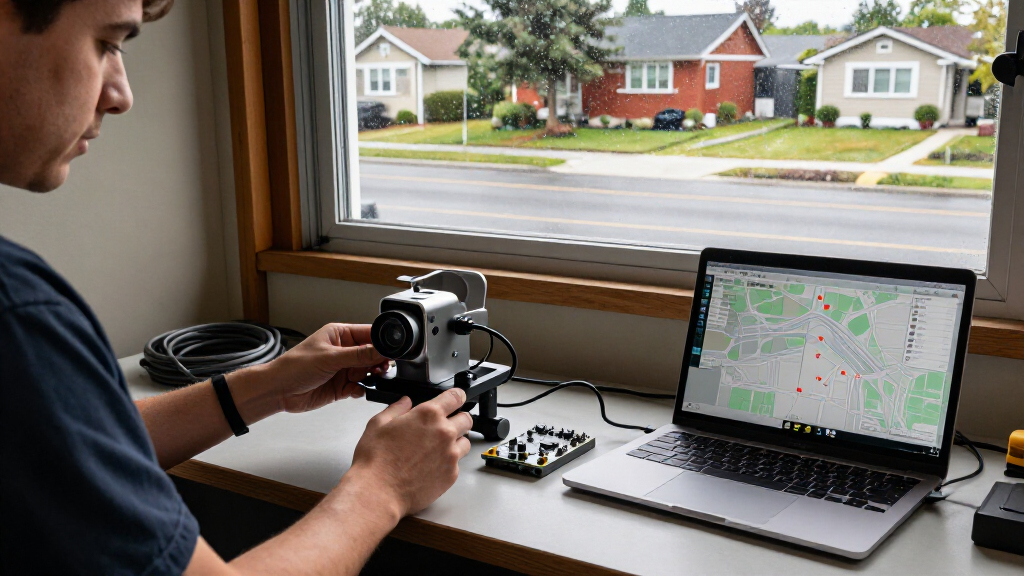
Sistilli, a software engineer in Brampton, Ontario, built his own ALPR camera about a month before the report and set it up to record the movement of police cars. He described the project in TikTok videos as “a personal Flock surveillance camera to Flock the Flockers,” referring to the camera network company whose technology has become prominent in debates about license-plate surveillance.
In a YouTube video published earlier this week, Sistilli said two officers came to his door and asked what he planned to do with the data. Gizmodo reported the visit based on Sistilli’s account. The available report does not provide an independent account from the officers or a police explanation of why they visited.
Sistilli said one officer described the risks of such information for police, including the possibility that someone could learn where officers live, when they start work and what they do during the day. That description is Sistilli’s account of the conversation; no direct statement from the officers was included in the report.
A Surveillance Debate Aimed at Police
The episode highlights a tension in the use of automated license plate recognition: cameras can capture vehicle movements in public, but the implications of collecting and retaining those records depend on who is gathering them and how the data may be used. Sistilli’s project applies a method associated with police and commercial camera networks to police vehicles themselves.
The officers’ reported concerns, as recounted by Sistilli, also point to the potential sensitivity of location records. Data that could reveal work schedules and travel patterns may raise safety concerns if linked to identifiable people. The report does not establish that Sistilli’s system identified officers’ home addresses or that anyone used the collected information to target them.
For readers, the central issue is not whether a homemade camera is equivalent in scale to a municipal network. It is that surveillance practices can look different when the people being recorded are police, while questions about data access, retention and safeguards apply to both public agencies and private individuals.
automatic license plate recognition camera
As an affiliate, we earn on qualifying purchases.
As an affiliate, we earn on qualifying purchases.
Brampton’s Camera Spending
The report places Sistilli’s project in Brampton, where the city recently spent C$2 million on high-resolution cameras and automated license plate recognition technology. That municipal purchase offers local context for the project, but the source material does not establish that Sistilli’s camera was connected to the city’s system or that his visit was prompted by the city’s spending.
ALPR cameras record vehicle license plates and can associate them with information such as time and location. Flock Safety has become a prominent provider of this kind of technology, which has also drawn scrutiny over how camera data is collected, retained and shared. The report cites concerns about misuse, but provides no case-specific evidence that the system in Brampton was misused or that such misuse prompted the officers’ visit.
Sistilli’s YouTube video expands on questions about how ALPR products are marketed, whether they reduce crime and how transparent operators are about data practices. Those are subjects of his commentary; the report does not independently resolve them.
“A personal Flock surveillance camera to Flock the Flockers.”
— Anthony Sistilli, in TikTok videos describing his camera
As an affiliate, we earn on qualifying purchases.
Police Account and Data Use
Peel Regional Police had not responded to Gizmodo’s request for comment at the time of its report. The department’s reason for sending officers, what was said during the visit and whether any formal inquiry or action followed are not established in the available source material.
It is also unclear what information Sistilli’s camera recorded, how long he retained it, whether it captured identifiable drivers beyond police vehicles, or whether the data was shared. The report does not say that police ordered him to stop recording, seized equipment or alleged a legal violation. Those details should not be inferred from the reported visit alone.
As an affiliate, we earn on qualifying purchases.
Awaiting a Police Response
The next relevant development would be a statement from Peel Regional Police addressing the officers’ visit and its purpose. Gizmodo’s report said the department had not immediately replied, and the source material gives no indication of a scheduled response or further police action.
Sistilli’s YouTube video contains his account and discussion of ALPR systems, but it does not settle the questions about the police visit or the handling of his camera’s data. Until additional information is available, the incident remains based chiefly on Sistilli’s public account, with key details about the officers’ perspective and any follow-up unresolved.
DIY police vehicle tracking camera
As an affiliate, we earn on qualifying purchases.
As an affiliate, we earn on qualifying purchases.
Key Questions
Who is Anthony Sistilli?
Anthony Sistilli is a software engineer and YouTuber based in Brampton, Ontario, according to the report.
What did Sistilli build?
He says he built an automatic license plate recognition camera and set it up to record the movement of police vehicles.
Why did police visit him?
Sistilli said two Peel Regional Police officers asked about his intentions for the data. The department had not provided its own account in Gizmodo’s report, so its reason for the visit remains unconfirmed.
Did police tell him to stop recording?
The source report does not say that officers ordered Sistilli to stop, seized his equipment or accused him of breaking the law.
What remains unknown about the camera data?
The report does not specify what was recorded, how long it was retained, whether it captured other drivers, or whether the information was shared.
Source: fediverse
Evergreen bestsellers Picks
bestsellers
As an affiliate, we earn on qualifying purchases.