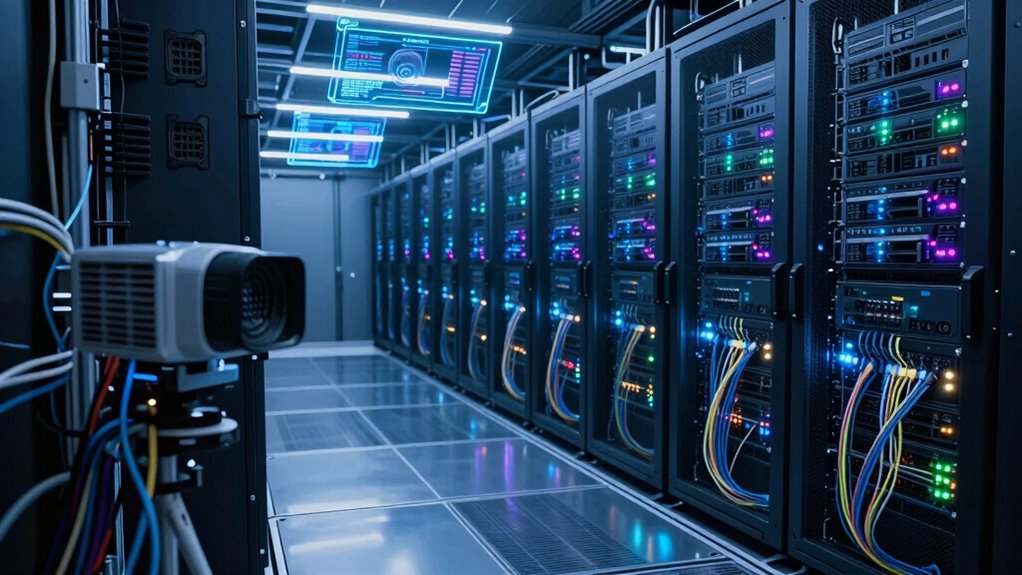

AI accelerators are becoming essential infrastructure because they enable faster, more efficient machine learning, driving innovation across industries. They help you support advanced tasks like natural language processing and image recognition at scale, while also enhancing security through technologies like hardware-based encryption. As they evolve, these accelerators give you a competitive edge by fostering scalable, secure AI solutions that adapt to emerging tech like quantum computing. Keep exploring to discover how this shift could impact your organization’s future.
Key Takeaways
- They enable faster, more efficient machine learning, driving innovation across industries at scale.
- Integration with quantum computing exponentially enhances computational capabilities for complex tasks.
- Robust security features protect sensitive data and ensure compliance with evolving privacy regulations.
- They serve as strategic assets, supporting rapid deployment, security, and future-proofing AI initiatives.
- AI accelerators help organizations maintain technological leadership amidst advancements in quantum tech and data privacy.
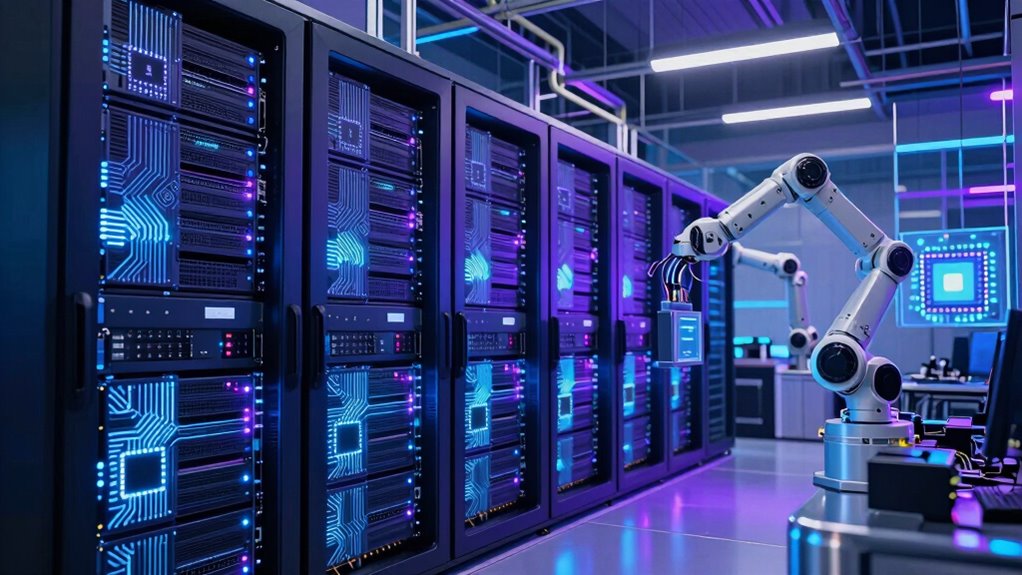
AI accelerators have become essential components of modern technological infrastructure, enabling faster and more efficient machine learning computations. As you harness their power, you realize how crucial they are in driving innovation across industries. These specialized hardware units turbocharge AI workloads, making complex tasks like natural language processing and image recognition more feasible at scale. But beyond boosting performance, AI accelerators are shaping strategic priorities, especially around emerging technologies like quantum computing and data privacy.
AI accelerators are vital for boosting performance and driving strategic innovation in machine learning and emerging technologies.
Quantum computing, although still in its early stages, promises to revolutionize the way you process information. When combined with AI accelerators, quantum computing could exponentially increase your computational capabilities, enabling you to solve problems currently out of reach. This synergy could unlock breakthroughs in cryptography, optimization, and simulation—areas vital for secure data handling and advanced AI applications. As you invest in AI infrastructure, integrating quantum computing components becomes a strategic move, positioning you ahead of competitors in fields requiring immense computational power. Additionally, the integration of hardware-based encryption can further strengthen security measures, making AI accelerators more resilient against emerging threats. Staying informed about hardware innovation is essential to maintaining a competitive edge in this rapidly evolving landscape.
Data privacy also stands as a key concern in deploying AI accelerators. With AI systems processing vast amounts of sensitive data, safeguarding that information becomes paramount. You need to ensure that accelerators are designed with robust security features, like hardware-based encryption and secure enclaves, to protect user privacy. As data privacy regulations tighten worldwide, your ability to deploy AI responsibly influences your reputation and compliance standing. AI accelerators, when optimized for privacy-preserving techniques such as federated learning, allow you to train models across decentralized data sources without exposing individual data points. This strategic approach not only enhances privacy but also maintains data integrity, which is essential for gaining user trust.
Furthermore, AI accelerators have become strategic because they enable faster innovation cycles. You can iterate on models more quickly, deploying solutions that respond swiftly to market demands. This agility is crucial in an environment where data privacy concerns and quantum computing advancements evolve rapidly. Investing in these accelerators also supports the integration of emerging hardware technologies, which can further enhance capabilities and future-proof your AI systems. As the demand for specialized hardware units continues to grow, staying ahead in hardware innovation will be vital for maintaining a competitive edge. Incorporating security enhancements like tamper-proof hardware components can help defend against physical attacks on AI infrastructure. By investing in these accelerators, you’re not just improving current systems—you’re building a foundation for future-proof infrastructure. This infrastructure supports secure, privacy-conscious AI applications and positions you to leverage quantum innovations as they mature.
In essence, AI accelerators are no longer just performance enhancers; they are strategic assets. They help you navigate the complex landscape of quantum computing advancements and data privacy requirements, ensuring your AI initiatives remain secure, scalable, and competitive. As you continue to develop and deploy AI, recognizing their strategic value will be key to staying at the forefront of technological progress.

AI Hardware, Software, and Architectures Powering Modern Artificial Intelligence: From GPUs and ASICs to CUDA, Accelerators, Compilers and Runtimes
As an affiliate, we earn on qualifying purchases.
As an affiliate, we earn on qualifying purchases.
Frequently Asked Questions
How Do AI Accelerators Impact Data Privacy Concerns?
AI accelerators can both improve and challenge data privacy. They enable faster data processing, but you must prioritize data security and user privacy. By implementing strong encryption and access controls, you safeguard sensitive information during AI computations. However, if mismanaged, these accelerators might increase risks of data leaks or misuse. Staying vigilant and adopting privacy-preserving techniques ensures you maintain trust and secure user data effectively.
What Are the Environmental Costs of AI Accelerator Production?
You should know that the environmental costs of AI accelerator production are significant. Their environmental footprint stems from high resource consumption during manufacturing, including rare metals and energy-intensive processes. This results in increased greenhouse gas emissions and resource depletion. As you support AI advancements, it is crucial to take into account these environmental impacts and advocate for sustainable practices, like recycling metals and reducing energy use, to minimize the ecological footprint of AI accelerator development.
How Can Small Companies Access Advanced AI Accelerators?
You can access advanced AI accelerators through affordable options like cloud-based services offered by providers such as AWS, Google Cloud, or Azure. These platforms often provide pay-as-you-go models, making high-end resources more accessible. Additionally, seek out partnership opportunities with larger tech firms or research institutions, which can offer shared access, collaborative projects, or grants, helping small companies leverage cutting-edge AI hardware without hefty investments.
What Legal Regulations Govern AI Accelerator Deployment?
You need to understand that deploying AI accelerators is governed by regulations around intellectual property and regulatory compliance. You must guarantee your use respects existing patents and licenses, avoiding infringement. Additionally, you’re responsible for meeting data protection laws and industry standards, especially when handling sensitive information. Staying updated on evolving policies helps you prevent legal issues, enabling smooth deployment and operation of AI accelerators within legal boundaries.
How Do AI Accelerators Influence Global Technological Competitiveness?
AI accelerators boost your country’s technological competitiveness by enhancing innovation ecosystems and strengthening technological sovereignty. When you leverage advanced accelerators, you accelerate the development of cutting-edge AI applications, attracting investments, talent, and partnerships. This not only sustains your nation’s leadership in AI but also guarantees you remain resilient against global competitors. Fundamentally, AI accelerators serve as a strategic tool to solidify your place at the forefront of global technological advancements.

Demystifying Internet of Things Security: Successful IoT Device/Edge and Platform Security Deployment
As an affiliate, we earn on qualifying purchases.
As an affiliate, we earn on qualifying purchases.
Conclusion
You stand at the crossroads where AI accelerators are the keystones, shaping the future’s bridge. They’re not just hardware but the heartbeat of innovation, fueling the engine of progress. As you embrace this infrastructure, you’re planting seeds in fertile ground, watching ideas sprout into transformative realities. These accelerators symbolize the dawn of a new era—where your actions ripple outward, forging pathways that redefine what’s possible and illuminating the way forward in the evolving landscape of technology.
quantum computing compatible AI hardware
As an affiliate, we earn on qualifying purchases.
As an affiliate, we earn on qualifying purchases.

AI Networked Firearm Safety Protocol Frameworks: 2025 (Civil Blue Force Advanced Technology)
As an affiliate, we earn on qualifying purchases.
As an affiliate, we earn on qualifying purchases.