
TL;DR

Get the latest gadgets delivered free with Prime
- Fast, free delivery on millions of items
- Prime Video, Amazon Music and more included
- Member-only deals all year
AMD has confirmed that FSR 4.1 upscaling will be officially available for Radeon RX 7000-series (RDNA 3) cards in July and for RX 6000-series (RDNA 2) cards in early 2027. This marks the end of community-led unofficial support for older GPUs. The update promises improved visual quality and performance benefits.
AMD has officially confirmed that FSR 4.1 upscaling will be made available for Radeon RX 7000-series (RDNA 3) graphics cards in July 2024 and for RX 6000-series (RDNA 2) cards in early 2027, ending years of community-driven unofficial support for older Radeon GPUs. This development is significant for gamers seeking improved upscaling performance across a broader range of AMD graphics cards.
AMD Vice President Jack Huynh announced that FSR 4.1 support will be coming to RDNA 3-based Radeon RX 7000-series cards in July 2024, with support for RDNA 2-based RX 6000-series cards scheduled for early 2027. Prior to this, community members had used leaked source code to enable unofficial FSR 4 support on older GPUs, sparking ongoing demand for official integration.
The official FSR 4.1 update promises notable improvements over the original FSR 4.0, including less blurring and smearing, better detail retention on fine lines and distant objects, and reduced shimmer on edges. Community testing indicates that the new version incurs a performance penalty of approximately 10-20% on 6000-series cards when using INT8 mode, but offers better quality-to-speed ratios, especially on newer hardware.
Why It Matters
This announcement is important because it broadens access to AMD’s latest upscaling technology, which enhances visual fidelity in games without significant performance loss. It also addresses longstanding community demands for official support on older GPUs, potentially extending the lifespan and relevance of RX 6000-series cards. The improvements in image quality and stability could influence gamers’ upgrade decisions and game development considerations.
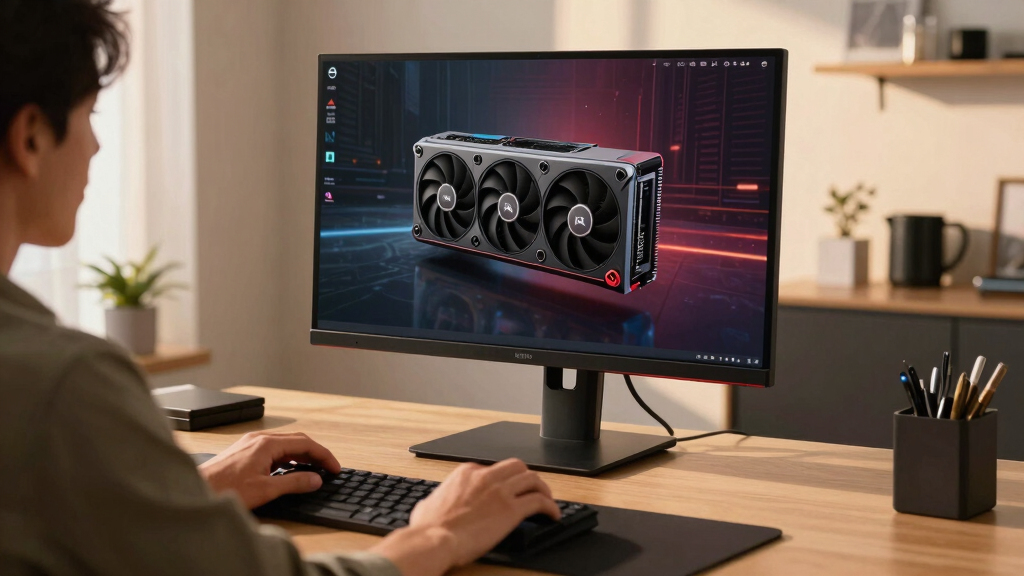
AMD Radeon RX 7000 series graphics card
As an affiliate, we earn on qualifying purchases.
As an affiliate, we earn on qualifying purchases.
Background
AMD introduced FSR 4 as a high-quality upscaling solution initially restricted to RDNA 4 hardware, with early community efforts enabling unofficial support for older GPUs via leaked source code in August 2025. The company’s official support for FSR 4.1 on RDNA 3 cards was announced in July 2024, with plans to extend support to RDNA 2 cards in 2027. The community has tested early versions of FSR 4, noting performance penalties but also significant quality improvements, which now will be officially supported.
“We are excited to bring FSR 4.1 support to our RDNA 3 and RDNA 2 graphics cards, providing gamers with improved visuals and performance.”
— AMD VP Jack Huynh
As an affiliate, we earn on qualifying purchases.
What Remains Unclear
Details about the exact performance impact of FSR 4.1 on different titles and settings remain uncertain, as community testing is ongoing and official benchmarks have not yet been released. It is also unclear whether future updates will further optimize performance or quality on older hardware.
gaming monitor compatible with AMD FSR 4.1
As an affiliate, we earn on qualifying purchases.
As an affiliate, we earn on qualifying purchases.
What’s Next
Next steps include AMD releasing FSR 4.1 support for RDNA 3 cards in July 2024, with subsequent support for RDNA 2 cards in early 2027. Developers and gamers will be able to test the official implementation, and AMD may release further updates to improve performance and compatibility based on feedback.
best gaming GPU for FSR 4.1 support
As an affiliate, we earn on qualifying purchases.
As an affiliate, we earn on qualifying purchases.
Key Questions
When will AMD officially support FSR 4.1 on RX 6000-series cards?
Support is scheduled for early 2027, according to AMD’s announcement.
What improvements does FSR 4.1 offer over previous versions?
FSR 4.1 offers less blurring and smearing, better detail retention, reduced shimmer on edges, and improved temporal stability, resulting in higher visual quality.
Will FSR 4.1 cause significant performance drops?
Community testing suggests a penalty of around 10-20% in INT8 mode on 6000-series cards, but the quality-to-performance ratio is improved, especially on newer GPUs.
Can I use FSR 4.1 unofficially on older GPUs now?
Yes, community tools enabled support through leaked source code, but official support will be available only after AMD’s scheduled releases.
Halloween Picks
halloween
As an affiliate, we earn on qualifying purchases.