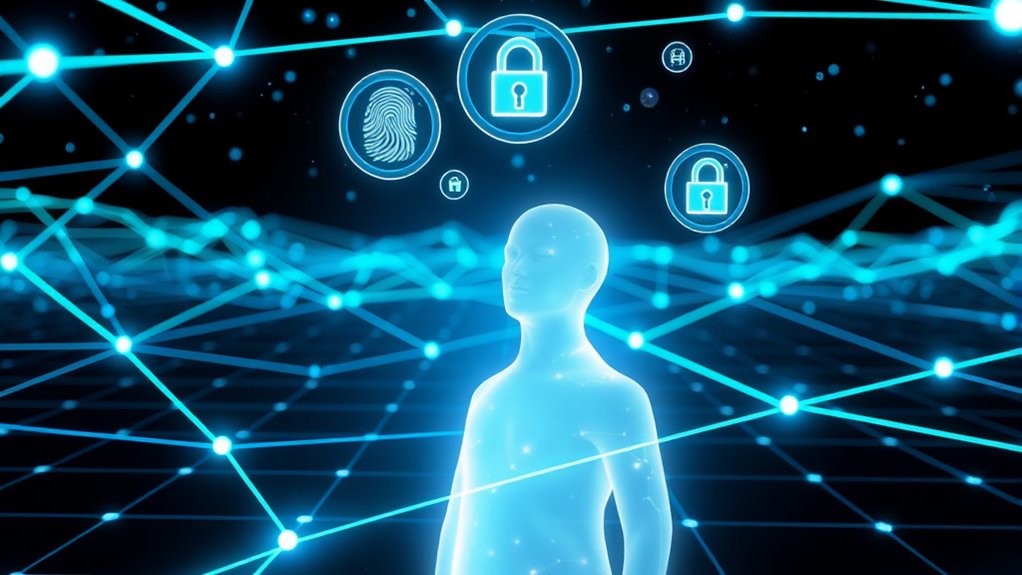

Decentralized IDs are transforming how you control and verify your online identity, making interactions more secure, private, and user-centered. Instead of relying on big tech or government agencies, you’ll store credentials in your digital wallet, giving you full control over what you share. Blockchain technology guarantees the integrity and security of your data, preventing fraud and breaches. As this system evolves, you’ll find it easier to manage your digital footprint and trust online exchanges—there’s more to uncover ahead.
Key Takeaways
- Decentralized IDs empower users to control their personal data, enhancing privacy and security online.
- Blockchain technology ensures tamper-proof credentials, enabling secure and instant verification across sectors.
- Users can selectively share identity information, reducing risks of identity theft and data breaches.
- The system transforms static data into a dynamic, user-managed digital asset, supporting future privacy customization.
- Decentralized IDs promote digital sovereignty, fostering a more trustworthy, private, and secure internet environment.
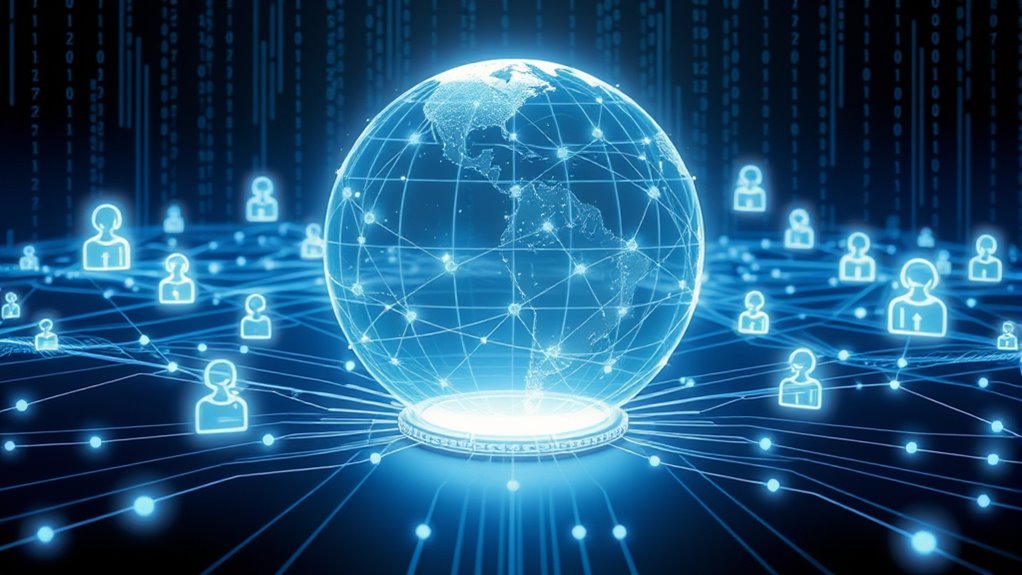
Have you ever wondered how your digital identity could become more secure and private? That curiosity is at the heart of the shift toward decentralized IDs, which aim to give you greater control over your personal information. Unlike traditional IDs stored on centralized servers—vulnerable to breaches and misuse—decentralized IDs put you in the driver’s seat. They leverage blockchain technology and cryptographic principles to guarantee your identity data remains under your control, reinforcing your digital sovereignty. This shift means you no longer have to rely solely on big tech companies or government agencies to verify who you are. Instead, you can manage and share your identity credentials securely and selectively, empowering you to decide what information to disclose and when.
User empowerment is a core benefit of decentralized IDs. Instead of handing over your data to multiple platforms, you hold your credentials in a digital wallet, granting you the ability to present verified information on demand. This reduces the risk of identity theft and fraud because your sensitive data isn’t floating around in multiple databases. You can prove your age, qualifications, or memberships without revealing unnecessary details, preserving your privacy. This control transforms how you interact online, shifting power away from centralized authorities and giving you more say over your digital footprint. You become an active participant in your online identity management rather than a passive data point.
Holding credentials in a digital wallet empowers you to verify information and protect your privacy online
Decentralized IDs also foster a more trustworthy digital ecosystem. With blockchain’s transparent and tamper-proof nature, verifying your credentials becomes faster and more reliable. Instead of waiting days for a background check or identity verification, you can present cryptographically secured credentials that are instantly verifiable. This streamlines processes in various sectors like banking, healthcare, and education, making interactions more efficient and secure. Plus, since your data isn’t stored on a single server, the risk of mass data breaches diminishes markedly. Your identity remains protected, and the control stays firmly in your hands.
Moreover, integrating crochet techniques into digital identity management might seem unconventional, but the principles of customization and flexibility echo how decentralized IDs allow users to tailor their privacy settings and credential sharing preferences. Adopting decentralized IDs means embracing a future where your online identity isn’t just a static, vulnerable piece of data but a dynamic, secure asset you control. It’s about reclaiming your digital sovereignty and making your online interactions more private and trustworthy. As technology advances, expect these systems to become more user-friendly and widespread, giving you even more power over your digital presence. The evolution toward decentralized IDs isn’t just a technical upgrade; it’s a fundamental shift toward a more secure and user-empowered internet.
Frequently Asked Questions
How Secure Are Decentralized IDS Against Cyberattacks?
Decentralized IDs are quite secure against cyberattacks because they use advanced cryptographic protocols that make hacking resistance high. You benefit from increased control over your data, as your identity info isn’t stored in a central database vulnerable to breaches. While no system is completely invulnerable, decentralized IDs markedly reduce risks, providing a safer way to verify your identity online and protect your personal information from cyber threats.
Can Decentralized IDS Be Used Across All Online Platforms?
Decentralized IDs are like versatile keys that can open many doors across online platforms. You can use them for identity verification and streamline platform integration, making your digital life smoother. While not all platforms currently support them, their adaptability is growing. With ongoing development, decentralized IDs promise to become a universal passport, seamlessly connecting you across various online spaces and enhancing your control over personal data.
What Are the Costs Associated With Adopting Decentralized IDS?
You’ll face some cost implications when adopting decentralized IDs, including initial setup, integration, and ongoing maintenance. These costs can vary depending on your platform’s complexity and the technology you choose. You might also encounter adoption challenges, like training staff and ensuring user trust. However, over time, decentralized IDs can reduce costs related to data breaches and streamline identity verification processes, making the investment worthwhile.
How Do Decentralized IDS Impact User Privacy Laws?
Decentralized IDs shake up user privacy laws by putting you in the driver’s seat, ensuring your data stays with you. You get to decide what info to share, making compliance easier while protecting your rights. No more sneaky surveillance or data leaks—just transparent control. Of course, this means staying savvy about legal standards, but overall, your privacy gets a serious upgrade, giving you peace of mind in the digital age.
Are Decentralized IDS Compatible With Existing Digital Infrastructure?
Yes, decentralized IDs are compatible with existing digital infrastructure. They integrate seamlessly through blockchain technology, ensuring secure and transparent credential management. You can benefit from credential portability, allowing you to carry your verified identity data across platforms without hassle. This compatibility means you won’t need a complete system overhaul; instead, you’ll enhance your current setup with more secure, user-controlled digital identities that work alongside traditional systems.
Conclusion
As you consider the future of online identity, decentralized IDs offer a promising way to take control and stay secure. They empower you to own your data and verify yourself without relying on centralized authorities. Isn’t it time you embraced a more private and self-sovereign way of managing your digital life? With decentralized IDs, you’re not just a user—you’re in charge. The question is, are you ready to join the revolution?