

You might think achievement badges motivate learners, but sometimes, a simple coincidence reveals their darker side. When badges become the focus, genuine growth can slip away, replaced by superficial pursuits and unhealthy competition. This shift can lead to burnout, resentment, or even a distorted sense of success. If you’ve ever wondered whether gamification does more harm than good, what’s really happening beneath the surface?
Key Takeaways
- Over-reliance on badges can diminish intrinsic motivation, causing learners to focus on external rewards rather than genuine interest.
- Achievement badges may lose meaning over time, leading to feelings of hollow success and decreased fulfillment.
- Badges can foster unhealthy competition, increasing stress, anxiety, and burnout among peers.
- Emphasis on badge collection can distort perceptions of success, undermining self-esteem and genuine skill development.
- Excessive use of badges risks superficial learning and reduces collaboration, ultimately backfiring in motivating meaningful engagement.
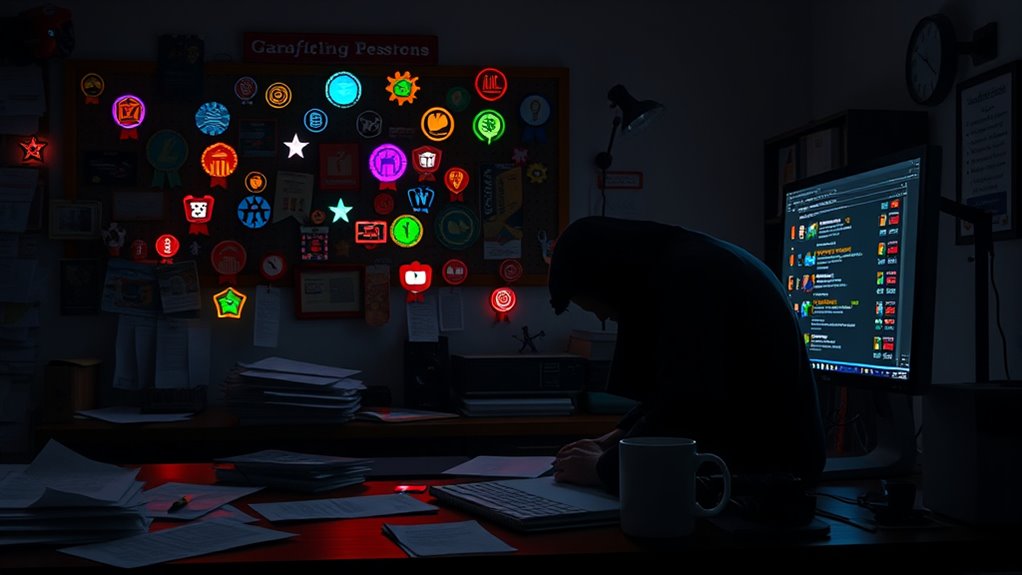
Achievement badges have become a popular way to motivate and recognize success, but beneath their shiny surface lies a darker side. When you rely solely on badges to inspire effort, you might find that motivation begins to decline over time. Instead of fueling genuine interest or passion, these rewards can turn into hollow symbols that lose their meaning once the novelty wears off. As you chase the next badge, the intrinsic reasons for learning or improving may fade into the background, leaving you feeling unfulfilled. This effect isn’t just theoretical; many people report feeling less motivated after receiving multiple badges, as the initial excitement diminishes and the task becomes more about accumulating symbols than meaningful progress.
At the same time, achievement badges can inadvertently foster unhealthy competition. When everyone’s efforts are reduced to earning points or badges, you might start comparing yourself to others more obsessively. This competitive environment often pushes you to focus on beating peers rather than your own growth, which can lead to stress, anxiety, and burnout. Instead of encouraging collaboration or shared learning, badges can create a zero-sum mindset, where success is seen as a limited resource to be hoarded, not a collective journey. You might find yourself feeling resentful or demotivated if you see others earning badges more rapidly or if you feel pressured to keep up. The pressure to outperform others can overshadow the original intent of gamification—making learning or achievement engaging and enjoyable.
Moreover, this unhealthy competition can distort your perception of success. Instead of valuing genuine skill development, you may start valuing the badge itself as proof of worth. When your self-esteem becomes tied to badges, failures or setbacks can feel like personal flaws rather than opportunities for growth. This shift not only hampers your motivation but also encourages shortcuts or superficial efforts just to earn the next badge. Over time, the emphasis on badges can cause you to lose sight of the intrinsic rewards of learning and progress, reducing the experience to a series of checkmarks rather than meaningful achievements. Research on motivation decline indicates that extrinsic rewards can sometimes undermine internal drive, especially when not aligned with personal values.
In the end, while achievement badges can be effective tools for motivation, they come with risks. If you’re not careful, they can lead to motivation decline and unhealthy competition, undermining the very purpose they’re meant to serve. Recognizing these pitfalls allows you to use badges more mindfully—focusing on genuine growth and collaboration rather than superficial rewards.

Hodges Badge Achievement Award Ribbon – 600 Count
6" Pulls 100 Yards – 600 Ribbons
As an affiliate, we earn on qualifying purchases.
As an affiliate, we earn on qualifying purchases.
Conclusion
So, as you chase those badges, remember that their shine can fade fast. You might find yourself more focused on collecting symbols than truly growing. Coincidentally, the more you chase, the less you might enjoy the learning itself. Don’t let badges become a trap that dims your passion or distorts your goals. Ultimately, genuine achievement isn’t about badges — it’s about real growth, which can’t be handed out in a shiny package.

Gamification: Playing For Profits: A Book of Sales Games and Motivational Tools
As an affiliate, we earn on qualifying purchases.
As an affiliate, we earn on qualifying purchases.

Lnngub 2 Pcs Nurse in Progress Badge Reel Nursing Student Badge Reel Student Nurse Badges Reels Cute Nursing ID Card Badges Holder Retractable with Clip for Doctor Medical Assistant
【Student Nurse Badge Reel】Cute funny design badge reel adding a touch of personality to your work attire to…
As an affiliate, we earn on qualifying purchases.
As an affiliate, we earn on qualifying purchases.

Self and Match Educational Consultation The Self and Match System: Systematic Use of Self-Monitoring as a Behavioral Intervention with Digital Forms, 7th Edition
Foreword by Dr. Saul Axelrod
As an affiliate, we earn on qualifying purchases.
As an affiliate, we earn on qualifying purchases.