
TL;DR

Get the latest gadgets delivered free — and shop member deals
- Fast, free delivery on millions of items
- Access to Prime Big Deal Days deals on October 6–7
- Prime Video, Amazon Music and more included
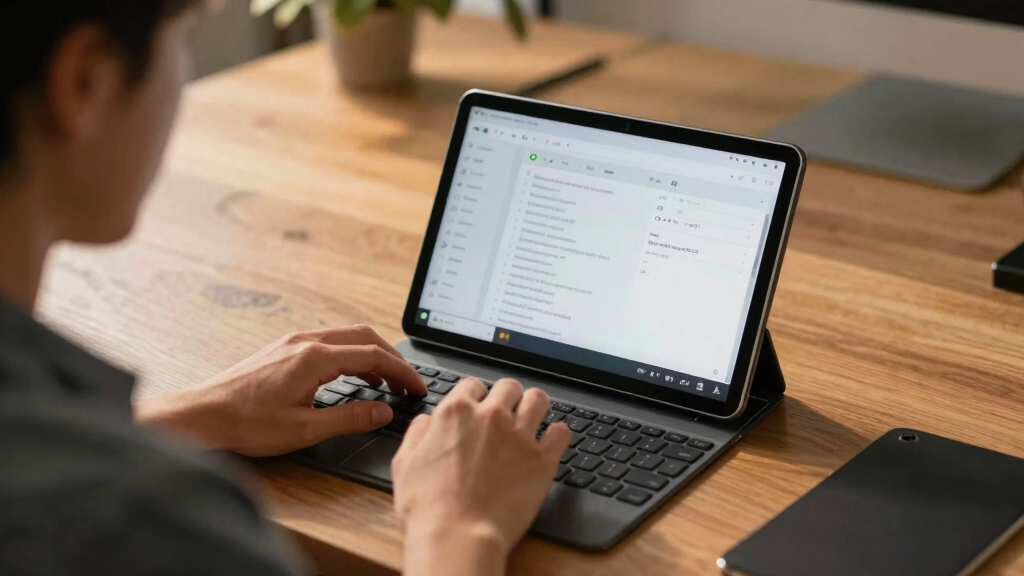
An individual has demonstrated how to run Debian 12 on an $80 Android tablet powered by the RK3562 chip. The process involves booting from an SD card, leaving the internal Android storage untouched. This showcases the device’s potential as a Linux workstation for hobbyists and developers.
A hobbyist has successfully installed and booted Debian 12 on a Doogee U10 Android tablet powered by the Rockchip RK3562 SoC, using a pre-built SD card image. This achievement demonstrates the device’s potential as a Linux workstation for users willing to experiment with open-source software on affordable hardware.
The Debian 12 pre-release image, available from the project’s GitHub repository, allows the tablet to boot Debian directly from an SD card without unlocking the bootloader or modifying internal storage. The process involves writing the image to an SD card, inserting it into the tablet, and powering on, after which the device boots into Debian. Removing the SD card reverts the tablet to its original Android system, preserving the internal storage.
The build was reverse-engineered from scratch, without official vendor support or documentation, relying on open-source Rockchip repositories and community efforts. The resulting Debian environment supports most hardware features, including display, touchscreen, Wi-Fi, Bluetooth, audio, and accelerometer, with partial support for 3D acceleration and cameras. The setup also enables local inference for Rockchip’s NPU using Rockchip’s RKLLM stack, allowing experiments with machine learning models.
Why It Matters
This development is significant for the open-source community and hobbyists, as it demonstrates that affordable Android tablets can be repurposed as Linux workstations without hardware modifications or vendor support. It opens possibilities for low-cost computing, embedded projects, and personal experimentation with Linux on ARM hardware. It also highlights the growing capabilities of Rockchip SoCs and the potential for community-driven firmware projects.
Android tablet SD card bootloader
As an affiliate, we earn on qualifying purchases.
As an affiliate, we earn on qualifying purchases.
Background
The Doogee U10, powered by the RK3562 chip, is an inexpensive Android tablet costing around $80. Prior to this, most Linux support for such devices was limited or required complex modifications. The project builds upon open-source efforts to develop Linux images for Rockchip hardware, similar to previous projects for other Rockchip-based devices. The release follows a trend of hobbyists and developers creating custom Linux distributions for ARM tablets, often with limited official support.
“This is a proof of concept showing that affordable hardware can run full Linux distributions without hardware modifications.”
— Project developer
“Reverse engineering these SoCs is challenging but rewarding, and it enables new possibilities for low-cost Linux devices.”
— Rockchip community contributor
Linux Debian tablet installation kit
As an affiliate, we earn on qualifying purchases.
As an affiliate, we earn on qualifying purchases.
What Remains Unclear
It is not yet clear how stable and fully functional the Debian environment will remain over time, as ongoing updates and hardware support improvements are still in development. Certain features, such as 3D acceleration and camera calibration, are only partially supported. The process currently requires technical expertise, including building and flashing images from source.
As an affiliate, we earn on qualifying purchases.
What’s Next
Next steps include improving hardware support, especially for cameras and 3D acceleration, and creating user-friendly tools for easier installation. The community may also develop pre-built images and documentation to facilitate broader adoption of Linux on similar low-cost ARM tablets. Further testing will determine the long-term stability and usability of the Debian environment on this device.
As an affiliate, we earn on qualifying purchases.
Key Questions
Can I install Debian on my own RK3562 tablet?
Yes, if your device is similar to the Doogee U10 and you have technical experience with flashing images and Linux, you can follow community guides to create a bootable Debian SD card.
Does this process void the tablet’s warranty?
Since the installation is done via SD card without modifying internal storage, it typically does not void the warranty, but this may vary by manufacturer and region. Proceed with caution.
What hardware features are supported under Debian?
Most features such as display, touchscreen, Wi-Fi, Bluetooth, audio, and accelerometer are supported. Partial support exists for 3D acceleration and cameras.
Is this suitable for everyday use?
While promising, the environment is still experimental. Users should expect some limitations and potential stability issues for daily tasks.
Will there be a user-friendly installer in the future?
Community developers may create simplified tools or images, but currently, technical knowledge is required for setup.
Halloween Picks
halloween
As an affiliate, we earn on qualifying purchases.



![Surveillance is not safety: A statement on the UK's latest threat to privacy [pdf]](https://geeksalad.org/wp-content/uploads/2026/06/surveillance-is-not-safety-a-statement-on-the-uk-s-latest-threat-to-privacy-pdf-featured-560x300.jpg)