
TL;DR
Automating lead qualification filters out unfit prospects before they reach your inbox, saving time and boosting conversion. Using structured forms, scoring models, and analytics, you can build a system that qualifies leads 24/7, making your sales process more scalable and predictable.
Imagine waking up to a list of hot leads, already scored and prioritized. No endless email exchanges, no missed opportunities. That’s the power of a smart, automated qualification system. It’s like having a tireless assistant working overnight, sorting the good from the bad, so you focus only on the best prospects. This article will show you how to build that system — one that scales, adapts, and keeps your pipeline full—even if you’re catching some Z’s.
Key Takeaways
- Automate your lead qualification using multi-step forms, scoring models, and routing rules to save hours and increase pipeline quality.
- Use structured frameworks like BANT or MEDDIC to define your criteria and guide scoring decisions.
- Leverage analytics to identify drop-off points and optimize questions, scoring thresholds, and traffic sources.
- Routing based on scores ensures high-potential leads get immediate attention while low-value prospects are nurtured or disqualified.
- Regularly review system performance and adjust your questions, scores, and channels for continuous improvement.

AI Schedule Automation & AI Estimator for Service Providers: Build a Fully Automated Lead Qualification, Pricing, and Booking System
As an affiliate, we earn on qualifying purchases.
As an affiliate, we earn on qualifying purchases.
Why Manual Qualification Is a Time Sink and Loses Deals
Manual qualification eats up hours, especially when leads trickle in after hours. Imagine a busy sales rep reviewing 50 inquiries from a weekend, only to find most are unqualified or low-value. It’s inefficient, inconsistent, and wastes your top talent.
For example, a web design agency spends 20 minutes per lead manually. That adds up to over 17 hours a month—time better spent closing deals. Plus, manual processes can vary wildly, depending on who’s checking inboxes or answering calls, leading to missed patterns or high-quality leads slipping through the cracks.
Research shows that speed and consistency are key. According to Salesforce, responding within five minutes boosts your chances of closing by 9 times. Manual work makes that impossible, especially at scale.
Beyond time wastage, manual qualification introduces inconsistency. Different team members may have varying criteria or interpretations, leading to uneven qualification standards. This inconsistency can cause promising leads to be overlooked or unqualified leads to be unnecessarily pursued. Automating ensures uniformity, which is critical for scaling and predictable growth. However, it’s important to balance automation with periodic human review to catch nuances that algorithms might miss, like a lead’s unique circumstances or industry-specific signals.

LOPASA Single & Double Scoring Wheels Replacement Blade for Maker 4, Maker 3, Scoring Accessories Tool (01 and 02)
[SCORING]: The scoring wheel is used to press out creasing lines on various paper materials to facilitate folding….
As an affiliate, we earn on qualifying purchases.
As an affiliate, we earn on qualifying purchases.
What a Smart, Automated Lead Qualification System Looks Like
At its core, it’s a structured process that asks prospects the right questions, scores their responses, and routes them accordingly—automatically. Think of it as a virtual gatekeeper, filtering leads based on your criteria without breaking a sweat.
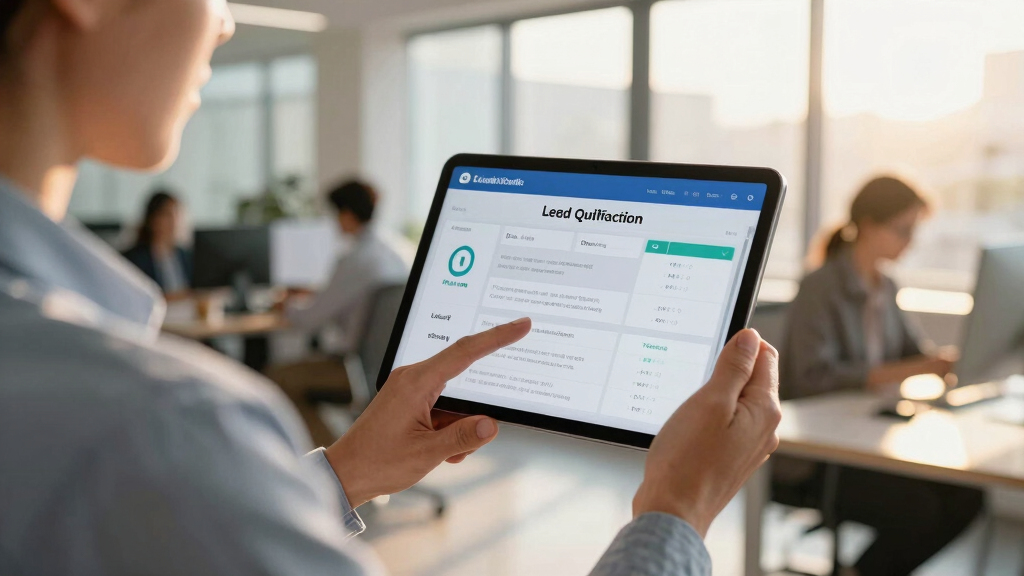
Picture a multi-step form embedded on your website, replacing a simple contact form. It asks about budget, authority, need, and timeline—your version of BANT—then assigns points based on their answers. The system instantly scores each lead and pushes the hot ones straight into your calendar, while nurturing the warm ones.
For example, a SaaS company uses a form that asks about company size, budget, and readiness, then scores each prospect. Those scoring above 80% get scheduled calls automatically. The rest get gentle nurturing emails or self-service options.
This approach matters because it ensures that only the most promising leads are prioritized for immediate follow-up, reducing wasted effort. It also provides a consistent framework that guides your team’s efforts, aligning everyone on what constitutes a qualified lead. The tradeoff is that overly rigid scoring models might exclude unconventional but valuable prospects; hence, ongoing calibration based on real-world results is essential for maintaining accuracy and fairness in qualification.
web form builder for lead capture
As an affiliate, we earn on qualifying purchases.
As an affiliate, we earn on qualifying purchases.
How to Build Your Own Lead Qualification Funnel in 4 Simple Steps
- Design your questions: Focus on criteria that matter—budget, decision power, need urgency, and timeline.
- Create the scoring model: Assign points to answers based on how well they match your ideal customer profile (ICP). For example, a $10K monthly budget might score 10, while under $1K scores zero.
- Implement the funnel: Use tools like Typeform, Jotform, or dedicated CRM forms to set up the multi-step qualification process. Integrate with your CRM or automation platform.
- Set routing rules: Based on scores, automatically route hot leads to your calendar, nurture warm prospects via email, and disqualify the rest with friendly messages.
Take a real-world case: a marketing agency creates a form with questions about budget, goals, and timeline. Leads scoring above 35 get booked immediately; those between 15-34 get nurtured; below 15 get a friendly thank-you and resource links.
Building this system isn’t just about automation; it’s about creating a reliable, repeatable process that aligns with your sales strategy. When done correctly, it reduces manual effort, speeds up response times, and improves lead quality over time. Remember, the key is to continuously monitor and refine your questions, scoring, and routing to adapt to market changes and lead behavior.
CRM lead routing system
As an affiliate, we earn on qualifying purchases.
As an affiliate, we earn on qualifying purchases.
The Power of Lead Scoring — Why It’s Your Best Friend
Lead scoring turns simple answers into a predictive tool. It helps you identify which prospects are most likely to buy. The key? Assign points based on how well responses match your ideal profile and signals like engagement or company growth.
For example, a prospect with a $20K/month budget, a recent website visit, and a direct request to start soon might score 90/100. That’s a hot lead worth prioritizing. Less engaged or low-budget prospects score lower and can be nurtured or disqualified.
Lead scoring’s importance lies in its ability to provide a quantifiable measure of lead quality, which reduces guesswork. It enables your team to focus efforts on the highest potential, increasing efficiency and closing rates. However, if your scoring criteria are too rigid or outdated, you risk missing valuable leads or wasting resources on unlikely prospects. Therefore, it’s vital to regularly review and adjust your scoring model based on real sales outcomes and changing market conditions. This dynamic calibration ensures your scoring remains relevant and effective, balancing automated precision with human judgment.
Routing and Follow-Up: Turning Scores Into Action
Once a lead is scored, the system automatically routes it. Hot prospects get scheduled immediately. Warm ones enter nurturing sequences. Low scores trigger friendly disqualification messages or self-service options.
For example, a B2B software company routes high scorers to a sales rep’s calendar, while low scorers are sent a link to their FAQ page. This keeps your team focused on high-potential deals without wasting time on unqualified leads.
Effective routing isn’t just about automation; it’s about strategic follow-up. High-scoring leads should be prioritized for immediate contact, but it’s equally important to nurture warm leads over time to build trust. Low scores shouldn’t be ignored—they can be nurtured or disqualified thoughtfully, maintaining a positive brand impression. Tracking these interactions provides valuable data, revealing which channels and messages convert best, and allowing you to fine-tune your scoring thresholds and routing logic for optimal results. This creates a feedback loop that continuously enhances your qualification process, making it more precise and efficient over time.
How to Use Data to Constantly Improve Your Qualification System
Automation doesn’t stop at routing. It provides you with analytics on where prospects drop off, which responses correlate with sales, and which sources produce the best leads.
For example, if data shows that most low-scoring leads come from Facebook ads, you can tweak your targeting or messaging. If high scores consistently come from LinkedIn, double down there.
Regularly review your scoring thresholds and questions. Small tweaks can significantly boost your qualification rate and pipeline quality.
Deep analysis of this data reveals patterns and insights that might not be obvious initially. For instance, you might discover certain questions are consistently misunderstood, leading to inaccurate scoring. Or, you might find that leads from specific channels tend to convert better, prompting a strategic shift in your marketing spend. The implications are profound: continuous data-driven refinement ensures your qualification system remains aligned with real-world dynamics, maximizing ROI and sales efficiency. The tradeoff, however, is that constant monitoring requires dedicated effort, but the payoff is a highly tuned pipeline that adapts to changing conditions and improves over time.
Frequently Asked Questions
How do I choose the right scoring criteria for my business?
Start by defining your ideal customer profile (ICP). Focus on key factors like budget, decision authority, need urgency, and behavior signals. Use past data and sales insights to refine your criteria over time.
What tools are best for building an automated qualification funnel?
Popular options include Typeform, HubSpot, Salesforce, and Zapier. These tools integrate well, allowing you to create multi-step forms, scoring rules, and routing workflows without coding.
How often should I review and update my qualification system?
Review analytics monthly or quarterly. Look for drop-off points, low scores, or poor conversions. Adjust questions, scoring thresholds, and traffic sources to keep your pipeline healthy and high-quality.
Can AI really qualify leads while I sleep?
Yes. AI-powered tools analyze engagement, intent signals, and responses in real-time, automatically scoring and routing prospects. This reduces manual effort and ensures no opportunity slips through.
What common pitfalls should I avoid when building a qualification system?
Avoid vague questions, overly complex scoring, or ignoring data. Ensure your team is trained on the system and aligned on criteria. Regularly test and tweak your process for best results.
Conclusion
A smart qualification system that runs while you sleep isn’t just a dream — it’s a necessity in today’s fast-paced market. By automating and scoring your leads, you focus on closing deals, not sorting through tire kickers. Build your system, refine it, and watch your pipeline grow without burning out your team.