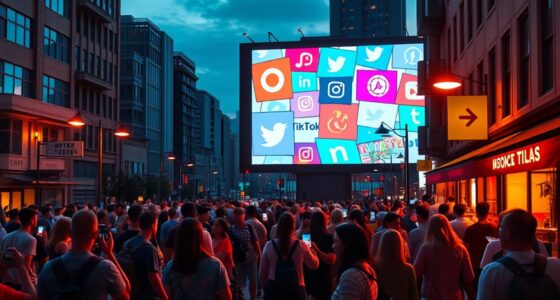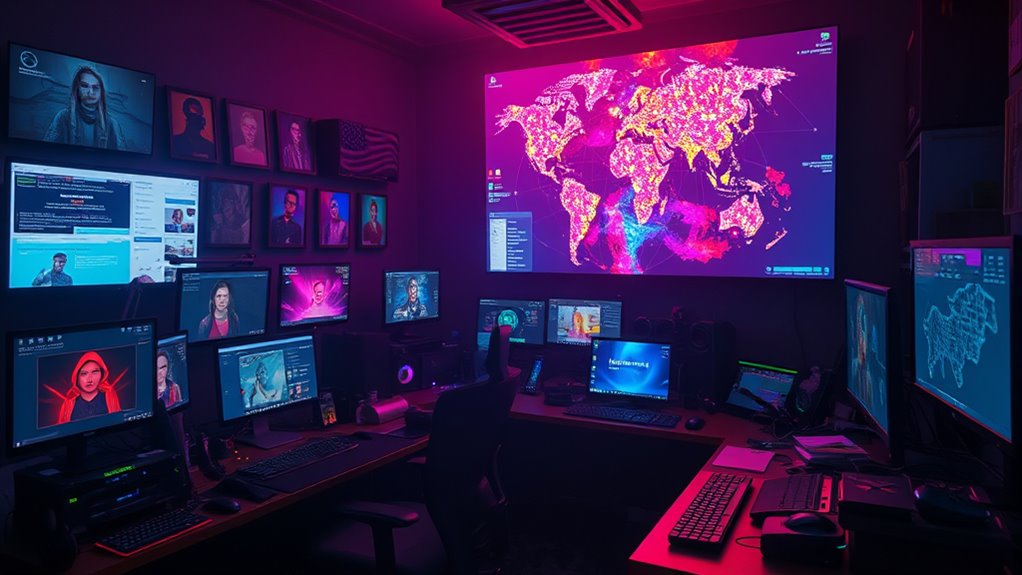
Online subcultures start in forums and gaming communities where you explore digital identities and shared interests. Anonymity allows you to experiment with personas, build trust, and develop unique norms, symbols, and language that set your community apart. As these evolve, AI-generated environments now mimic organic communities, creating immersive spaces for connection and self-expression. If you want to understand how these digital worlds continue to transform, keep exploring how AI shapes the future of online culture.
Key Takeaways
- Online subcultures form through shared interests, digital identities, and community norms, fostering spaces for self-expression and identity exploration.
- Anonymity enables honest communication, persona experimentation, and trust-building within online communities.
- Communities develop unique language, symbols, and norms that distinguish them from mainstream society.
- Virtual identities are curated to align with community standards, evolving over time as members interact and self-express.
- AI-generated communities create immersive environments for connection and exploration, raising questions about authenticity and digital identity.

Have you ever wondered how online subcultures form and thrive within the vast digital landscape? It all starts with your digital identity—the way you present yourself online—and how that identity can evolve based on your interactions and shared interests. When you step into these online communities, you often find a space where your digital identity is fluid, allowing you to explore different facets of yourself without the constraints of the physical world. This freedom is what attracts many people to join niche forums, gaming clans, or social media groups that align with their passions. In these spaces, your digital identity becomes a collective expression, shaped by others who share your enthusiasm or beliefs.
Online anonymity plays a significant role in the development of these subcultures. When you’re anonymous or semi-anonymous, you gain the freedom to speak more openly, experiment with different personas, or even challenge societal norms without fear of real-world repercussions. This sense of anonymity fosters a kind of trust and camaraderie among members, encouraging more authentic and uninhibited exchanges. It’s not uncommon to see communities where users feel safe enough to share controversial opinions, creative works, or personal stories because they’re shielded behind a pseudonym or avatar. This protective layer allows subcultures to flourish, as members can establish unique identities that might be impossible in offline environments.
Anonymous online spaces foster trust, encouraging open sharing and unique identities that thrive beyond real-world limitations.
As these communities grow, they often develop their own norms, language, and symbols—elements that reinforce a shared digital identity and distinguish the subculture from the mainstream. Members become tightly knit through shared experiences and a collective sense of belonging. The online anonymity that initially drew many in becomes a tool for deeper engagement, enabling members to explore ideas or express themselves without the fear of judgment or societal constraints. Over time, these digital identities can become very layered, with individuals curating their online personas to fit the community’s expectations or their personal goals. Additionally, the emergence of virtual identities has further expanded the ways members can craft and present themselves within these communities.
Furthermore, the rise of AI-generated communities adds a new dimension to online subcultures. These artificially created spaces can mimic organic communities, fostering interactions among real users and AI entities alike. While AI can facilitate deeper engagement and create immersive environments, it also raises questions about authenticity and the future of digital identities. Nonetheless, whether driven by humans or AI, these online subcultures showcase how digital identity and online anonymity serve as powerful tools for connection, self-exploration, and community building in the digital age.
Frequently Asked Questions
How Do Online Subcultures Influence Real-World Social Movements?
Online subcultures drive real-world social movements by fueling digital activism and inspiring grassroots mobilization. You can see how they spread awareness, organize protests, and influence public opinion through social media and forums. These communities give individuals a voice, empowering collective action beyond the digital space. As a result, online subcultures often become catalysts for tangible change, shaping policies and societal attitudes in meaningful ways.
What Role Does Anonymity Play in Online Subculture Development?
Anonymity is the secret sauce that ignites online subcultures, allowing you to shed identity anonymity and freely express yourself. It acts like a shield, fostering trust and encouraging open dialogue. This sense of safety strengthens community cohesion, making members feel more connected and willing to share ideas without fear. By removing personal barriers, anonymity helps develop vibrant, resilient online communities where everyone’s voice can thrive.
Are Ai-Generated Communities Sustainable Long-Term?
AI-generated communities can be sustainable long-term if they prioritize algorithm sustainability and foster community resilience. You should focus on designing algorithms that adapt to user needs and minimize biases, ensuring ongoing engagement. Building a resilient community involves encouraging genuine interactions and addressing challenges openly. When these elements are in place, AI communities can thrive, evolve, and maintain relevance, giving you a dynamic space for connection and shared interests over time.
How Do Online Subcultures Impact Mental Health?
You’re riding a fine line when it comes to online subcultures and mental health. They can boost your digital identity and provide validation, making you feel connected and understood. But if you rely too much on online validation, it can lead to anxiety, loneliness, or self-esteem issues. Remember, it’s a double-edged sword—use online communities wisely, and they can be a positive force, not a cause for concern.
What Are the Ethical Considerations of AI in Online Communities?
You should consider that using AI in online communities raises ethical issues like data privacy, where your personal information must be protected. Additionally, algorithm bias can unfairly influence content or interactions, impacting user experiences and perceptions. As a member or creator, you need to advocate for transparent AI practices, ensuring data is handled responsibly and biases are minimized, fostering a safe and fair environment for everyone.
Conclusion
As you explore online subcultures, you might believe they’re just fleeting trends, but history suggests they shape real communities and identities. Some theorists argue these digital spaces evolve into genuine social movements, blurring lines between virtual and physical worlds. So, next time you join a forum or chat with AI-generated peers, remember—these communities aren’t just entertainment; they’re part of a complex, ongoing social transformation shaping how we connect and express ourselves.