
Imagine a world where your concert ticket can’t be forged or stolen, and your access is guaranteed by technology you can trust. Blockchain-based NFT tickets promise just that, offering a secure way to prove ownership and prevent counterfeits. But how effective are they really in ending ticket fraud once and for all? The answer might change how you experience events forever.

Get the latest gadgets delivered free — and shop member deals
- Fast, free delivery on millions of items
- Access to Prime Big Deal Days deals on October 6–7
- Prime Video, Amazon Music and more included
Key Takeaways
- Blockchain’s transparent, immutable ledger prevents ticket forgery and verifies authenticity, reducing counterfeit risks.
- NFT tickets are securely stored on blockchain, making duplication or tampering nearly impossible.
- Smart contracts automate access control, ensuring only genuine ticket holders gain entry.
- Digital provenance records trace ownership history, deterring scalping and counterfeit resale.
- Blockchain enhances overall security and trust, effectively ending counterfeit tickets for good.
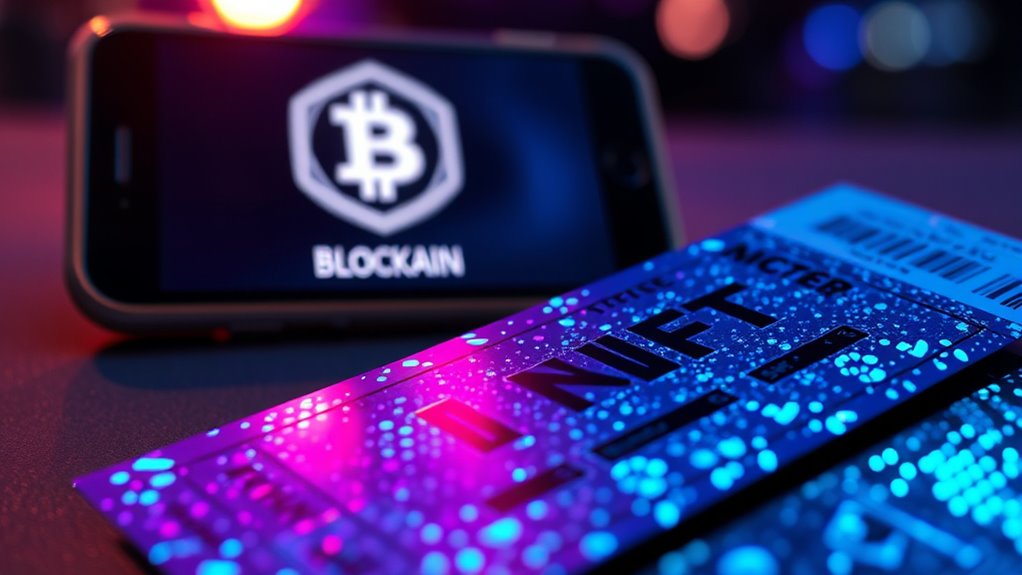
NFT ticketing is transforming the way we buy, sell, and manage event access by leveraging blockchain technology. This innovation introduces a new level of trust and transparency, directly addressing issues like counterfeits and ticket fraud. When you purchase an NFT ticket, you’re acquiring a digital asset stored securely on a blockchain. This provides undeniable proof of authenticity, ensuring that your ticket is genuine and not a counterfeit. Unlike traditional tickets, which can be easily duplicated or forged, NFT tickets utilize digital authenticity to guarantee that what you hold is the real deal. This shift not only enhances your confidence as a ticket buyer but also notably reduces the risk of scams at large events.
Event security gets a major upgrade with NFT ticketing because blockchain’s decentralized nature makes it nearly impossible to tamper with or duplicate tickets. Each NFT ticket is unique, with a transparent transaction history recorded on the blockchain. When you scan your ticket at the event, the system verifies its authenticity instantly, confirming that it hasn’t been previously used or duplicated. This immediate validation minimizes the risk of fake tickets making their way into circulation and helps event organizers better manage attendee lists. Furthermore, smart contracts can automate access control, ensuring only valid ticket holders gain entry, which boosts overall event security and minimizes chaos or gate-crashing.
From your perspective, NFT ticketing simplifies the entire process. You no longer need to worry about lost tickets or last-minute printing issues because your digital ticket is stored securely on your device or your digital wallet. Plus, since NFT tickets are often transferable on verified marketplaces, you can resell or transfer your ticket without fear of losing value or authenticity. This flexibility offers a more streamlined secondary market, reducing black-market sales and counterfeit risks. Additionally, the blockchain records every transaction, creating an immutable trail that benefits both you and event organizers by providing clear provenance and ownership history.
Ultimately, NFT ticketing’s incorporation of digital authenticity and enhanced event security means you enjoy a safer, more transparent experience. It addresses longstanding issues that have plagued traditional ticketing systems—counterfeiting, scalping, and fraud—by harnessing the power of blockchain technology. With this system, you get peace of mind, knowing your ticket is legitimate, and event organizers benefit from greater control and security. As this technology evolves, expect smoother check-ins, fewer scams, and a more trustworthy ticketing ecosystem that puts your security and confidence at the forefront. Blockchain technology plays a crucial role in ensuring the integrity of digital assets and reducing fraud in the ticketing industry.
As an affiliate, we earn on qualifying purchases.
Conclusion
Imagine a world where counterfeit tickets become a thing of the past, and fraud is completely wiped out—thanks to NFT ticketing. Blockchain technology isn’t just changing the game; it’s rewriting the entire rulebook on event access. Say goodbye to scalpers and fake tickets forever. With NFT tickets, you get absolute security, instant verification, and peace of mind like never before. The future of ticketing is here—are you ready to be part of it?
As an affiliate, we earn on qualifying purchases.
digital NFT tickets for concerts
As an affiliate, we earn on qualifying purchases.
As an affiliate, we earn on qualifying purchases.
As an affiliate, we earn on qualifying purchases.
Fall Picks
fall essentials
As an affiliate, we earn on qualifying purchases.