
TL;DR

Get the latest gadgets delivered free — and shop member deals
- Fast, free delivery on millions of items
- Access to Prime Big Deal Days deals on October 6–7
- Prime Video, Amazon Music and more included
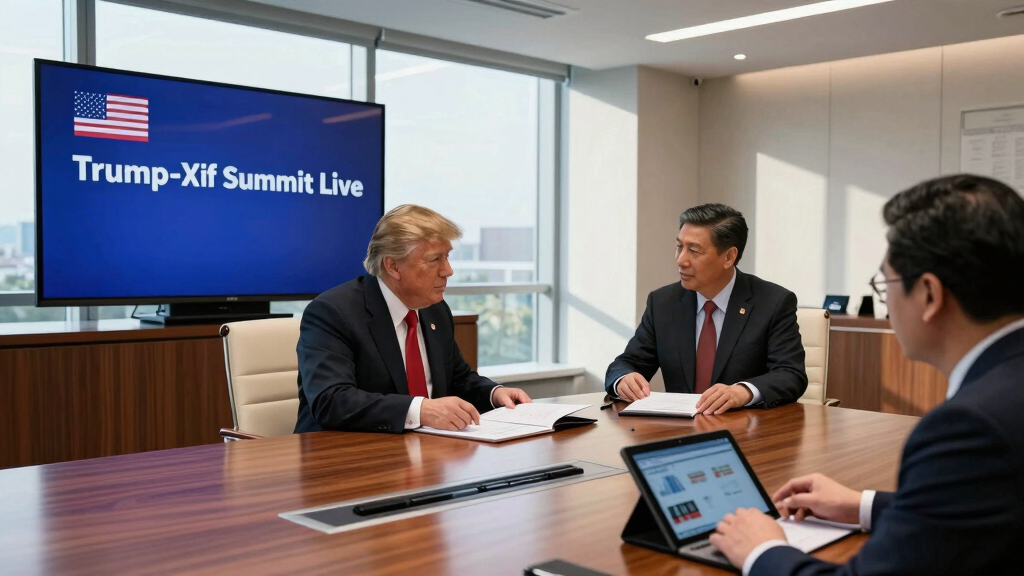
U.S. President Donald Trump has wrapped up his first China visit in nearly nine years, meeting with Xi Jinping to discuss trade, regional security, and AI. The summit produced some agreements, but many details remain unclear.
U.S. President Donald Trump has officially concluded his visit to China after a series of high-level meetings with Chinese President Xi Jinping, marking his first trip to the country in nearly nine years. The trip included formal talks, a state banquet, and various diplomatic engagements, with the U.S. leader departing Beijing on May 15, 2026.
During his stay, Trump and Xi Jinping held multiple meetings at Zhongnanhai, where they discussed a range of issues including trade, regional security, and artificial intelligence. The Chinese foreign ministry announced that the leaders reached “a series of new consensuses” on handling mutual concerns and enhancing communication on international issues. Trump highlighted that he believed “a lot of good” had come from the trip, citing “fantastic trade deals,” though specific agreements have not been publicly disclosed.
Additionally, Trump indicated that a potential order of 200 Boeing aircraft was under consideration, though the impact on market share remains minimal. The leaders also addressed tensions over Taiwan and the Iran conflict, with China calling for the reopening of shipping routes and a ceasefire in the Middle East. Trump’s entourage included prominent U.S. corporate executives, signaling a focus on commercial opportunities.
Why It Matters
This summit is significant as it marks a rare high-level engagement between the U.S. and China, with implications for trade, regional stability, and global diplomacy. The outcome could influence U.S.-China relations, economic agreements, and strategic stability in Asia. The trip also signals ongoing U.S. efforts to balance economic interests with geopolitical concerns amid rising tensions over Taiwan, AI dominance, and regional security issues.
As an affiliate, we earn on qualifying purchases.
Background
Trump’s visit comes amid ongoing tensions over trade tariffs, Taiwan, and the global AI race. Previous administrations have struggled to maintain stable relations, with recent years marked by tariffs and diplomatic friction. This trip aims to reset some of those dynamics, with a focus on commercial deals and strategic dialogue. The summit follows a period of heightened rhetoric and policy shifts, including U.S. export controls on Chinese technology and China’s calls for stability in regional conflicts.
“The leaders have reached a series of new consensuses on properly handling each other’s concerns and strengthening communication on international issues.”
— Chinese Foreign Ministry spokesperson
“I believe a lot of good has come out of this trip, and we have made fantastic trade deals.”
— Donald Trump
“China and the U.S. should build a constructive relationship of strategic stability.”
— Xi Jinping
“We hope for a positive response from China regarding the case of Jimmy Lai, the Hong Kong media figure.”
— Secretary of State Marco Rubio
As an affiliate, we earn on qualifying purchases.
What Remains Unclear
Many details of the trade agreements or concrete deliverables remain unconfirmed. It is unclear whether the potential Boeing order will be finalized or how substantive the “fantastic trade deals” will be. Additionally, the precise content of any agreements on regional security or AI cooperation has not been disclosed. The impact of these discussions on future U.S.-China relations is still uncertain.
U.S.-China trade agreement books
As an affiliate, we earn on qualifying purchases.
As an affiliate, we earn on qualifying purchases.
What’s Next
Trump is scheduled to depart Beijing later on May 15, with next steps including the implementation of any agreed-upon trade or diplomatic measures. Both sides are expected to continue diplomatic engagement through official channels, with upcoming meetings potentially focusing on regional security, trade policies, and technology cooperation. The U.S. and China may also address unresolved issues such as Hong Kong and Taiwan in future dialogues.
regional security strategy books
As an affiliate, we earn on qualifying purchases.
As an affiliate, we earn on qualifying purchases.
Key Questions
What are the main outcomes of Trump’s China visit?
The trip resulted in a series of consensuses on handling mutual concerns and improving communication, with indications of potential trade deals and discussions on regional security and AI. Specific agreements have not been publicly detailed.
Will there be any concrete trade deals signed?
While President Trump mentioned “fantastic trade deals,” no formal agreements have been announced or signed as of now. The potential order of 200 Boeing jets remains unconfirmed.
How might this summit affect U.S.-China relations long-term?
The summit could lay groundwork for improved cooperation or lead to more diplomatic friction, depending on the implementation of agreements and future policy decisions. Its long-term impact remains uncertain.
What issues remain unresolved after the trip?
Key unresolved issues include the specifics of trade agreements, the case of Jimmy Lai, Taiwan tensions, and regional security concerns. Many of these topics are likely to require further negotiation.
Fall Picks
fall essentials
As an affiliate, we earn on qualifying purchases.