

TL;DR

Get the latest gadgets delivered free with Prime
- Fast, free delivery on millions of items
- Prime Video, Amazon Music and more included
- Member-only deals all year
In 2026, nine AI strategies are redefining how businesses operate, from automation to personalized customer engagement. This report details confirmed deployments and emerging trends shaping the future of industry.
Nine AI strategies are currently being adopted across various industries in 2026, fundamentally changing business practices. These strategies, confirmed through industry reports and company disclosures, include automation, advanced data analytics, and personalized customer experiences. This shift impacts competitive dynamics and operational efficiencies worldwide.
Industry leaders and technology analysts confirm that in 2026, companies are increasingly deploying nine specific AI strategies to gain a competitive edge. These include expanding automation in supply chains and customer service, leveraging AI-driven data analytics for decision-making, and implementing personalized marketing at scale. Several firms have publicly announced the integration of these strategies, citing improved efficiency and customer satisfaction.
For example, a recent report from TechInsights highlights that 75% of Fortune 500 companies have adopted at least three of these AI strategies, with many planning further expansion. Companies like Amazon and Microsoft have announced new AI-driven platforms that automate logistics and enhance cloud services. While these deployments are confirmed, details about the full scope and long-term impacts are still emerging, and some claims about market dominance remain preliminary.
The 9 picks
- 1
 Samsung 49” Business Curved Ultrawide Dual QHD Computer Monitor, USB-C, Displ…View on Amazon →
- 2
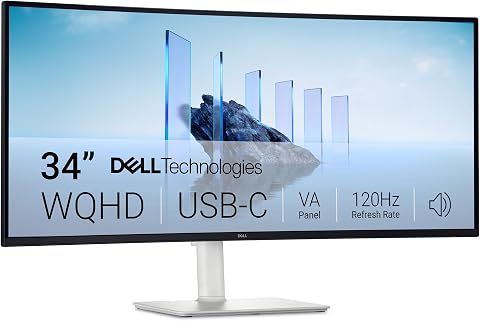 Dell 34 Monitor S3425DW, WQHD VA, 120Hz, FreeSync Premium, Eye Comfort, HDR10…View on Amazon →
- 3
 Kado 2-Pack 34-Inch Curved Ultrawide Gaming Monitors with 1500R Curvature, 16…View on Amazon →
- 4
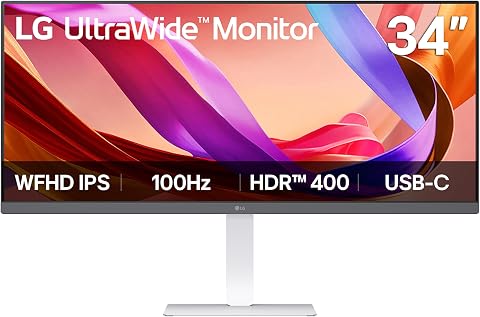 LG 34U530A-W 34-inch UltraWide WFHD IPS Computer Monitor with HDR and Adjusta…View on Amazon →
- 5
 Samsung 34" ViewFinity S50GC Series Ultra-WQHD Monitor, 100Hz, HDR10, AMD Fre…View on Amazon →
- 6
 LG 34U530A-W UltraWide 34-Inch FHD IPS Monitor with USB-C and Speakers BundleView on Amazon →
- 7
 Sceptre 34-Inch Curved Ultrawide WQHD Monitor (3440 x 1440), 180Hz/165Hz, Dis…View on Amazon →
- 8
 ViewSonic VX3276-MHD 32 Inch 1080p IPS Monitor with HDMI and DisplayPortView on Amazon →
- 9
 CRUA 34 Inch 165Hz UWQHD IPS Ultrawide Gaming Monitor with Speakers and PIP/PBPView on Amazon →
Impact of AI Strategies on Business Operations in 2026
This development matters because it indicates a fundamental shift in business operations driven by AI. Companies adopting these strategies report increased efficiency, reduced costs, and enhanced customer engagement, which could reshape market leadership and competitive dynamics. For consumers and employees, these changes may lead to more personalized services and new job roles, respectively. The widespread adoption underscores AI’s role as a core business enabler in 2026.
Evolution of AI in Business Leading Up to 2026
Over the past few years, AI has transitioned from experimental projects to integral components of business infrastructure. Early adopters focused on automation and data analysis, but by 2026, the scope has expanded to include personalized customer experiences and autonomous decision-making. Major tech firms and startups alike have invested heavily in AI development, with industry analysts predicting that these nine strategies are the most impactful in current deployment.
Previous years saw incremental AI integration, but recent breakthroughs in machine learning and natural language processing have accelerated adoption. The COVID-19 pandemic also catalyzed digital transformation, pushing more companies to implement AI strategies rapidly. While some claims about market dominance are still unverified, the trend toward AI-driven business models is well established and growing.
Unconfirmed Aspects of AI Strategy Deployment in 2026
Although many companies have publicly announced AI initiatives, the full scope, effectiveness, and long-term impacts of these nine strategies are still uncertain. Specific results, such as measurable ROI and market share gains, have not been independently verified for all firms. Additionally, some claims about AI-driven market dominance are preliminary and require further validation as more data becomes available.
Future Developments and Monitoring of AI Strategy Adoption
In the coming months, industry analysts will closely monitor the performance and scalability of these AI strategies. Companies are expected to report more detailed results and case studies, clarifying their impact. Regulatory and ethical considerations are also likely to influence further deployment. Researchers and investors will watch for evidence of sustained competitive advantage and innovations stemming from these strategies.
Key Questions
Which AI strategies are most widely adopted in 2026?
The most widely adopted strategies include automation of operations, AI-driven data analytics, and personalized customer engagement, with many firms integrating multiple approaches simultaneously.
Are these AI strategies confirmed to improve business performance?
Many companies report improvements such as increased efficiency and customer satisfaction, but comprehensive, independent evaluations are still ongoing to confirm long-term performance gains.
What industries are leading the AI transformation in 2026?
Technology, retail, manufacturing, and logistics are among the leading industries actively deploying these AI strategies, with finance and healthcare also rapidly adopting new AI-driven solutions.
Are there risks associated with these AI strategies?
Potential risks include data privacy concerns, ethical issues, and over-reliance on automated decision-making, which are subjects of ongoing regulatory and corporate scrutiny.
Source: ThorstenMeyerAI.com
Halloween Picks
halloween
As an affiliate, we earn on qualifying purchases.