
TL;DR

Get the latest gadgets delivered free with Prime
- Fast, free delivery on millions of items
- Prime Video, Amazon Music and more included
- Member-only deals all year
A tech enthusiast has engineered a fully operational RTX 3070 with 16GB VRAM by harvesting parts from defective graphics cards. The mod uses complex reballing and hardware adjustments, showing promising performance in modern games. This development highlights innovative DIY approaches in high-end GPU customization.
A PC enthusiast has successfully created a fully functional NVIDIA GeForce RTX 3070 with 16GB of VRAM by harvesting and reworking parts from defective graphics cards, a process that involves advanced hardware modifications. This achievement demonstrates a high level of technical skill and may impact DIY GPU customization and repair communities.
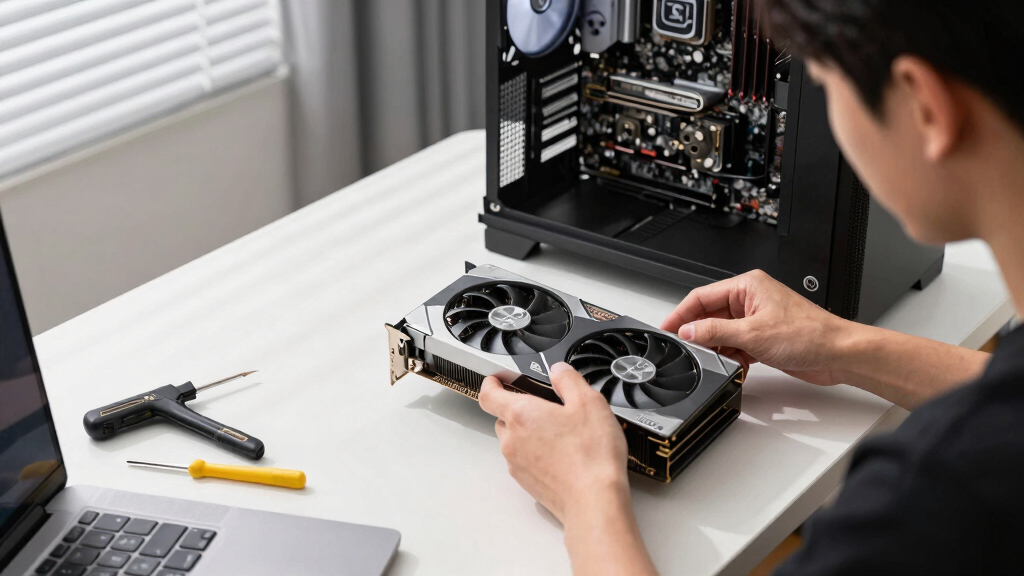
The modder, known as AssassinWarlord, disassembled two non-working graphics cards: an RTX 3070 with defective memory and an AMD Radeon RX 6900 XT with a damaged GPU. They carefully removed the BGA memory chips from both cards, reballing and reattaching them onto the RTX 3070’s PCB. This process, typically reserved for professional hardware repair, was executed with custom tools including a 3D-printed bracket for precise reballing.
After reassembling the hardware, the modder made minor adjustments, including a resistor change and a VRAM configuration switch, to enable the system to recognize 16GB of VRAM. The modified card was tested successfully in Windows environments and modern games, with no need for driver modifications. However, some issues appeared, such as black screens during stress tests, which were traced to memory timing settings in BIOS. Applying a RegEdit tweak to disable dynamic power states stabilized the system at the cost of increased idle power consumption (~70W).
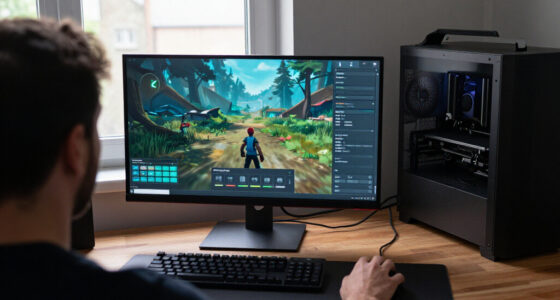
Benchmark tests, including synthetic and real-world gaming scenarios, showed significant performance improvements. In Marvel’s Spider-Man 2 at 4K resolution with Very High settings, frame rates doubled from around 20 fps to over 40 fps when switching from 8GB to 16GB VRAM mode, illustrating the practical benefit of increased VRAM capacity.
Why It Matters
This development is notable because it demonstrates a high-level DIY approach to extending GPU capabilities beyond manufacturer specifications. It could inspire hardware enthusiasts to explore similar modifications, potentially extending the lifespan or performance of existing hardware. For the broader market, it highlights ongoing innovation in hardware repair and customization, though such modifications remain complex and risky for casual users.
As an affiliate, we earn on qualifying purchases.
Background
Previous attempts at modifying GPUs for increased VRAM have been limited and often required custom driver or BIOS modifications. This project stands out because it used physically harvested components from defective cards, avoiding the need for software hacks. The process reflects a growing trend among PC enthusiasts to push hardware beyond standard limits through intricate hardware hacking, especially as GPU shortages and high prices persist.
“The whole process was actually not that difficult, the main challenge was in the reballing and making sure the system recognized the new VRAM.”
— AssassinWarlord
“The mod demonstrates a complex but achievable hardware hack that extends the VRAM capacity of a high-performance GPU using salvaged parts.”
— Tom’s Hardware
As an affiliate, we earn on qualifying purchases.
What Remains Unclear
It remains unclear how durable or stable the modified GPU will be over extended use, and whether such modifications can be reliably replicated outside of experimental settings. Long-term performance, thermal management, and potential warranty issues are still unconfirmed.
As an affiliate, we earn on qualifying purchases.
What’s Next
The creator plans to conduct prolonged stress testing and possibly refine the mod for better stability. Broader community interest may lead to more DIY projects, and hardware manufacturers might explore similar repair or upgrade techniques in official capacities.
As an affiliate, we earn on qualifying purchases.
Key Questions
Can this modification be done on other GPUs?
Potentially, but it requires advanced hardware skills, specialized tools, and a thorough understanding of GPU architecture. Not recommended for casual users.
Will this affect the GPU’s warranty?
Yes, performing such hardware modifications will void any manufacturer warranty and could damage the card if not done correctly.
Is this modification safe for everyday use?
While the initial tests are promising, long-term stability and thermal management are still uncertain, making it risky for continuous use without further testing.
Could this increase in VRAM improve gaming performance?
Yes, especially in VRAM-intensive titles, as demonstrated by the doubling of frame rates in Spider-Man 2 at 4K resolution.
Halloween Picks
halloween
As an affiliate, we earn on qualifying purchases.