
TL;DR

Get the latest gadgets delivered free with Prime
- Fast, free delivery on millions of items
- Prime Video, Amazon Music and more included
- Member-only deals all year
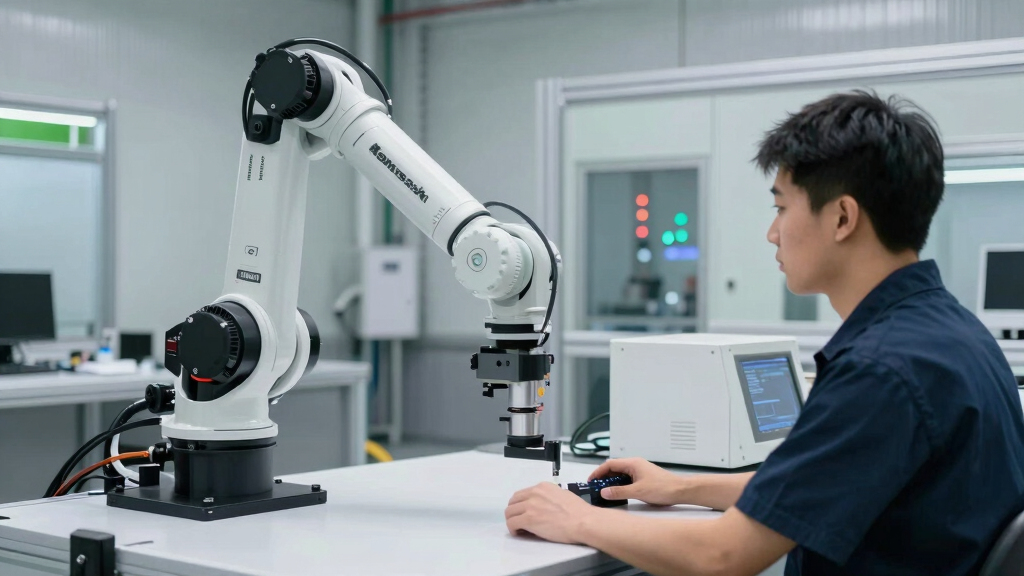
Kawasaki Heavy Industries will collaborate with Nvidia to develop physical AI solutions and establish a new robot research center in Silicon Valley. This marks a significant step in integrating AI with robotics for industrial applications.
Kawasaki Heavy Industries has announced a partnership with Nvidia to develop solutions that integrate physical artificial intelligence with robotics, establishing a joint development center in Silicon Valley.
The partnership aims to combine Kawasaki’s industrial robotics expertise with Nvidia’s AI technology to create advanced, physically aware AI systems. The joint development center will serve as a hub for research and innovation in robotics and AI integration. Kawasaki’s move reflects a broader industry trend toward embedding AI directly into physical systems for manufacturing, logistics, and other industrial sectors. The collaboration was confirmed through Kawasaki’s official statement, emphasizing their commitment to advancing robotics capabilities with Nvidia’s AI platform.
Why It Matters
This development is significant because it signals a major push toward smarter, more autonomous industrial robots that can operate more effectively in complex environments. The partnership could accelerate innovations in automation, improve efficiency, and reduce costs across various industries. For Nvidia, this collaboration expands its influence in industrial AI applications, beyond its existing dominance in data centers and autonomous vehicles. For Kawasaki, it represents a strategic move to stay competitive in the evolving robotics landscape, especially as AI becomes central to automation.
As an affiliate, we earn on qualifying purchases.
Background
Kawasaki Heavy Industries has been an established player in industrial robotics, with a focus on manufacturing and transportation systems. Nvidia has been expanding its AI ecosystem through partnerships and developing hardware and software solutions for various sectors. This announcement follows a series of industry trends where tech giants and traditional manufacturers are collaborating to embed AI into physical systems, aiming for smarter, more adaptable robotics. The joint center in Silicon Valley is part of Kawasaki’s broader strategy to innovate in robotics and AI integration.
“We are excited to partner with Nvidia to develop next-generation physical AI solutions that will transform industrial robotics.”
— Kawasaki Heavy Industries spokesperson
“Our collaboration with Kawasaki will push the boundaries of what autonomous, physically aware robots can achieve in industrial settings.”
— Nvidia representative
As an affiliate, we earn on qualifying purchases.
What Remains Unclear
It is not yet clear what specific projects or products will emerge from this partnership, or the timeline for commercial deployment. Details about the scope and scale of the new Silicon Valley center are still emerging.
As an affiliate, we earn on qualifying purchases.
What’s Next
The joint development center is expected to begin operations soon, with Kawasaki and Nvidia likely to announce specific projects or pilot programs in the coming months. Further updates on product launches and technological breakthroughs are anticipated as research progresses.
As an affiliate, we earn on qualifying purchases.
Key Questions
What types of robots will benefit from this partnership?
The collaboration aims to enhance industrial robots used in manufacturing, logistics, and other sectors, making them more autonomous and capable through physical AI integration.
Will this partnership lead to new products soon?
While specific products have not been announced, the establishment of the Silicon Valley center indicates ongoing research that could lead to new solutions within the next year or two.
Why is Kawasaki partnering with Nvidia specifically?
Nvidia’s leading AI hardware and software platforms are well-suited to enable advanced physical AI in robotics, making them a strategic partner for Kawasaki’s innovation goals.
How does this development compare to other industry trends?
This partnership aligns with a broader industry movement toward embedding AI into physical systems, aiming to improve automation and autonomous operation in industrial environments.
Source: Nikkei Asia
Fall Picks
fall essentials
As an affiliate, we earn on qualifying purchases.


![[AINews] GPT-Realtime-2, -Translate, and -Whisper: new SOTA realtime voice APIs](https://geeksalad.org/wp-content/uploads/2026/05/ainews-gpt-realtime-2-translate-and-whisper-new-sota-realtime-voice-apis-featured-560x300.jpg)