
TL;DR

Get the latest gadgets delivered free — and shop member deals
- Fast, free delivery on millions of items
- Access to Prime Big Deal Days deals on October 6–7
- Prime Video, Amazon Music and more included
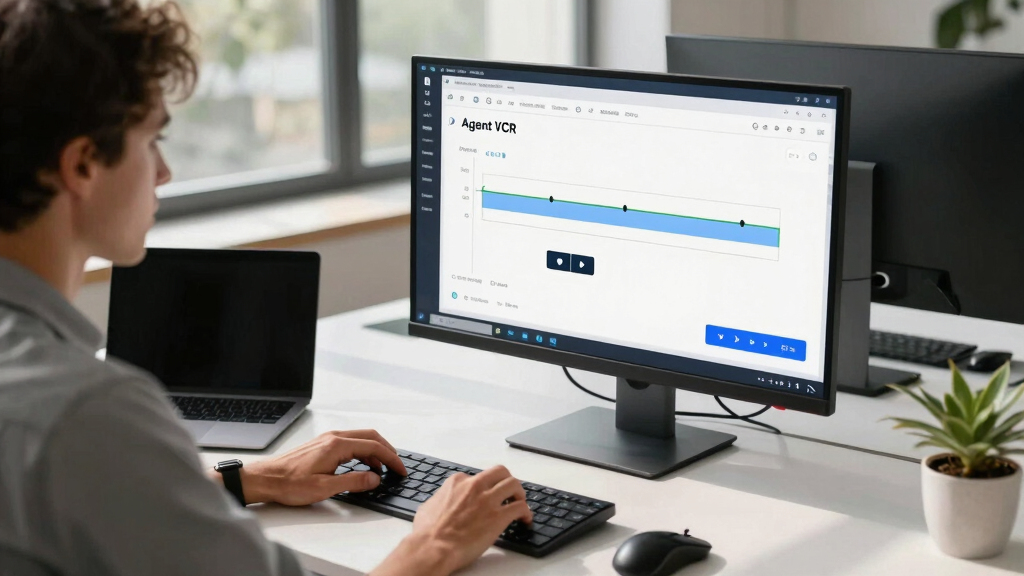
Agent VCR is a new tool that allows developers to record, rewind, and edit the execution of large language model (LLM) agents locally. It offers features like step inspection, state editing, session forking, and transactional rollback, all without cloud dependencies. This development aims to improve debugging efficiency and reliability for AI agent workflows.
Agent VCR, an open-source tool for debugging large language model (LLM) agents, has been released, enabling developers to record, rewind, and modify agent sessions locally without cloud dependencies. This innovation addresses longstanding challenges in debugging complex AI workflows and aims to improve development efficiency and reliability.
Agent VCR is a Python package that offers a suite of debugging features tailored for LLM agents, including time travel to any execution step, full state snapshots, and the ability to edit and resume from specific frames. It operates entirely locally, with no API keys or cloud services required. The tool supports session forking, allowing parallel experiments, and includes a ghost replay feature that saves successful runs for instant replays, reducing costs and time.
Key features include the VCRPlayer for inspecting and modifying past frames, the VCRRecorder for recording sessions with minimal overhead (<5ms), and integration options with tools like LangGraph and CrewAI. The system also supports ACID-compliant transactions to rollback filesystem changes, ensuring a clean environment after failures. The developers claim the tool is production-safe and benchmarked in CI environments.
Why It Matters
This development is significant because it provides a local, non-cloud-based solution for debugging and optimizing complex AI agents, which are often difficult to troubleshoot due to their multi-step, state-dependent workflows. By enabling precise inspection, editing, and rollback, Agent VCR can improve debugging speed, reduce costs, and increase reliability in deploying AI applications. It also introduces transactional filesystem management, addressing a common failure point in agent workflows.
Python debugging tools for AI development
As an affiliate, we earn on qualifying purchases.
As an affiliate, we earn on qualifying purchases.
Background
Debugging LLM agents has traditionally relied on rerunning entire workflows or using cloud-based tools that lack fine-grained control over internal states. Existing solutions often do not support reversible step-by-step inspection or local state editing, leading to inefficiencies. The release of Agent VCR builds on prior advances in AI debugging tools and integrates transactional file management, inspired by database systems, to address partial failures and state inconsistencies. The tool’s release follows ongoing industry efforts to improve reproducibility and debugging in AI development.
“Agent VCR transforms debugging for LLM agents by enabling local, step-by-step inspection and editing without cloud reliance.”
— Developer Team behind Agent VCR
“The ability to rewind, edit, and resume agent execution dramatically reduces development time and cost.”
— Open-source contributor
local LLM agent debugging software
As an affiliate, we earn on qualifying purchases.
As an affiliate, we earn on qualifying purchases.
What Remains Unclear
It is not yet clear how widely adopted the tool will become or how it performs with extremely large or complex agent workflows. The long-term stability and integration with existing debugging ecosystems remain to be tested in real-world scenarios.
As an affiliate, we earn on qualifying purchases.
What’s Next
Next steps include broader adoption and integration with popular AI development platforms. Developers will likely experiment with session forking and ghost replay features, while further benchmarks and user feedback will inform future enhancements. The team may also release updates to improve scalability and user interface options.
large language model debugging toolkit
As an affiliate, we earn on qualifying purchases.
As an affiliate, we earn on qualifying purchases.
Key Questions
How does Agent VCR compare to existing debugging tools?
Unlike traditional methods that require rerunning entire workflows, Agent VCR allows step-specific inspection, editing, and rollback locally, providing more control and efficiency.
Can Agent VCR be used with any LLM agent?
Yes, it is designed as a general tool for Python-based LLM agents, with integrations for frameworks like LangGraph and CrewAI, and can be extended further.
Does using Agent VCR require cloud connectivity?
No, all operations are local, with no API keys or cloud services needed, ensuring privacy and security.
What are the system requirements for running Agent VCR?
It requires Python 3.8+ and compatible dependencies; performance benchmarks show minimal overhead (<5ms per operation).
Is Agent VCR suitable for production environments?
Developers claim it is production-safe due to transactional filesystem management and benchmarking, but widespread adoption is still emerging.
Fall Picks
fall essentials
As an affiliate, we earn on qualifying purchases.