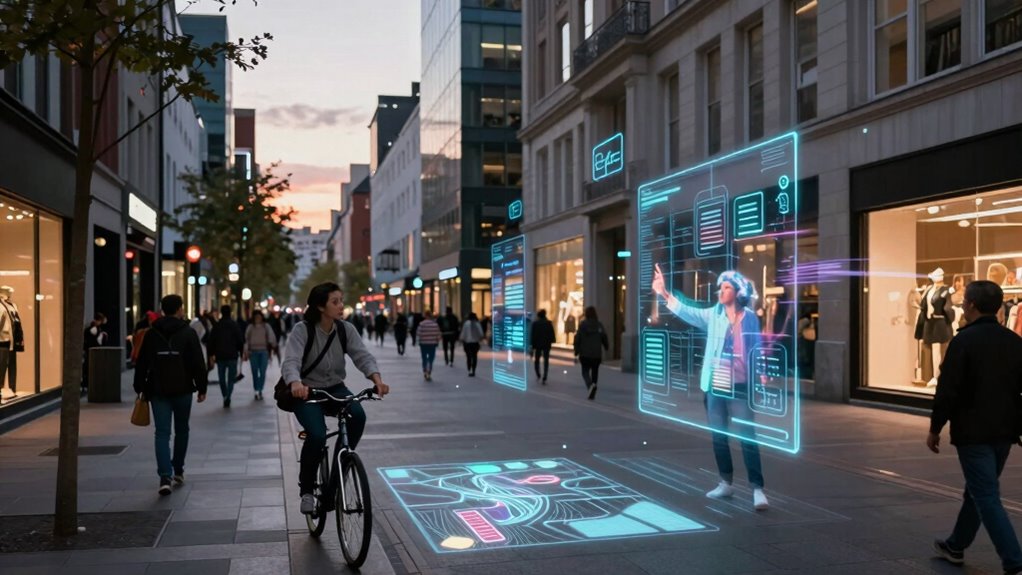

Spatial computing outside headsets lets you blend digital info with the physical world using smartphones, tablets, and sensors. You can see virtual furniture in your living room, explore cities with interactive maps, or shop with virtual try-ons—all in real environments. This technology makes data more accessible and intuitive to use in everyday life. As it continues to evolve, you’ll find even more seamless ways to interact with your surroundings—if you explore further.

Get the latest gadgets delivered free — and shop member deals
- Fast, free delivery on millions of items
- Access to Prime Big Deal Days deals on October 6–7
- Prime Video, Amazon Music and more included
Key Takeaways
- Spatial computing enhances real-world environments through AR applications on smartphones and tablets, without needing headsets.
- It enables digital data visualization and interaction directly in physical spaces, improving accessibility and user engagement.
- Devices like smartphones use spatial navigation algorithms for accurate mapping, directions, and location-based services.
- It supports remote collaboration with 3D models and augmented visuals integrated into physical spaces via everyday devices.
- Hardware advancements make seamless, real-time spatial experiences possible outside headsets, integrating digital info into daily routines.

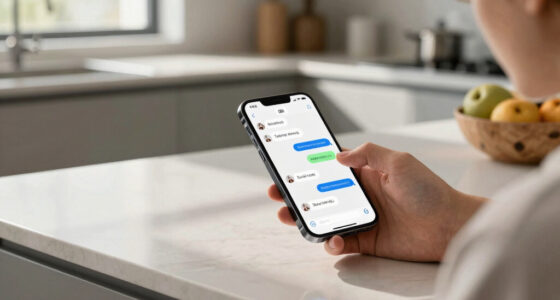
While most people associate spatial computing with headsets and wearable devices, its applications extend far beyond these gadgets. You might not realize it, but spatial computing is already shaping your daily life in ways you don’t directly see. For example, augmented reality (AR) seamlessly integrates digital information into your physical environment, often through your smartphone or tablet. Think about how you use AR to visualize furniture in your living room before buying or to access interactive maps when exploring new cities. These experiences rely on spatial computing to understand your environment, enabling digital objects to appear anchored in real-world space. It’s not just about entertainment; AR helps you interact with information more intuitively, making complex data accessible right where you need it.
Spatial computing shapes daily life through AR, blending digital info seamlessly into your environment via smartphones and tablets.
Beyond AR, spatial navigation is a core component of how spatial computing influences many industries. When you use your phone’s map app to find a route, it’s using spatial navigation algorithms to interpret your surroundings and guide you efficiently. Retailers and manufacturers are also leveraging this tech to enhance shopping experiences, offering virtual try-ons or interactive store layouts that adapt to your physical space. In logistics, warehouses employ spatial computing to optimize storage and streamline inventory management, allowing workers to locate items faster. These applications reduce errors, improve efficiency, and create more immersive customer experiences, all without requiring headsets or wearable devices. Additionally, spatial understanding is crucial for these systems to accurately interpret and respond to real-world environments, especially as hardware continues to advance. Hardware improvements are making these experiences more precise and accessible for everyday use.
You’re likely to encounter spatial computing in your workplace too. Companies are integrating this tech into their workflows to improve collaboration and planning. Imagine virtual meetings where 3D models of products or machinery are manipulated in real time, directly on your desktop or tablet screen. This kind of spatial interaction simplifies complex concepts, enabling teams to troubleshoot or design more effectively. Similarly, architects and engineers utilize spatial computing to visualize building plans within real-world contexts, helping clients understand projects better without stepping onto a construction site. Advancements in hardware continue to make these experiences more seamless and accessible across different devices. As these developments progress, the potential for real-time processing will further enhance user experience and application versatility.
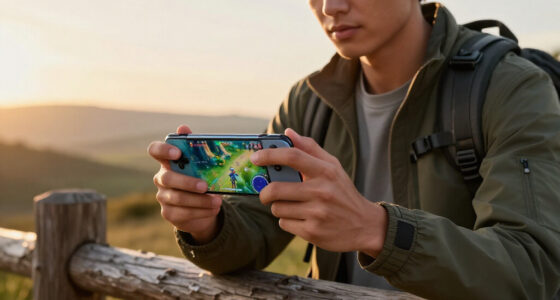
In essence, spatial computing outside headsets is about making digital interactions more natural and context-aware. It’s embedded in your smartphone’s camera apps, navigation tools, and shopping experiences, transforming how you perceive and engage with information in your environment. One key aspect that enhances this experience is the ability of spatial computing to utilize high refresh rates and low input lag, which are essential for smooth and responsive digital interactions. Its power lies in bridging the digital and physical worlds through augmented reality and spatial navigation, providing richer, more intuitive ways to interact with data. As this technology continues to evolve, it’ll become even more integrated into your everyday activities—no headset required. Instead, it’ll work quietly in the background, enhancing the way you navigate, communicate, and understand your surroundings.
As an affiliate, we earn on qualifying purchases.
Frequently Asked Questions
How Is Spatial Computing Integrated Into Everyday Mobile Devices?
You experience spatial computing on your mobile devices through augmented reality apps that overlay digital info onto the real world. These apps use real-time mapping to understand your environment, allowing features like interactive navigation, virtual try-ons, or gaming. Your phone’s sensors and cameras work together to create accurate spatial data, making digital interactions seamless and immersive, even without wearing headsets. It’s about blending digital with physical in your everyday life.
What Industries Are Most Benefiting From Spatial Computing Outside Headsets?
Imagine Sherlock Holmes with a smartphone—augmented reality is transforming industries like retail, manufacturing, and healthcare. You benefit as businesses use spatial computing for enhanced training, maintenance, and customer engagement through augmented reality applications. These industry applications allow for real-time data visualization, remote collaboration, and improved accuracy. As a result, sectors outside headsets are embracing spatial computing to boost efficiency, innovate processes, and deliver immersive experiences to you, the user.
How Secure Is Spatial Computing Data in Public Environments?
Spatial computing data in public environments can be quite secure if you follow proper security protocols and prioritize data privacy. Many systems use encryption to protect your information during transmission and storage. However, you should stay cautious, as public networks are more vulnerable to breaches. Always verify the security measures in place, use strong passwords, and avoid sharing sensitive data to keep your spatial computing data safe.
Can Spatial Computing Be Used for Remote Collaboration Without Headsets?
Yes, you can use spatial computing for remote collaboration without headsets by leveraging gesture control and spatial awareness. You might use AR glasses or other devices that detect gestures and understand your environment, enabling you to interact naturally with digital content. This setup allows you to collaborate seamlessly with colleagues, sharing spatial data and visuals in real-time, making remote teamwork more intuitive and immersive without the need for traditional headsets.
What Are Future Trends in Spatial Computing Technology Outside Headsets?
Future trends in spatial computing outside headsets include more advanced Augmented Reality applications and interactive displays. You’ll see seamless integration of digital content into your environment, making daily tasks more intuitive. These technologies will become more accessible, allowing you to interact with virtual objects naturally. Expect smarter, more responsive systems that enhance collaboration, gaming, and education, all without needing bulky headsets, creating immersive experiences right in your physical space.
As an affiliate, we earn on qualifying purchases.
Conclusion
Spatial computing outside headsets is like exploring a vast, invisible web woven into our everyday environments. It seamlessly connects digital and physical worlds, transforming how you work, play, and connect. As this web expands, it pulls you into a new reality where technology becomes an intuitive part of your life — not just something you wear or look at, but something you live within. Embrace it, and you’ll find yourself steering a universe of endless possibilities.
As an affiliate, we earn on qualifying purchases.
As an affiliate, we earn on qualifying purchases.
Fall Picks
fall essentials
As an affiliate, we earn on qualifying purchases.