
TL;DR
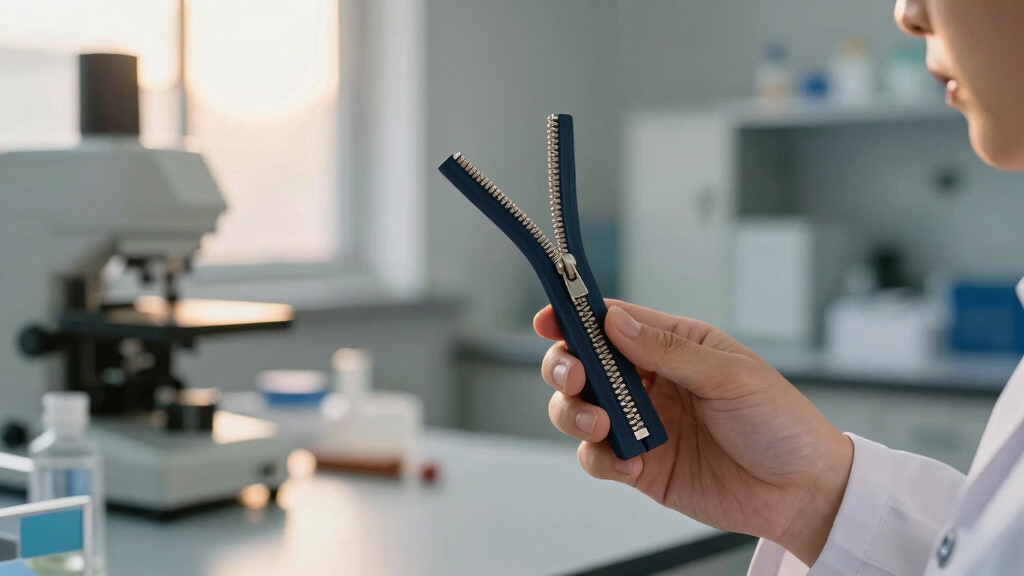
MIT researchers have developed a 3D-printed Y-zipper that can transform from flexible strips into rigid structures like rods and coils with a single slide. This innovation reimagines the zipper as a dynamic structural element for use in robotics, wearable supports, and architecture.
MIT researchers have developed a 3D-printed, three-sided zipper that can switch between flexible and rigid states through a single sliding motion, transforming the way structures are assembled and disassembled. This innovation, rooted in a nearly 40-year-old patent, allows for rapid, reversible changes in structural stiffness, with potential applications across robotics, wearable devices, and architecture.
The project, led by MIT’s Computer Science and Artificial Intelligence Laboratory (CSAIL), revives a 1985 patent by William Freeman that envisioned a triangular zipper capable of transforming flexible objects into rigid structures. Advances in computational design and desktop 3D printing enabled the team to realize this concept as a printable system, called the Y-zipper.
The Y-zipper interlocks three flexible strips into a triangular tube that can stiffen into load-bearing rods, arches, or coils when the slider is moved upward. When unzipped, it behaves like a bundle of ribbons or tentacles. The entire mechanism is fabricated from standard 3D printing materials such as PLA and TPU, and can fold into complex shapes through the motion of a single slider.
Prototypes include a squid-like structure that stiffens into a rigid form, a vine-like shape that extends and blooms into a flower, and wearable wrist braces that switch from flexible to protective support. The team also integrated the zipper into a quadruped robot, enabling its legs to extend or retract quickly for obstacle navigation or crawling under confined spaces. At an architectural scale, the zipper replaces traditional tent poles, allowing a tent to be erected in about 80 seconds and collapsed into lightweight strips for transport.
Why It Matters
This development offers a new paradigm for adaptive structures that can change stiffness on demand, reducing assembly time and increasing portability. It has implications for emergency shelters, space exploration, robotics, and wearable technology, where rapid deployment and reconfiguration are critical. Unlike previous rigidization methods relying on air pressure or complex hardware, the Y-zipper operates mechanically through continuous engagement, enabling autonomous and reversible transformations.
Future iterations could involve stronger materials, larger-scale deployable systems, and integration with motorized actuation for autonomous operation. The ability to produce custom geometries through digital design tools further expands potential applications across multiple fields.

JZDACH Roll Top Thermal Insulated Bag Army Print
Material Quality: This roll top lunch bag is crafted with premium durable polyester outer fabric, featuring excellent scratch,…
As an affiliate, we earn on qualifying purchases.
As an affiliate, we earn on qualifying purchases.
Background
The concept traces back to a 1985 patent by MIT’s William Freeman, which remained unrealized due to technological limitations at the time. Recent advancements in 3D printing and computational design have allowed researchers at CSAIL to revisit and expand this idea. Prior efforts in flexible rigidization systems often relied on complex hardware or external stimuli like air pressure, making this mechanical approach a notable innovation.
This project aligns with ongoing trends toward adaptable, lightweight, and easily transportable structures in various industries, including robotics, architecture, and wearable tech. The research was published recently by MIT CSAIL, with prototypes demonstrating practical applications.
“The Y-zipper transforms from a flexible, tentacle-like structure into a rigid, load-bearing form with a simple slide, opening new possibilities for rapid assembly and reconfiguration.”
— Jiaji Li, lead researcher
“Our digital design tool allows users to customize the zipper’s geometry and behavior, enabling tailored solutions for different structural needs.”
— Stefanie Mueller, MIT CSAIL researcher

7" Nylon Coil Zippers YKK #3 Skirt & Dress Zippers (10 Zippers/Pack), Select Color (S859 Georgia Brick)
7"Nylon Coil Zippers YKK #3 Skirt & Dress Zippers
As an affiliate, we earn on qualifying purchases.
As an affiliate, we earn on qualifying purchases.
What Remains Unclear
It is not yet clear how scalable the Y-zipper system is for large structures or its long-term durability under repeated use. The team is still evaluating the strength of materials and potential for integration into commercial products. Additionally, the extent of its autonomous operation capabilities remains under development.
robotic joint with 3D printed zipper
As an affiliate, we earn on qualifying purchases.
As an affiliate, we earn on qualifying purchases.
What’s Next
The researchers plan to test stronger materials for larger-scale applications, improve motorized actuation for autonomous operation, and explore commercial partnerships. Further studies will focus on durability, safety, and integration into real-world systems, with potential field trials in robotics and architecture expected in the coming year.
Shoulder Stability Brace Adjustable Shoulder Brace Support with Pressure Pad, Light Breathable Neoprene Rotator Cuff Shoulder Support for Sport, Dislocated AC Joint, Labrum Tear, Shoulder Pain – Right
High Quality: Shoulder brace made of breathable neoprene, PU, nylon. The fabric adopts moisture wicking and heat regulation…
As an affiliate, we earn on qualifying purchases.
As an affiliate, we earn on qualifying purchases.
Key Questions
How does the Y-zipper switch between soft and rigid states?
The zipper uses a sliding mechanism that interlocks three printed strips into a triangular tube. Moving the slider upward pulls the strips together, stiffening the structure into various load-bearing shapes. Sliding it back releases the tension, returning to a flexible state.
What materials are used for 3D printing the Y-zipper?
The prototypes are printed using standard materials such as PLA (Polylactic Acid) and TPU (Thermoplastic Polyurethane), which provide the necessary flexibility and strength for repeated transformation.
What are the potential applications of this technology?
The Y-zipper could be used in wearable supports, robotic limbs, rapid-assembly tents, emergency shelters, and space exploration tools where quick, reversible structural changes are needed.
Is this technology ready for commercial use?
Not yet. While prototypes demonstrate promising capabilities, further development, testing, and scaling are required before commercial deployment. The team is actively working on these next steps.
Source: designboom