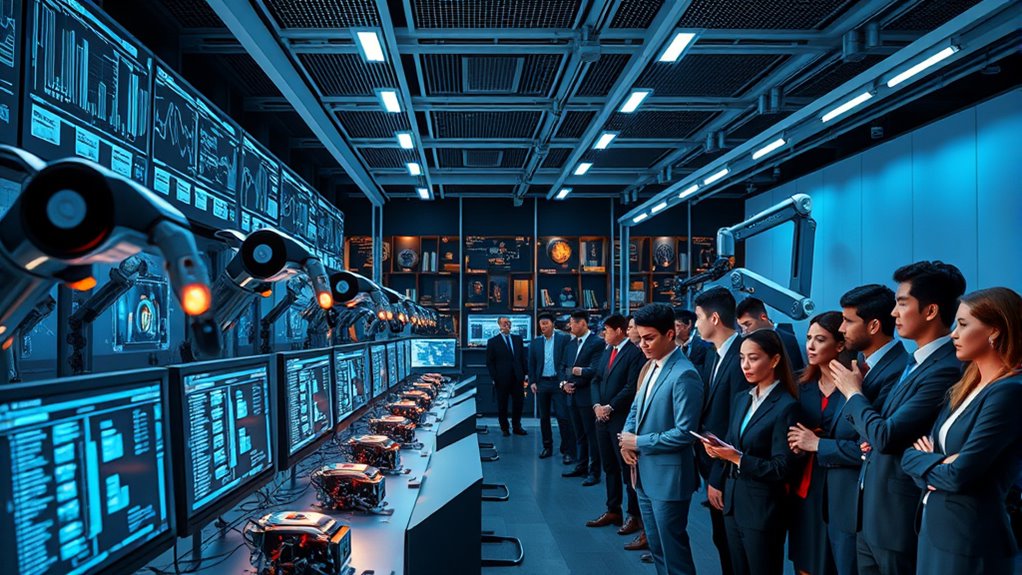

AI isn’t here to steal your job but to change how work gets done. Instead of replacing roles, it automates repetitive tasks, allowing you to focus on more skilled, creative, or complex responsibilities. Your future job may involve overseeing AI systems or developing new skills that complement technology. Embracing these changes can open fresh opportunities. To understand how you can adapt and thrive, explore how AI impacts different careers and the evolving job landscape.

Get the latest gadgets delivered free — and shop member deals
- Fast, free delivery on millions of items
- Access to Prime Big Deal Days deals on October 6–7
- Prime Video, Amazon Music and more included
Key Takeaways
- AI automates repetitive tasks but typically shifts roles toward overseeing systems and handling complex, non-routine work.
- Technological advances historically displace some jobs but also create new opportunities in emerging fields.
- Embracing AI as a tool and upskilling in digital literacy can enhance career prospects rather than threaten employment.
- The impact of AI is a transformation of the job landscape, emphasizing adaptability rather than outright job elimination.
- Success in future work depends on flexibility, continuous learning, and leveraging AI to augment human skills.

As artificial intelligence continues to advance rapidly, its impact on jobs becomes impossible to ignore. You’ve probably heard warnings that AI could replace countless roles, but it’s essential to understand the real scope of this transformation. The automation impact, for example, isn’t just about robots taking over factory floors; it extends to many sectors, including customer service, data analysis, and even creative fields. AI automates repetitive tasks, which can boost efficiency and reduce costs for companies. However, rather than simply eliminating jobs, this shift often changes the nature of work itself. You might find that some roles evolve to focus more on overseeing AI systems or managing tasks that require human judgment and emotional intelligence. Additionally, understanding the broader automation impact can help you better prepare for these changes.
AI advances are transforming work, automating tasks and shifting roles across industries, emphasizing adaptation and new skill development.
Looking ahead, the question of future employment isn’t just about job loss—it’s about how roles will adapt. Historically, technological advances have displaced certain jobs, but they’ve also created new opportunities. Think about how the advent of computers eliminated some clerical roles but opened doors for IT specialists and software developers. With AI, the pattern is similar. While some routine tasks become automated, new jobs will emerge that require skills in machine learning, AI maintenance, and data science. It’s important to recognize that AI can augment your capabilities rather than replace you outright. For instance, in fields like healthcare, AI tools assist doctors in diagnosing diseases faster and more accurately, allowing professionals to focus on patient care and complex decision-making.
Your future employment may involve working alongside AI systems, leveraging their strengths to improve productivity and innovation. This means that rather than fearing AI as a job thief, you should see it as a tool that can enhance your work. Upskilling becomes vital—learning new skills related to AI, data analysis, or digital literacy will help guarantee you stay relevant. Companies increasingly value employees who understand how to integrate AI into their workflows, as it offers a competitive edge. While certain manual or routine jobs might decline, roles that require creativity, emotional intelligence, and complex problem-solving will remain in high demand.
Ultimately, the automation impact underscores a shift rather than an annihilation of jobs. Your ability to adapt, learn new skills, and embrace the changing landscape will determine your future employment prospects. Instead of viewing AI as a threat, consider it an opportunity to redefine your career and develop expertise in areas that machines cannot easily replicate. As technology evolves, so too will the opportunities for those willing to evolve with it.
AI training and upskilling courses
As an affiliate, we earn on qualifying purchases.
As an affiliate, we earn on qualifying purchases.
Frequently Asked Questions
How Quickly Will AI Impact Different Industries?
AI’s impact on industries varies, but you’ll notice automation concerns accelerating within a few years, especially in manufacturing, retail, and customer service. Some sectors will adapt quickly, leading to economic shifts, while others may see slower change. Staying informed and developing new skills helps you stay ahead of these changes, ensuring you’re prepared for the evolving job landscape driven by AI advancements and the ongoing automation concerns.
Will AI Create More Jobs Than It Replaces?
Like a rising tide reshaping the shoreline, AI’s economic transformation can create more jobs than it replaces if you embrace change. While automation concerns loom, new roles emerge in tech, data analysis, and creative fields, fueling innovation. You might find yourself sailing into uncharted waters, but with adaptability, you’ll harness AI’s power to open doors rather than close them, turning technological waves into opportunities for growth.
Can AI Replace Creative and Emotional Roles?
AI can’t fully replace creative and emotional roles because it lacks true emotional intelligence and authentic artistic expression. While AI can generate art, music, or writing, it doesn’t experience feelings or inspiration like humans do. Your unique perspective and emotional depth are irreplaceable, making your creative work more meaningful. AI can be a tool for enhancement, but the core of emotional connection and artistic expression remains human-centered and irreplaceable.
What Policies Can Mitigate AI Job Displacement?
Think of AI as a river reshaping the landscape. To prevent flooding, you build levees like policies such as Universal Basic Income and Workforce Retraining. These measures support displaced workers, giving them new skills and financial stability. By investing in education and social safety nets, you make certain the job market adapts smoothly, turning potential floods into opportunities for growth and innovation.
How Can Workers Adapt to Ai-Driven Changes?
You can adapt to AI-driven changes by embracing worker reskilling and lifelong learning. Stay curious and seek out new skills related to technology, data analysis, or other emerging fields. Take advantage of online courses, workshops, and industry training programs to stay relevant. By continuously updating your skillset, you’ll become more adaptable, increase your value, and better position yourself for new opportunities in an evolving job market.
As an affiliate, we earn on qualifying purchases.
Conclusion
So, as you stand at this crossroads, remember that AI isn’t the gilded age’s loom replacing artisans but a tool shaping new crafts. It’s not a harbinger of doom, nor a magic wand for instant change. Instead, it’s a catalyst—think of it as your modern-day alchemist—transforming jobs and skills. Embrace the shift, adapt like a resilient merchant in a changing market, and you’ll find your place in this evolving landscape.
As an affiliate, we earn on qualifying purchases.
As an affiliate, we earn on qualifying purchases.
Fall Picks
fall essentials
As an affiliate, we earn on qualifying purchases.