
Remote work security comes down to a few practical layers: strong login protection, safe network access on the road, and knowing which habits actually keep you safe. For most remote workers, the Yubico Security Key C NFC is the best overall pick because hardware-based two-factor authentication stops account takeover more reliably than any app-based code. The Capri CP-EL128 travel VPN router is the standout for anyone working from cafes, airports, or short-term rentals, since it encrypts every device on the connection rather than just one laptop. The main tradeoff in this category is between hardware that protects automatically and knowledge-based resources that depend on your consistency — the best setup usually combines one of each. Continue reading for the full breakdown of all nine options and who each one fits best.

Get the latest gadgets delivered free with Prime
- Fast, free delivery on millions of items
- Prime Video, Amazon Music and more included
- Member-only deals all year
Complete the kit



Key Takeaways
- Hardware beats habits for account security: the Yubico Security Key C NFC ranked highest because phishing-resistant authentication works even when you’re tired or rushed, unlike behavior-based protection from the guide books.
- Travel VPN routers differ mainly in throughput and setup friction — the Capri CP-EL128 suits frequent travelers who want set-and-forget protection, while the Maui MA-B256 targets users who need more capacity for multiple devices.
- Data blockers like the JSAUX charge-only adapters are the cheapest risk reduction in the lineup, but they only cover public USB ports — they complement rather than replace a VPN router.
- The four books in this roundup serve distinct audiences: the NIST-based guide fits structured solo businesses, the survival guide fits complete beginners, and the general guides overlap enough that buying more than one is usually redundant.
- A bundled secure infrastructure solution makes sense for distributed teams but is overkill for a single freelancer — paying for team-grade tooling solo was the most common mismatch found here.
| Secure Remote Work Infrastructure for Distributed Teams |  | Best for Building a Security Strategy | Format: Guide / reference resource | Focus: Remote work security infrastructure | Audience: Distributed teams and IT decision-makers | VIEW ON AMAZON | See Our Full Breakdown |
| Yubico Security Key C NFC USB-C Security Key |  | Best Overall | Brand: Yubico | Model: 100957 | Connectivity: USB-C, NFC | VIEW ON AMAZON | See Our Full Breakdown |
| Capri CP-EL128 Server and Travel VPN Router |  | Best for Working From Anywhere | Model: CP-EL128 | Product type: Server and travel VPN router | VPN service: KeepYourHomeIP subscription required | VIEW ON AMAZON | See Our Full Breakdown |
| JSAUX USB & USB-C Data Blocker, Charge-Only, 4-Pack, Grey |  | Best Value | Connector types: USB-A and USB-C | Quantity: 4-pack (2 USB-A, 2 USB-C) | USB-C max power: 100W (20V/5A, PD 3.0/2.0) | VIEW ON AMAZON | See Our Full Breakdown |
| Maui MA-B256 Server & Travel VPN Router |  | Best Premium Travel Router | Brand: Maui | Model: MA-B256 | Product type: Travel VPN router | VIEW ON AMAZON | See Our Full Breakdown |
| Remote Work Survival Guide: Productivity and Security |  | Best for Complete Remote Work Newcomers | Format: Book | Primary Topic: Remote work productivity and security | Coverage: Combined productivity and cybersecurity | VIEW ON AMAZON | See Our Full Breakdown |
| Cyber Hygiene for Remote Workers: A Practical Guide to Staying Secure in a Connected World |  | Best Everyday Habits Guide | Format: Book | Primary Topic: Cyber hygiene for remote work | Approach: Practical best practices and habits | VIEW ON AMAZON | See Our Full Breakdown |
| Cybersecurity for Remote Workers & Solopreneurs: A Practical Guide Using NIST Cybersecurity Framework 2.0 |  | Best Framework-Based Security Guide | Format: Book | Framework: NIST Cybersecurity Framework 2.0 | Target Audience: Remote workers and solopreneurs | VIEW ON AMAZON | See Our Full Breakdown |
| Cybersecurity for Remote and Hybrid Work: Protecting Your Business in a Digital World (Books on Tech Book 88) | 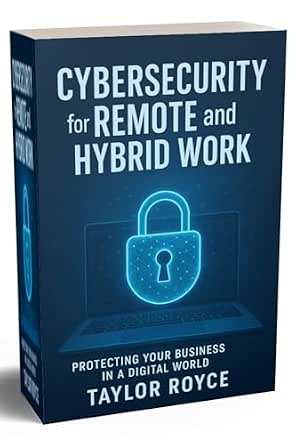 | Best for Small Business Owners | Format: Book | Series: Books on Tech (Book 88) | Topic: Cybersecurity for remote and hybrid work | VIEW ON AMAZON | See Our Full Breakdown |
| cybersecurity gear for remote worker | Format |
|---|---|
| Secure Remote Work Infrastruct | Guide / reference resource |
| Yubico Security Key C NFC USB- | — |
| Capri CP-EL128 Server and Trav | — |
| JSAUX USB & USB-C Data Blocker | — |
| Maui MA-B256 Server & Travel V | — |
| Remote Work Survival Guide: Pr | Book |
| Cyber Hygiene for Remote Worke | Book |
| Cybersecurity for Remote Worke | Book |
| Cybersecurity for Remote and H | Book |
More Details on Our Top Picks
Secure Remote Work Infrastructure for Distributed Teams
Every gadget in this roundup — the Yubico Security Key C NFC, the Capri travel router, the JSAUX data blockers — solves one specific threat. This guide takes the opposite approach: it steps back and helps you figure out which protections your setup actually needs before you spend money on hardware. Compared with the other books in this lineup, like Cyber Hygiene for Remote Workers, it leans toward team-level infrastructure decisions rather than individual habits, which makes it the stronger pick for anyone managing remote staff rather than just securing their own laptop. The tradeoff is real: there is nothing here you can plug in. If you want an immediate physical safeguard, buy the Yubico key first. If you want to know what to buy and why, start here.
Pros:- Helps prioritize which security investments matter before spending on hardware
- Team-oriented framing suits managers of distributed staff
- Complements physical tools like security keys and VPN routers by giving them context
Cons:- Not a physical security device — provides no direct protection on its own
- Team-focused content may be more depth than a solo freelancer needs
Best for: Remote team leads and IT decision-makers who need to design a security setup for multiple people before buying hardware
Not ideal for: Solo remote workers who want a plug-and-play device right now — this is a planning resource, not a product that blocks a single attack
- Format:Guide / reference resource
- Focus:Remote work security infrastructure
- Audience:Distributed teams and IT decision-makers
- Scope:Strategy and architecture planning
- Complements:Hardware security keys, VPN routers, data blockers
Our verdict“Buy this first if you’re responsible for securing a remote team and want your hardware purchases guided by strategy rather than guesswork.”
Yubico Security Key C NFC USB-C Security Key
This is the single highest-impact purchase a remote worker can make, which is why it earns the top spot. Phishing-resistant multi-factor authentication stops account takeover attacks that no VPN router or data blocker can touch — the Capri CP-EL128 protects your traffic, but this key protects your identity, which is usually the bigger risk for remote logins. The dual USB-C and NFC connection covers laptops and phones without adapters, and the waterproof, crush-resistant build means it survives life in a travel bag. No battery and no internet requirement means it works anywhere, including airports with terrible Wi-Fi. The tradeoff: unlike pricier YubiKey models, this one does not support one-time passwords or the Yubico Authenticator app, so it’s purely a FIDO/passkey device. Anyone with accounts still stuck on legacy OTP login flows will need a workaround.
Pros:- Phishing-resistant FIDO2/WebAuthn and passkey support blocks the most common account-takeover attacks
- USB-C plus NFC covers both laptops and modern phones with no dongles
- Works with over 1,000 accounts and needs no battery or internet connection
- Waterproof, crush-resistant build handles travel wear
Cons:- No one-time-password support, so legacy OTP-only services remain a gap
- Incompatible with the Yubico Authenticator app available on higher-tier keys
Best for: Remote workers who log into sensitive work accounts daily and want the strongest defense against phishing and credential theft
Not ideal for: Users whose critical accounts only support one-time-password MFA — this key intentionally drops OTP support, so it can’t replace an authenticator app for those logins
- Brand:Yubico
- Model:100957
- Connectivity:USB-C, NFC
- Authentication standards:FIDO2/WebAuthn, FIDO U2F
- Firmware:5.7
- Weight:0.16 ounces
- Dimensions:0.1 x 1.8 x 0.7 inches
- Color:Black
Our verdict“If you buy only one item on this list, make it this one — nothing else here protects the accounts themselves from phishing.”
Capri CP-EL128 Server and Travel VPN Router
Where the Yubico Security Key C NFC protects your logins, the Capri protects your network connection — a different threat entirely. This travel router tunnels your traffic back to your home network, which means café and airport Wi-Fi traffic is encrypted and your work tools see your familiar home IP. Compared with the Maui MA-B256, the Capri is the more utilitarian option: same core capability of multi-device coverage for laptops, tablets, and phones, and the same requirement of a KeepYourHomeIP subscription after the included first month. That subscription is the honest tradeoff here — the hardware is not fully functional on its own, so budget for recurring cost. Compared with running a VPN app on one laptop, the advantage is that every device you carry shares the secure tunnel without individual licenses.
Pros:- Encrypts all traffic on public Wi-Fi across laptops, tablets, and phones simultaneously
- Connects you to your home network, keeping access to local files and services
- One tunnel covers multiple devices instead of per-device VPN apps
- Can reach region-restricted work tools and services while abroad
Cons:- Requires an ongoing KeepYourHomeIP subscription after the first included month
- Extra device to charge, pack, and configure on every trip
Best for: Digital nomads and frequent travelers who work from hotels, cafés, and co-working spaces and need all their devices on one encrypted connection
Not ideal for: Remote workers who only ever use trusted home or office Wi-Fi — a router-based VPN adds subscription cost with little daily benefit
- Model:CP-EL128
- Product type:Server and travel VPN router
- VPN service:KeepYourHomeIP subscription required
- Included subscription:One month
- Supported devices:Laptops, tablets, and phones
- Multi-device support:Yes, simultaneous connections
Our verdict“Worth it for travelers who live on public Wi-Fi and want whole-device coverage — but factor in the subscription before buying.”
JSAUX USB & USB-C Data Blocker, Charge-Only, 4-Pack, Grey
This is the cheapest peace of mind in the roundup. Juice-jacking attacks at public USB ports are exactly the kind of threat remote workers shrug off at airports — and these tiny adapters make the risk physically impossible by blocking all data pins while passing power through. Compared with the Capri CP-EL128 or the Yubico key, the scope is narrow: it does nothing for phishing or Wi-Fi snooping. But it costs a fraction of either, covers both USB-A and USB-C in one 4-pack, and the USB-C version passes 100W fast charging, so a MacBook or phone doesn’t slow down. The transparent casing is a nice touch — you can see it’s a blocker, not a cable fault, when charging acts up. The tradeoff is simple: charge-only means no data sync ever, so keep them off your desk setup.
Pros:- Physically blocks data transfer to defeat juice-jacking and spyware at public charging ports
- USB-C blockers support 100W PD 3.0/2.0 fast charging for laptops and flagship phones
- Four-pack covers both USB-A and USB-C ports across multiple bags
- Small enough for keychains, pockets, or a laptop sleeve
Cons:- Charge-only design means no data sync, which is annoying if you forget it’s attached
- Actual charging speed still depends on your charger and cable quality
Best for: Travelers and commuters who regularly charge phones and laptops at airports, hotels, and public stations and want low-cost protection
Not ideal for: Anyone expecting broader security coverage — this blocks data over USB only and won’t help with phishing, public Wi-Fi, or account compromise
- Connector types:USB-A and USB-C
- Quantity:4-pack (2 USB-A, 2 USB-C)
- USB-C max power:100W (20V/5A, PD 3.0/2.0)
- USB-A max current:2.4A
- Color:Grey
- Design:Charge-only data blocker, transparent casing
- Compatibility:iPhone 15-18, MacBook, Samsung Galaxy, iPad, and other USB/USB-C devices
Our verdict“The easiest yes in this roundup — grab the 4-pack and leave one in every travel bag.”
Maui MA-B256 Server & Travel VPN Router
The Maui does everything the Capri CP-EL128 does — home network tunneling, public Wi-Fi encryption, multi-device support, and geo-block bypassing — but it’s pitched squarely at the professional who treats travel security as non-negotiable. End-to-end encryption covers banking and work sessions, and keeping your home IP address while abroad means fewer fraud flags from banks and fewer access problems with work tools that block foreign IPs. That last point is where it pulls ahead of the Capri for international remote workers: it’s framed around exactly the geo-restriction headaches that plague cross-border work. The cost of that polish is the same as the Capri’s, and it’s the biggest drawback in this category — the router will not function as a VPN without an active KeepYourHomeIP subscription once the free month ends. Pair it with the Yubico key and you’ve covered both network and identity threats.
Pros:- Keeps your home IP address while traveling, reducing bank and work-tool access problems abroad
- End-to-end encryption secures browsing, banking, and work sessions on public Wi-Fi
- Multiple devices connect simultaneously through one tunnel
- Bypasses geo-blocks for streaming and region-locked work applications
Cons:- VPN features stop working without an active paid KeepYourHomeIP subscription after the first month
- Overlaps heavily with the Capri CP-EL128, so buying both adds no real protection
Best for: International remote professionals and business travelers who need their home IP, encrypted sessions, and geo-blocked work tools from anywhere
Not ideal for: Budget-conscious or occasional travelers — the required subscription makes this an ongoing expense for hardware that’s redundant on trusted networks
- Brand:Maui
- Model:MA-B256
- Product type:Travel VPN router
- VPN service:KeepYourHomeIP subscription required
- Included subscription:1 month free
- Supported devices:Laptops, tablets, phones (multiple simultaneous connections)
- Encryption:End-to-end
Our verdict“The stronger pick over the Capri if you work across borders and need your home IP — just accept the subscription as part of the price.”
Remote Work Survival Guide: Productivity and Security
This guide stands apart from the rest of this lineup because it treats security as one chapter of a bigger story. Compared with Cyber Hygiene for Remote Workers, which goes deep on defensive habits, this book splits its pages between productivity systems and security basics, making it the right starting point for someone whose remote work setup is a mess on every front — not just the security side. That breadth is also its main tradeoff: a reader who already has a solid routine will find the security sections thin next to the NIST-based guide later in this roundup. Where hardware picks like the Yubico Security Key C NFC protect a single login, this book tries to fix the whole workflow around it. For someone building a home office from scratch, that broader lens earns it a place.
Pros:- Covers productivity and security together, matching how remote work actually fails
- Beginner-friendly framing that doesn’t assume technical background
- Useful onboarding companion alongside hardware like security keys and VPN routers
- Low-commitment way to audit an entire remote work setup
Cons:- Security content is necessarily shallower than dedicated cybersecurity guides
- Limited published detail makes depth and currency hard to verify before buying
Best for: First-time remote workers who need help with routines, focus, and basic security all at once
Not ideal for: Readers who only want cybersecurity depth — the productivity material dilutes the security coverage
- Format:Book
- Primary Topic:Remote work productivity and security
- Coverage:Combined productivity and cybersecurity
- Audience:Remote work beginners
- Technical Depth:Introductory
- ASIN:B0H8T31NGX
Our verdict“Pick this if you’re new to remote work and want one book that addresses the whole picture, not just the locks on the door.”
Cyber Hygiene for Remote Workers: A Practical Guide to Staying Secure in a Connected World
Where Cybersecurity for Remote Workers & Solopreneurs organizes itself around a formal framework, this book takes the opposite approach: it’s built around daily habits — password discipline, safe browsing, device hygiene — that any remote worker can adopt without learning a standard first. That makes it the most approachable dedicated security title in this batch. The tradeoff is structure: readers who want an auditable, step-by-step security program will prefer the NIST-based guide, and anyone protecting an office network will outgrow this quickly. But as the knowledge layer that sits behind hardware like the JSAUX data blockers in this roundup, it does the job well — you learn why you’re plugging into a charge-only adapter, not just that you should.
Pros:- Habit-based approach that’s easy to act on immediately
- Accessible to non-technical readers without dumbing down the risks
- Directly relevant to daily remote work scenarios like public Wi-Fi and personal devices
- Complements physical security gear like data blockers and security keys
Cons:- Lacks the structured, auditable methodology of framework-based guides
- Brief detail available makes it hard to gauge depth on advanced threats
Best for: Freelancers and employees who want practical, low-jargon habits rather than formal frameworks
Not ideal for: Managers building a documented security program — there’s no framework or compliance structure to build on
- Format:Book
- Primary Topic:Cyber hygiene for remote work
- Approach:Practical best practices and habits
- Audience:Remote workers
- Technical Depth:Beginner to intermediate
- ASIN:B0FKF24X4Q
Our verdict“This pick makes the most sense for remote workers who want to change their daily behavior rather than implement an official standard.”
Cybersecurity for Remote Workers & Solopreneurs: A Practical Guide Using NIST Cybersecurity Framework 2.0
This is the most structurally rigorous book of the four titles in this roundup. By anchoring everything to the NIST Cybersecurity Framework 2.0, it gives solo remote workers the same five-function structure (Govern, Identify, Protect, Detect, Recover) that enterprises use, scaled down to one person and a laptop. Compared with Cyber Hygiene for Remote Workers, the payoff is auditability — you can track what you’ve secured and what you haven’t — but the cost is a steeper learning curve for readers who’ve never touched a framework. It’s also aimed squarely at solopreneurs, meaning anyone handling client data, invoices, and business accounts. Those same readers should still pair it with hardware like the Yubico Security Key C NFC, since a framework tells you what to protect but doesn’t do the protecting itself.
Pros:- Built on NIST CSF 2.0, a recognized and current standard
- Actionable steps rather than abstract theory
- Specifically tailored to remote workers and solo entrepreneurs
- Creates an auditable security checklist you can revisit over time
Cons:- Framework terminology adds a learning curve for non-technical readers
- Limited independent review information to gauge depth of coverage
Best for: Solopreneurs and one-person businesses who want a documented, standards-based security program
Not ideal for: Casual remote employees who want quick tips — the framework structure is more process than they need
- Format:Book
- Framework:NIST Cybersecurity Framework 2.0
- Target Audience:Remote workers and solopreneurs
- Approach:Practical, framework-driven steps
- Technical Depth:Intermediate
- ASIN:B0FKRSRMJT
Our verdict“Choose this if you run your own remote business and want enterprise-grade structure applied to a one-person operation.”
Cybersecurity for Remote and Hybrid Work: Protecting Your Business in a Digital World (Books on Tech Book 88)
Unlike the other three books here, which focus on the individual, this title is written for protecting a business operating across remote and hybrid setups — think policies, team risk, and distributed operations rather than personal habits. That positions it closest in spirit to Secure Remote Work Infrastructure for Distributed Teams elsewhere in this roundup: one is about building the infrastructure, the other about the strategy that governs it. Being part of the Books on Tech series adds some editorial consistency, though I’d weigh that lightly — series pedigree doesn’t guarantee depth on any single topic. Compared with the NIST-based solopreneur guide, this one zooms out further, which means solo readers may find team-oriented material they’ll never use. The biggest caveat is transparency: with little published detail, buyers are betting on the topic and series rather than verified content quality.
Pros:- Addresses remote and hybrid business security at the organizational level
- Timely topic as hybrid work becomes the default for many companies
- Part of an established tech book series with a consistent format
- Complements hands-on tools like the Capri and Maui VPN routers in this roundup
Cons:- Minimal published detail makes depth and quality hard to evaluate in advance
- Overkill for individuals — business-level policy content has limited personal use
Best for: Owners and managers of small businesses running remote or hybrid teams
Not ideal for: Solo remote workers — the business-and-team focus goes beyond personal security needs
- Format:Book
- Series:Books on Tech (Book 88)
- Topic:Cybersecurity for remote and hybrid work
- Scope:Business-level security strategy
- Audience:Small business owners and managers
- ASIN:B0FHQQFWFX
Our verdict“If you’re responsible for securing a team rather than just yourself, this is the book in the batch aimed at your job.”

How We Picked
I evaluated every option through one specific lens: how well it protects a remote worker in real, messy conditions — airport Wi-Fi, shared accommodations, coffee shop outlets, and busy schedules where convenience wins over caution. That meant favoring gear that keeps working without daily effort, ranking phishing-resistant hardware keys and always-on travel routers above resources that depend on sustained discipline. For each product I weighed setup difficulty, portability, compatibility with common remote-work tools, and whether the protection it provides overlaps with something cheaper already on the list.
The ranking also separates single-purpose tools from layered solutions. A data blocker is a small, targeted fix; a VPN router covers your entire device fleet; a book shifts your behavior long-term. Products that solved a problem no other pick addressed placed higher, while overlapping options were ranked by fit — which is why the four books each landed with a different reader in mind rather than competing for one spot. The top of the list goes to the gear that delivers the most protection per dollar of effort, not the most features per dollar spent.
| cybersecurity gear for remote worker | Format |
|---|---|
| Secure Remote Work Infrastruct | Guide / reference resource |
| Yubico Security Key C NFC USB- | — |
| Capri CP-EL128 Server and Trav | — |
| JSAUX USB & USB-C Data Blocker | — |
| Maui MA-B256 Server & Travel V | — |
| Remote Work Survival Guide: Pr | Book |
| Cyber Hygiene for Remote Worke | Book |
| Cybersecurity for Remote Worke | Book |
| Cybersecurity for Remote and H | Book |
Factors to Consider When Choosing Cybersecurity Gear For Remote Workers
Before buying anything in this category, it helps to understand where remote work risk actually comes from and which purchases close real gaps. The biggest mistake I see is buying impressive-looking hardware while leaving the cheapest vulnerabilities wide open.Start With Your Accounts, Not Your Gadgets
The most common way remote workers get compromised isn’t exotic hacking — it’s a phished password on one critical account, usually email or a password manager. That’s why a hardware security key should almost always be your first purchase, before a router or any subscription tool. Many buyers do the reverse: they buy a travel router first because it feels tangible, then reuse weak passwords everywhere. A key closes the single highest-impact risk for a one-time cost, with no recurring fees. If your employer doesn’t support hardware keys, check whether your accounts at least support app-based two-factor before spending anything. Buy the router second, once your logins are solid.
Match the VPN Router to How You Actually Travel
Travel VPN routers vary more than their listings suggest, and the differences matter for daily use. Throughput determines whether video calls lag, setup method determines whether you’ll actually use it in a hotel lobby at 11pm, and power options determine whether it works without an outlet. Frequent flyers with one or two devices can get by with a compact, slower unit; anyone running a full remote setup — laptop, tablet, phone, and maybe a work device — needs a unit that handles several concurrent connections without throttling. Also confirm the router supports your VPN provider before buying, since compatibility gaps are the number-one return reason in this category. A router you leave in your bag because setup is painful provides zero protection.
Don’t Underestimate the Cheap Fixes
The humble USB data blocker is the most overlooked item in remote work security. Public charging ports in airports and cafes can expose a device to data interception or malware injection, and a charge-only adapter eliminates that risk for the price of a coffee. The buying mistake here is treating it as too trivial to bother with, or buying a single unit and losing it within a month — which is why multi-packs make practical sense. Keep one attached to each charging cable you travel with. This is also a good example of a broader principle: the cheapest gear often has the highest protection-to-cost ratio because it solves one narrow problem completely, rather than many problems partially.
Choose Books By Your Situation, Not Their Star Ratings
Security books for remote workers cluster into two types: behavior-focused guides that build habits, and framework-based guides modeled on standards like NIST. Beginners and non-technical workers get more from the former, which explain threats in plain language and prioritize what to fix first. Freelancers and solo business owners handling client data benefit from the latter, because frameworks give you a defensible, structured process — useful when a client asks about your security practices. The mistake to avoid is buying multiple generalist guides; their content overlaps heavily, and reading three versions of the same advice wastes the momentum that drives actual change. Pick one that matches your role and actually work through it.
Team Solutions vs. Solo Gear: Know Which You Are
Bundled secure infrastructure products are designed for distributed teams with centralized management — device policies, shared credentials, and admin oversight. If you manage employees or contractors, that centralized control is worth paying for, because you cannot personally verify every person’s habits. If you’re a solo remote worker, the same bundle is usually overkill, and you’ll pay for management features you’ll never open. The dividing line is whether anyone else’s security decisions affect your risk. Solo workers should assemble their own stack — a key, a travel router, maybe a data blocker and one book — at a fraction of the cost. Team leads should prioritize the infrastructure first and personal gadgets second.
Layer Your Defenses Instead of Chasing One Perfect Product
No single product in this roundup protects you completely, and that’s by design — remote work security is a stack of independent layers: something guarding your logins, something guarding your network, something guarding your physical ports, and knowledge that keeps the whole system running. The pattern among the top-ranked picks is that each covers a failure mode the others don’t. Buyers who chase one premium all-in-one solution usually end up with strong protection in one area and untouched risk in another. A sensible starting stack is a hardware key plus a data blocker, adding a travel router when public Wi-Fi is a regular part of your week. Build in that order and every purchase adds something genuinely new.
Frequently Asked Questions
Do I need a hardware security key if I already use an authenticator app?
An authenticator app is far better than no two-factor authentication at all, but it has a specific weakness: codes can be phished. A convincing fake login page can capture both your password and your real-time code before it expires, and hardware keys block that attack because they cryptographically verify the genuine website. For remote workers, whose email and password manager accounts are the keys to everything else, that difference matters. If you use a password manager and can afford one key, the upgrade is worthwhile — and buying two lets you keep a backup in case one is lost. Keep the app as a fallback method either way, since some services don’t support hardware keys yet.
Is a travel VPN router necessary if I already pay for VPN software?
A VPN app on your laptop and a travel router solve overlapping but different problems. The app protects one device and requires you to remember to launch it; the router protects everything connected to it, including phones, tablets, smart TVs in rentals, and work devices where you may not be allowed to install software. If you travel with a single laptop and are diligent about connecting the VPN, the app alone is reasonable. If you carry multiple devices, work from shared accommodations, or want protection that starts automatically the moment you plug in, the router earns its place. Many frequent travelers use both — the router as the default layer, the app as a second layer on hotel and airport networks.
Are USB data blockers actually necessary, or is that risk overblown?
The risk is real but narrow, which is exactly why a blocker makes sense as a cheap insurance policy rather than a must-panic purchase. Juice-jacking attacks through public USB ports are documented but not common, and newer phones largely restrict data transfer by default until you approve it. The stronger argument is cost: the risk is small, the price of blocking it is trivial, and a four-pack means you always have one when you need it. The practical habit worth building is carrying your own charger and cable and using wall outlets when possible, with the blocker as a fallback for the times only a USB port is available. Treat it as one small layer, not a centerpiece of your security setup.
Which of the security books in this roundup should I start with?
Match the book to your role rather than trying to rank them overall. Complete beginners who feel overwhelmed by security jargon get the most from the survival-style guide, since it starts with basic habits and doesn’t assume technical background. Solo business owners and freelancers handling client data are better served by the NIST-framework guide, because it walks you through a structured process you can point to when clients ask about your practices. The two general titles sit between those poles and work well for office workers newly remote. What I’d caution against is buying several — the core advice in this genre overlaps heavily, and one book you actually finish beats three you skim.
What should a solo remote worker buy first on a tight budget?
Protect your accounts before anything else — that means a hardware security key if your critical accounts support one, and enabling two-factor everywhere they don’t. Account takeover is the highest-impact, most common threat a remote worker faces, and it’s cheap to defend against with a one-time purchase. The second purchase should be a data blocker multi-pack, which closes the public-charging risk for very little money. A travel VPN router comes third, and only becomes a priority if you regularly work on networks you don’t control. Books can be borrowed or read at any point, but they work best once the basic hardware protections are in place, because then the advice reinforces habits rather than substituting for tooling you still need to buy.
Conclusion
The right choice here depends less on which product is objectively best and more on how you work. For best overall, the Yubico Security Key C NFC delivers the most protection for the least ongoing effort, and it belongs in nearly every remote worker’s bag. For best value, the JSAUX data blocker four-pack eliminates an entire attack vector for pocket change — no other pick in this lineup comes close on cost per risk reduced. For frequent travelers and premium buyers, the Capri CP-EL128 travel VPN router justifies its price by protecting every device you carry with set-and-forget encryption, with the Maui MA-B256 as the stronger option if you travel with a heavier device load.
For beginners, the Remote Work Survival Guide is the gentlest on-ramp and pairs well with a first security key. Solopreneurs and freelancers with client obligations should reach for the NIST-framework guide to build a defensible security process. And if you manage a distributed team, the bundled secure infrastructure solution is the right foundation — buy it before individual gadgets, since it covers the people whose habits you can’t police. Whatever your situation, remember that these picks are layers: start with your logins, add network protection as your travel demands it, and let one good book tie the habits together.
Columbus Day / Indigenous Peoples' Day Picks
long weekend sales
As an affiliate, we earn on qualifying purchases.