
TL;DR
A hacker has demonstrated the process of dumping, analyzing, and modifying HDD firmware, highlighting potential security risks. The effort involved reverse engineering drives used in gaming consoles and PCs, with implications for data security.
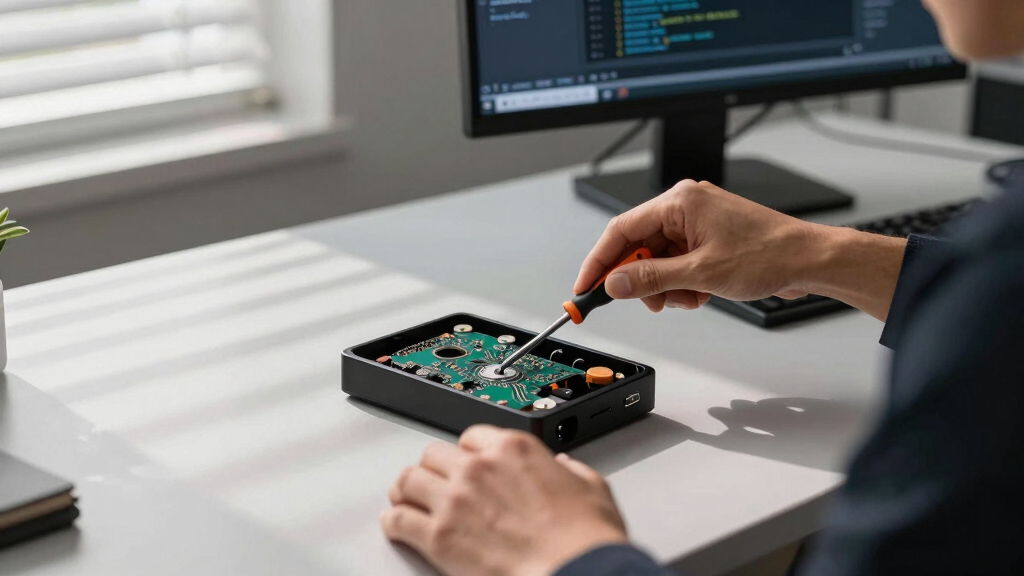
A hacker has publicly detailed the process of dumping, analyzing, and modifying hard drive firmware, revealing how low-level access can be exploited to manipulate storage devices. This development matters because it exposes vulnerabilities in widely used drives, raising concerns over data security and device integrity.
The hacker, active on a technical forum, described how they obtained firmware dumps from various HDDs and SSDs, including Samsung, Western Digital, and Hitachi models. They used tools like IDA Pro for analysis and explored methods to reflash modified firmware back onto drives. The goal was to understand and potentially exploit vulnerabilities at the firmware level, such as introducing delays in read operations to facilitate exploits like race conditions. The process involved live debugging via JTAG, reverse engineering unknown microcontroller architectures, and using AI for analysis. While the hacker initially aimed to exploit a race condition in an Xbox 360 console by modifying HDD firmware, they found alternative methods that made firmware modification unnecessary for their purpose. The research also uncovered that much of the existing information on firmware modification is outdated or not directly applicable to current models, complicating efforts to develop generalized exploits.
Why It Matters
This development matters because firmware-level vulnerabilities can allow malicious actors to manipulate or brick drives, potentially leading to data loss or security breaches. As firmware controls fundamental drive operations, compromised firmware could be used for persistent malware, data exfiltration, or sabotage of storage devices in sensitive environments. The research underscores the importance of securing firmware against unauthorized modifications and highlights potential attack vectors in consumer and enterprise storage hardware.
As an affiliate, we earn on qualifying purchases.
Background
Historically, firmware hacking has been a niche area, but recent disclosures suggest increasing interest in low-level hardware exploits. Previous research focused on older drives or theoretical vulnerabilities, but this new work demonstrates practical techniques for dumping, analyzing, and modifying firmware on current models. The hacker’s background in reverse engineering and embedded systems, combined with the use of AI tools, reflects a broader trend toward more sophisticated hardware security research. The specific focus on drives used in gaming consoles like the Xbox 360 shows how targeted firmware modifications can facilitate exploits in consumer devices, which often rely on these storage components.
“Most of the information I found was either wrong or didn’t apply to the model HDD I had. It was a lot of piecing together bits of data to form a bigger picture.”
— the hacker
“The idea of modifying the firmware to introduce delays was to help exploit a race condition in the Xbox 360. Although I found other ways, the process revealed significant vulnerabilities.”
— the hacker
As an affiliate, we earn on qualifying purchases.
What Remains Unclear
It remains unclear how widespread or easily exploitable these firmware vulnerabilities are across different drive models and manufacturers. The hacker’s work is highly technical and specific, and whether malicious actors can replicate or automate these techniques at scale is still unconfirmed. Additionally, the security community has yet to assess the full impact of these findings or develop effective mitigation strategies.
hard drive firmware recovery kit
As an affiliate, we earn on qualifying purchases.
As an affiliate, we earn on qualifying purchases.
What’s Next
Security researchers and hardware manufacturers are likely to investigate these techniques further, aiming to develop firmware protections and detection methods. Future developments may include automated tools for firmware analysis and patching, as well as increased scrutiny of low-level hardware security. The hacker indicated plans to continue exploring AI-assisted reverse engineering and broader firmware modifications across more drive models.
As an affiliate, we earn on qualifying purchases.
Key Questions
Can HDD firmware be easily hacked in everyday devices?
Currently, firmware hacking requires specialized knowledge and equipment. While possible, widespread exploitation in consumer devices remains unlikely without targeted effort.
What are the risks of firmware modification for drives?
Modified firmware can cause data loss, device malfunction, or security breaches if exploited maliciously. It also risks voiding warranties and damaging hardware if not done carefully.
Are manufacturers aware of these vulnerabilities?
Many manufacturers are aware of firmware security issues but may not have fully addressed them. Ongoing research like this highlights the need for stronger protections.
Could this technique be used for malicious attacks?
Yes, if malicious actors develop tools based on these techniques, they could potentially create firmware-based malware or hardware bricking exploits.