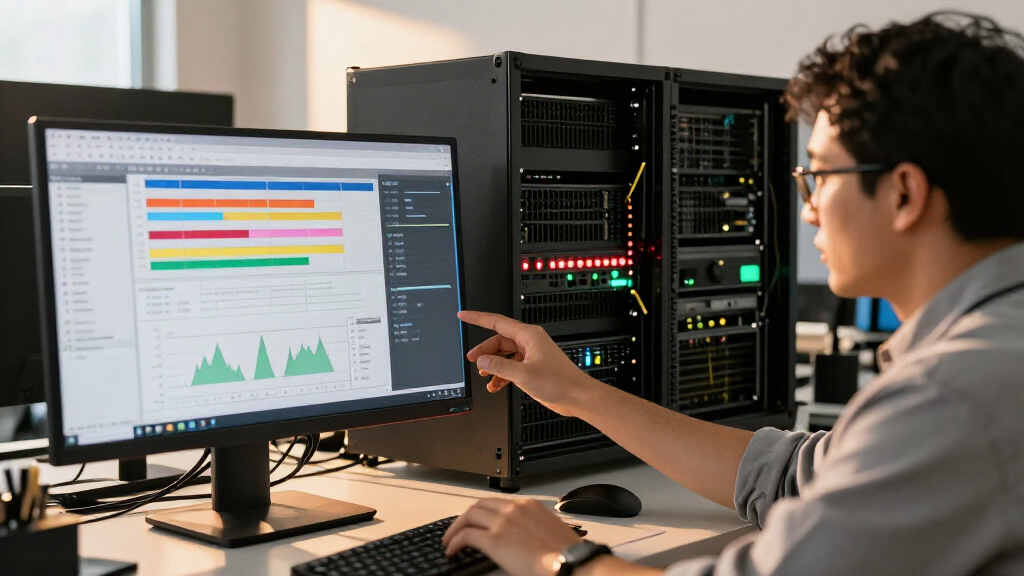
🔍 Read the full analysis: How GPU Cluster Scheduling Can Improve AI Workflows on ThorstenMeyerAI.com

Get the latest gadgets delivered free with Prime
- Fast, free delivery on millions of items
- Prime Video, Amazon Music and more included
- Member-only deals all year
TL;DR
Ai2 says it has replaced a priority-based GPU scheduler with a system built around project GPU-time budgets, hierarchical fair-share allocation and time slicing. The change is intended to direct scarce compute across research teams, but the source provides no before-and-after performance results.
Ai2 says it has replaced its priority-based GPU scheduler with a system that allocates compute through project time budgets, hierarchical fair-share rules and time slicing, as described in the original analysis. The research institute says the change is meant to direct limited GPU capacity across its teams through advance budgeting, though it has not reported whether the new approach has improved utilization, wait times or research output.
Ai2’s infrastructure team manages thousands of NVIDIA H100, B200 and B300 GPUs across clusters ranging from 88 to 1,024 GPUs, according to the institute. About 150 internal researchers use the hardware for work including language and vision model training, robotics reinforcement-learning simulations and scientific agent development. Ai2 says workloads request two to three times as much GPU capacity as is available at any given moment.
Under the previous arrangement, workloads could opt out of preemption, subject to limits on how many GPUs teams could protect from interruption. Preemptible jobs could use capacity above those limits. Ai2 says users sometimes kept idle workloads running so they could attach debugging jobs quickly, while priority levels lost meaning as more workloads were assigned the highest setting. The institute also says engineers spent much of their time responding to some tickets negotiating the shutdown of protected jobs on machines due for maintenance.
The new model assigns GPU time to projects rather than permanent control of particular GPUs. Ai2 says leadership can set relative project priorities through budgets before workloads arrive, with the scheduler using those allocations to inform how incoming work is handled. The institute also identifies hierarchical fair-share allocation and a time-slicing contract as parts of the system, but the source does not explain their detailed operation.
How Budgeting Changes GPU Access
The change addresses a practical problem for research groups: demand exceeds available GPU capacity, and allocation rules shape which experiments can run and when teams can respond to technical issues. A priority system can become less useful if nearly every job is marked urgent. Protected workloads can also make maintenance harder, while idle jobs may reserve access without doing useful work, according to Ai2’s account of its former setup.
Moving allocation decisions into project budgets could make tradeoffs more explicit and less dependent on negotiations around individual jobs. It may also let the institute revise how compute is divided as research needs change. But those are intended advantages, not reported outcomes. Without measurements of utilization, queue times, maintenance delays or research throughput, it is not possible to tell from the source whether the replacement has improved cluster performance.
There is a tradeoff in any budget-based model. Rigid allocations could leave GPUs unused when a project is not ready to run, while flexible reallocations could weaken the priorities the budgets are supposed to protect. How well the system handles urgent requests, unused allocations and shifting research schedules will shape its practical effect.
As an affiliate, we earn on qualifying purchases.
Why Ai2 Changed Its Scheduler
Ai2 says its earlier system combined priority levels with optional protection from preemption. In the institute’s description, some users kept no-op workloads running to make GPUs available quickly for debugging. It also says high-priority assignments became common enough to reduce the distinction between priority levels, leaving lower-priority work with less access. These are Ai2’s accounts of its own operations; the supplied material does not include independent verification or supporting operational data.
The institute says it tried tighter controls on priority settings and assigning GPU monopolies to important projects. It characterizes those approaches as inadequate for research demand that changes over time: monopolies could leave hardware idle when a team was not ready to use it. Ai2 frames the new system as a change in the allocation model, from protecting specific hardware to budgeting compute over time.
Ai2 also points to a broader resource-allocation concern discussed in a 2011 paper on Dominant Resource Fairness by Ghodsi and co-authors: users may have incentives to make their own workloads appear more valuable or highly utilized, even when that does not serve overall efficiency. That example helps explain the problem Ai2 says it is addressing; it is not evidence that the new scheduler performs better.
“We decided to iterate on the ownership model.”
— Ai2’s AI Infrastructure team
As an affiliate, we earn on qualifying purchases.
Performance and Rules Still Unreported
The supplied description gives no before-and-after performance measurements for GPU utilization, occupancy, job wait times, research throughput or maintenance response. It also does not say when the scheduler began operating, how long it has been in use, or whether the problems Ai2 reports have declined.
Important implementation details remain unspecified. The source does not explain how project budgets are calculated or revised, what happens when a project exhausts its allocation, how unused time is reassigned, or how urgent workloads are treated. It also names time slicing and hierarchical fair-share allocation without describing how they work in practice. As a result, the system’s real-world effects and the rules researchers will encounter remain unclear.
As an affiliate, we earn on qualifying purchases.
Evidence Needed From Deployment
The next useful update would describe how Ai2 sets and adjusts project budgets, along with the scheduler’s policies for urgent work, unused allocations and maintenance. Operational results over a defined period—including utilization, queue times and interruption rates—would help show whether the new model changes access to compute or reduces the problems the institute identified.
Until Ai2 publishes those details or measurements, the confirmed development is the change in allocation design and the institute’s explanation for making it. Whether the approach improves research operations remains unreported.
As an affiliate, we earn on qualifying purchases.
Key Questions
What changed in Ai2’s GPU scheduling system?
Ai2 says it replaced priority-based scheduling and protected jobs with a system that assigns GPU-time budgets to projects and uses hierarchical fair-share allocation and time slicing.
Why did Ai2 replace its previous scheduler?
The institute says high priority became common, idle workloads were sometimes kept running to preserve quick access, and protected jobs could complicate maintenance. These points are Ai2’s description of its own operations.
Has Ai2 shown that the new scheduler improves performance?
No performance results are included in the supplied source. It reports no before-and-after figures for GPU utilization, wait times, research throughput or maintenance response.
How does Ai2 decide each project’s GPU-time budget?
The available description does not explain how budgets are calculated, how often they can change, or what happens when a project uses its allocation early.
Primary source: Hugging Face · via ThorstenMeyerAI.com
Columbus Day / Indigenous Peoples' Day Picks
long weekend sales
As an affiliate, we earn on qualifying purchases.