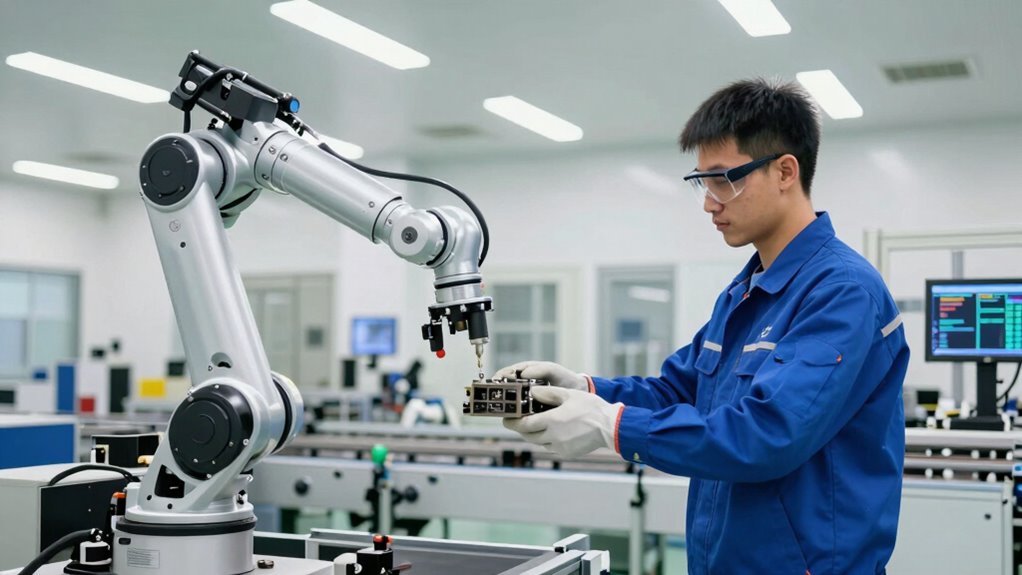

Human-robot collaboration changes workflows by boosting efficiency and safety while freeing you from repetitive or heavy tasks. Robots can adapt quickly using sensors and learning algorithms, allowing you to focus on more critical or creative work. They streamline processes, reduce errors, and speed up turnaround times. Safety protocols and proper training guarantee smooth cooperation with these autonomous systems. By understanding these advancements, you’ll see how your work environment can become more flexible and productive—if you keep exploring, you’ll uncover even more benefits.

Get the latest gadgets delivered free — and shop member deals
- Fast, free delivery on millions of items
- Access to Prime Big Deal Days deals on October 6–7
- Prime Video, Amazon Music and more included
Key Takeaways
- Integrates robots into workflows to enhance productivity and reduce human workload on repetitive or heavy tasks.
- Promotes flexible, efficient operations through real-time adaptation and learning algorithms.
- Improves safety and trust with sensors, safety protocols, and proper training.
- Streamlines processes, reducing errors and turnaround times for better overall efficiency.
- Transforms traditional workflows into more dynamic, collaborative, and safer work environments.
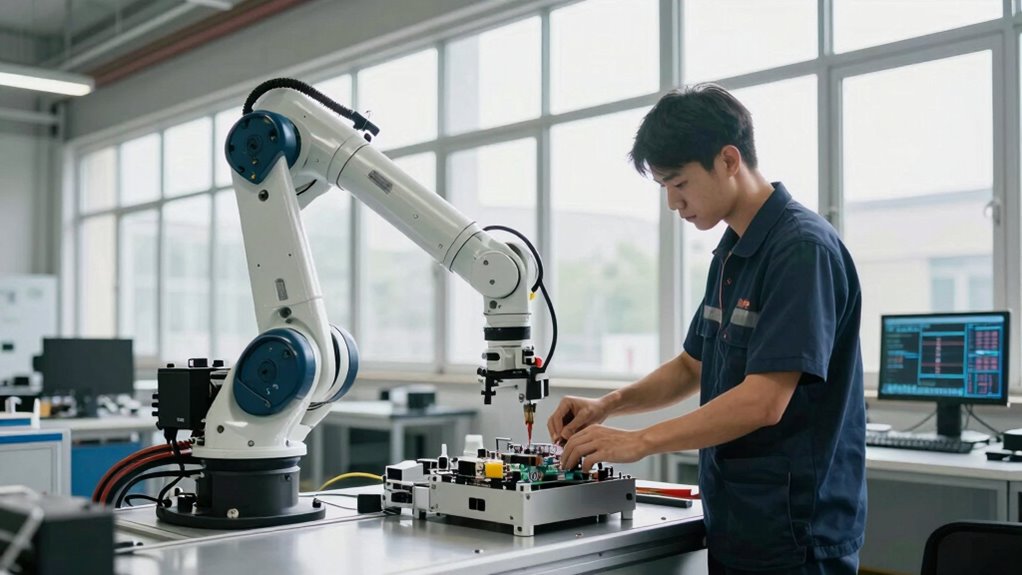
As industries increasingly adopt automation, human-robot collaboration has become essential for optimizing workflows. You find that working alongside robots isn’t about replacing humans but enhancing productivity through seamless integration. Robots today are designed with impressive adaptability, allowing them to handle a variety of tasks and adjust quickly to changes in the environment. This robot adaptability means you can rely on them to perform repetitive, precise, or heavy-duty work, freeing you to focus on tasks requiring critical thinking or creativity. The key to successful collaboration lies in understanding how these adaptable machines can fit into your daily operations and how to leverage their strengths effectively.
Human-robot collaboration boosts productivity by seamlessly integrating adaptable machines into daily workflows.
However, integrating robots into your workflow isn’t without its challenges. Safety protocols become vital when working alongside machines that can move swiftly or lift heavy objects. You need to make sure that safety measures are in place to prevent accidents and protect everyone on the floor. Proper safety protocols include deploying sensors, emergency stop buttons, and clear demarcations to keep humans and robots separated when necessary. Training is equally important, so you understand how to work safely around autonomous systems and respond appropriately in case of unexpected behavior. Following safety protocols not only minimizes risks but also builds confidence in the collaboration process, making the partnership more productive and less stressful. Additionally, understanding the role of safety measures helps foster trust and smooth integration between humans and robots.
When robots are equipped with advanced sensors and learning algorithms, their ability to adapt improves even further. You notice that as these systems learn from their environment, they become more intuitive, adjusting their actions based on real-time data. This responsiveness allows robots to work more harmoniously with you, accommodating changes in your workflow without requiring lengthy reprogramming. Such robot adaptability gives you the flexibility to switch tasks quickly, keeping your operations agile and efficient. Additionally, this dynamic interaction encourages a more collaborative environment where humans and robots complement each other’s strengths.
You also recognize that the integration of emerging trends in robotics technology continues to evolve, allowing for even more sophisticated and seamless collaboration. In practice, this means your workflows become more streamlined—less downtime, fewer errors, and faster turnaround times. You don’t have to micromanage every step; instead, you can trust that the robots will handle routine tasks while you oversee complex decision-making. As long as safety protocols are strictly followed, the risk of accidents diminishes, and the overall work environment feels safer and more productive. Ultimately, human-robot collaboration transforms traditional workflows into more flexible, efficient, and safer systems, empowering you to accomplish more with less effort and greater precision.
industrial safety sensors for robots
As an affiliate, we earn on qualifying purchases.
As an affiliate, we earn on qualifying purchases.
Frequently Asked Questions
How Do Robots Adapt to Changing Workflow Requirements?
Robots adapt to changing workflow requirements using adaptive algorithms that analyze data and learn from new patterns. They make real-time adjustments, allowing seamless shifts in tasks or processes. You can program them to respond dynamically, ensuring efficiency remains high even when conditions change unexpectedly. This flexibility helps you maintain productivity, reduce downtime, and optimize operations without manual reprogramming, making your workflows more resilient and responsive.
What Are the Costs Associated With Implementing Human-Robot Collaboration?
You face costs like initial investment, ongoing maintenance, and training. A thorough cost analysis reveals the financial commitment needed for hardware, software, and integration. Implementation challenges, including staff adaptation and system compatibility, can drive expenses higher. You must weigh these costs against the efficiency gains and productivity improvements. While upfront expenses seem significant, they often lead to long-term savings, making human-robot collaboration a worthwhile investment.
How Is Employee Training Affected by Robotic Integration?
You’ll find that employee training shifts focus to developing new robot skillsets, requiring more specialized training programs. You need to equip your staff with the knowledge to operate, troubleshoot, and collaborate effectively with robots. This means investing time in tailored programs that cover both technical and soft skills. As a result, your team becomes more adaptable, improving overall workflow efficiency and fostering a seamless human-robot partnership.
What Safety Standards Govern Human-Robot Interactions?
A stitch in time saves nine, and the same applies to robot safety. You must follow strict interaction protocols and safety standards like ISO 10218 or ANSI/RIA R15.06, which govern human-robot interactions. These standards guarantee safe robot operation, minimize risks, and promote seamless collaboration. By adhering to these guidelines, you create a secure environment where humans and robots work together efficiently without compromising safety.
How Do Robots Impact Overall Productivity Metrics?
Robots boost your overall productivity metrics by increasing robot efficiency, allowing tasks to be completed faster and more consistently. They reduce errors, which enhances output quality and minimizes rework. As a result, your workflows become smoother, and you can meet higher demands without sacrificing quality. This improved efficiency leads to better resource utilization, shorter production cycles, and ultimately, increased profitability for your operations.
human-robot collaboration safety protocols
As an affiliate, we earn on qualifying purchases.
As an affiliate, we earn on qualifying purchases.
Conclusion
So, by teaming up with robots, you’re not just improving workflows—you’re unleashing a productivity revolution that could turn your office into a sci-fi movie set! Imagine a world where humans and robots work so seamlessly, they finish tasks faster than you can say “automation,” leaving you free to dream bigger and conquer even the wildest projects. Embrace this collaboration, and watch your workday transform from chaos to crystal-clear efficiency—it’s a game-changer you can’t afford to miss!
robot learning algorithms for automation
As an affiliate, we earn on qualifying purchases.
As an affiliate, we earn on qualifying purchases.
collaborative robot safety training
As an affiliate, we earn on qualifying purchases.
As an affiliate, we earn on qualifying purchases.
Fall Picks
fall essentials
As an affiliate, we earn on qualifying purchases.

![Surveillance is not safety: A statement on the UK's latest threat to privacy [pdf]](https://geeksalad.org/wp-content/uploads/2026/06/surveillance-is-not-safety-a-statement-on-the-uk-s-latest-threat-to-privacy-pdf-featured-560x300.jpg)