
Neuromorphic computing could change the way you use technology by making machines faster, smarter, and more energy-efficient. It mimics the brain’s structure, allowing systems to learn and adapt on their own without relying heavily on data. This could improve robotics, autonomous vehicles, and AI in ways that feel more natural and intuitive. If you stay with us, you’ll discover how these innovations will shape the future of smart systems and daily life.

Get the latest gadgets delivered free — and shop member deals
- Fast, free delivery on millions of items
- Access to Prime Big Deal Days deals on October 6–7
- Prime Video, Amazon Music and more included
Key Takeaways
- Enables highly energy-efficient AI systems suitable for mobile and embedded devices.
- Facilitates real-time learning and adaptation without extensive training.
- Enhances autonomous robotics with more intuitive perception and decision-making.
- Promotes the development of smarter, more human-like AI and cognitive technologies.
- Could revolutionize data processing, making machines more efficient at handling complex, unstructured information.
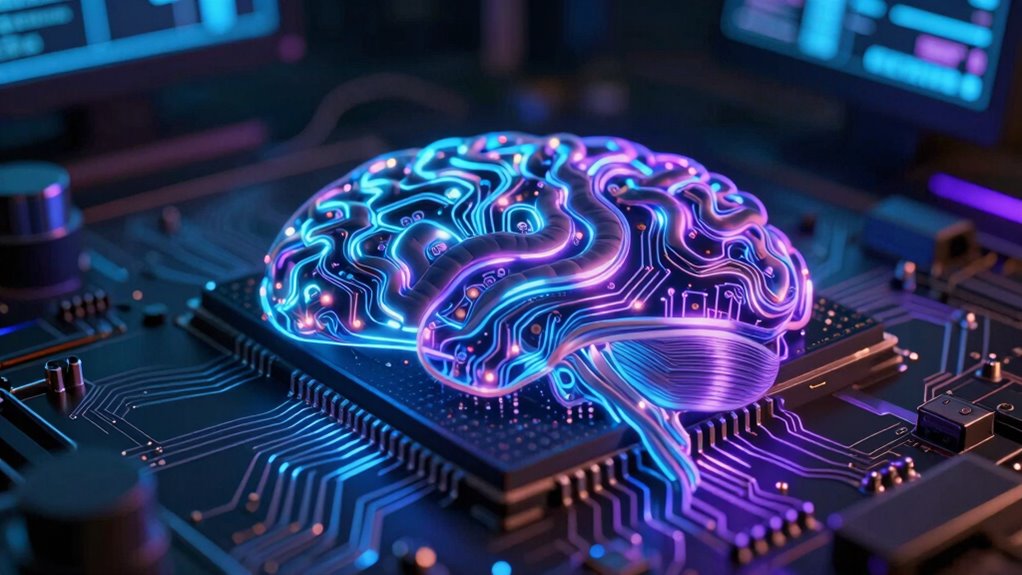
Neuromorphic computing is transforming the way we approach technology by mimicking the structure and function of the human brain. This innovative approach leverages brain inspired design to create systems that process information more like biological neurons, rather than traditional digital circuits. By doing so, it opens up new possibilities for machines that are not just faster but smarter and more adaptable. Instead of relying on conventional architectures, neuromorphic systems use interconnected nodes that emulate neurons, allowing for more natural and efficient information flow. This design approach means that these systems can handle complex, unstructured data much more effectively than traditional computers.
Neuromorphic systems mimic brain neurons for smarter, more efficient data processing and adaptability.
One of the most exciting prospects of neuromorphic computing lies in its potential for energy efficient processing. Unlike traditional processors that consume vast amounts of power, neuromorphic chips are built to operate with minimal energy, much like the human brain does. Your devices could, in the future, perform sophisticated tasks—such as real-time image recognition or natural language understanding—without draining your battery or requiring massive power supplies. This energy efficiency isn’t just a bonus; it’s a game-changer, especially for mobile devices, embedded systems, and large-scale data centers where power consumption is a critical concern.
As you think about the future, you can imagine neuromorphic systems revolutionizing AI and machine learning. Because they process information in a way that resembles brain activity, they can learn and adapt more naturally. Instead of needing vast amounts of labeled data and extensive training, these systems can develop a nuanced understanding of their environment through unsupervised learning, much like humans do. This means smarter, more flexible AI that improves over time and responds to new situations with little to no human intervention.
Furthermore, neuromorphic computing could redefine robotics, enabling machines to navigate and interact with their surroundings more intuitively. Imagine robots that can learn from experience, adapt to unpredictable environments, and make decisions on the fly—all powered by brain inspired design that mimics neural pathways. This shift could lead to more autonomous vehicles, advanced prosthetics, and smarter assistive devices that seamlessly integrate with human activities.
In essence, neuromorphic computing promises a future where machines are more efficient, adaptable, and capable of complex cognition. Its foundation in brain inspired design and energy efficient processing positions it as a pivotal technology that could reshape everything from AI to robotics, making systems smarter while using less power. Understanding neural-inspired architectures is key to appreciating how these systems operate and their potential impact. As this field continues to evolve, you’ll likely see it becoming a cornerstone of next-generation technology—bringing us closer to machines that think, learn, and adapt like the human brain.
As an affiliate, we earn on qualifying purchases.
Frequently Asked Questions
How Does Neuromorphic Computing Compare to Traditional Supercomputers?
You’ll find neuromorphic computing differs from traditional supercomputers by mimicking brain architectures, making it more efficient for tasks like adaptive learning. Unlike supercomputers, which rely on brute-force processing, neuromorphic systems process information more like biological brains, allowing for real-time learning and energy efficiency. This approach could revolutionize AI, enabling machines that adapt and learn naturally, surpassing traditional hardware in tasks requiring pattern recognition and decision-making.
What Industries Will Benefit Most From Neuromorphic Technology?
Like a master chef perfecting a recipe, you’ll see industries like healthcare, robotics, and autonomous vehicles benefit most from brain-inspired systems. Neuromorphic technology excels in sensory processing, enabling machines to interpret complex data quickly and efficiently. This innovation transforms how devices learn and adapt, making real-time decisions more accurate. As a result, you’ll notice smarter prosthetics, improved medical diagnostics, and safer self-driving cars advancing rapidly with neuromorphic systems.
Are There Ethical Concerns With Neuromorphic AI Development?
You should consider that developing neuromorphic AI raises ethical dilemmas, such as ensuring these systems don’t develop unintended behaviors or biases. Privacy concerns also come into play, especially if neuromorphic devices process sensitive data or make autonomous decisions. It’s essential to establish clear guidelines and safeguards to prevent misuse and protect individual rights, so responsible development benefits society without compromising ethical standards.
How Energy-Efficient Is Neuromorphic Computing?
Imagine your smartphone’s battery lasting twice as long—that’s how energy-efficient neuromorphic computing can be. It uses markedly less energy because its hardware mimics the brain’s neurons and synapses, reducing overall energy consumption. This hardware efficiency means neuromorphic systems can perform complex tasks with minimal power, making them ideal for sustainable AI applications and devices that need to operate longer without recharging.
When Will Neuromorphic Chips Become Commercially Available?
Neuromorphic chips are expected to become commercially available within the next few years, as advancements in artificial consciousness and sensory integration accelerate. You’ll likely see them integrated into AI systems that mimic human-like perception and decision-making. Companies are investing heavily, and ongoing research aims to make these chips more practical, energy-efficient, and capable of supporting complex tasks like real-time sensory processing and autonomous learning.
As an affiliate, we earn on qualifying purchases.
Conclusion
As you step into the future of neuromorphic computing, imagine it as a bridge connecting today’s technology to tomorrow’s possibilities. It’s like opening a door to a new universe where machines think more like humans, learning and adapting effortlessly. Embrace this revolution, because it’s not just evolution—it’s a leap into a smarter, more intuitive world that’s waiting just beyond the horizon. The future’s neural network is ready to reshape everything you know.
brain-inspired neural network devices
As an affiliate, we earn on qualifying purchases.
As an affiliate, we earn on qualifying purchases.
AI-powered autonomous robot kits
As an affiliate, we earn on qualifying purchases.
As an affiliate, we earn on qualifying purchases.
Halloween Picks
halloween
As an affiliate, we earn on qualifying purchases.