🔍 Read the full analysis: Optimize AI Voice Capture With These Studio Condenser Microphones In 2026 on ThorstenMeyerAI.com

Get the latest gadgets delivered free — and shop member deals
- Fast, free delivery on millions of items
- Access to Prime Big Deal Days deals on October 6–7
- Prime Video, Amazon Music and more included
TL;DR
In 2026, leading studio condenser microphones like the RØDE NT1 Signature and Audio-Technica AT2020 are recommended for enhancing AI voice capture quality. These models balance sound clarity, build quality, and connectivity options, making them ideal for professional and home studios.
In 2026, several new studio condenser microphones have been introduced, specifically optimized for AI voice capture, with models like the RØDE NT1 Signature and Audio-Technica AT2020 gaining recognition for their performance. For a detailed review, see the original analysis. These developments come as the demand for high-quality voice data for AI training and virtual assistant applications continues to rise, making microphone choice more critical than ever for content creators, voice actors, and AI developers.
The RØDE NT1 Signature remains a top choice for its exceptional sound clarity and durability, making it suitable for professional voice recording in AI applications. Learn more about the best options in top studio microphones. It features a wide, flat frequency response, low self-noise, and robust build quality, which are essential for capturing nuanced vocal data. Meanwhile, the Audio-Technica AT2020 continues to be favored for its affordability and solid performance, offering a reliable option for budget-conscious users who need clear, natural voice recordings.
In addition, the RØDE NT1 5th Gen introduces USB-C connectivity, simplifying setup for modern digital workflows, though at a higher price point. This model caters to users who prefer plug-and-play solutions, especially in home studio environments or portable setups. Industry experts note that while XLR microphones generally offer higher audio fidelity and expandability, the latest USB models are closing the gap, making high-quality voice capture more accessible.
Market analysis indicates that build quality, connectivity options, and included accessories like shock mounts and pop filters are increasingly influencing purchasing decisions. Discover how to maximize your studio sound with the latest AI condenser microphones. Premium models often include features such as multiple pickup patterns and enhanced noise rejection, which are advantageous for AI voice data collection in noisy environments. Conversely, entry-level models still deliver impressive results for basic voice recording needs, ensuring broad accessibility across user levels.
The 10 picks
- 1
 RØDE NT1 5th Gen Studio Condenser Microphone, XLR + USB-C, SilverView on Amazon →
- 2
 RØDE NT1 Signature Series Studio Condenser Microphone, BlackView on Amazon →
- 3
 Audio-Technica AT2020 Cardioid Condenser Studio XLR Microphone, BlackView on Amazon →
- 4
 AKG Pro Audio P120 – Affordable 2/3-Inch Diaphragm Condenser Microphone for C…View on Amazon →
- 5
 Melon Audio MA-87 Studio Condenser Microphone with AccessoriesView on Amazon →
- 6
 MAONO A04 Gen2 XLR/USB Condenser Microphone Kit for PC Podcast RecordingView on Amazon →
- 7
 Maono PM320S Condenser PC Microphone with XLR Cable, Boom Arm, Pop FilterView on Amazon →
- 8
 Mackie EM-Series Large-Diaphragm Condenser Microphone (EM-91C)View on Amazon →
- 9
 FIFINE T669 Studio Condenser USB Microphone for Recording and PodcastingView on Amazon →
- 10
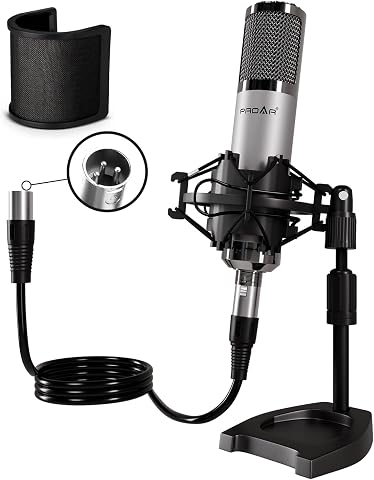 XLR Condenser Microphone with Desktop Stand for Vocals and PodcastingView on Amazon →
Why High-Quality Microphones Matter for AI Voice Data
The choice of condenser microphones in 2026 directly impacts the quality of voice data used for AI training, virtual assistants, and speech recognition systems. Superior sound clarity and low noise floors lead to more accurate, natural-sounding AI interactions, which are crucial for user experience and system efficiency. As AI applications become more integrated into daily life, the demand for high-fidelity voice recordings grows, emphasizing the importance of investing in reliable, professional-grade microphones.
Furthermore, advancements like USB-C connectivity and improved durability enhance usability for content creators and developers working in diverse environments. The ability to capture nuanced vocal data with minimal background noise reduces the need for extensive post-processing, saving time and resources. Overall, these microphone improvements support the development of more sophisticated, responsive AI systems, making this a significant technological milestone for the industry.
2026 Microphone Innovations and Industry Trends
The microphone market in 2026 reflects ongoing innovation driven by the expanding needs of AI voice applications. Manufacturers such as RØDE and Audio-Technica have introduced models that emphasize both audio fidelity and ease of use, recognizing the growing importance of high-quality voice data. The RØDE NT1 Signature has maintained its reputation as a top-tier choice, while the new NT1 5th Gen with USB-C connectivity exemplifies the trend toward simplified, versatile recording solutions.
Historically, condenser microphones have been favored in studio environments for their detailed sound capture, but recent models have become more robust and adaptable for a variety of settings. The integration of features like multiple pickup patterns, noise rejection, and durable construction reflects industry efforts to meet the demands of professional voice recording for AI training and virtual assistant development. These trends indicate a shift toward more accessible, high-performance microphones that support the growing AI ecosystem.
“The 2026 lineup of studio condenser microphones offers unprecedented clarity and ease of integration, making them ideal for AI voice data collection.”
— Thorsten Meyer, audio technology expert
Remaining Questions About 2026 Microphone Capabilities
While the new models are praised for their features, it is not yet clear how they perform in highly variable or noisy environments over extended periods. Long-term durability and real-world AI voice data collection tests are still underway, and some experts question whether the USB-C models can match the audio fidelity of traditional XLR setups in all scenarios. Additionally, the impact of these microphones on large-scale AI training remains to be fully assessed, with ongoing studies evaluating their effectiveness in diverse acoustic conditions.
Upcoming Developments and Industry Adoption in 2026
Manufacturers are expected to release further updates to their microphone lines, incorporating AI-friendly features such as automatic noise filtering and adaptive pickup patterns. Industry adoption of these microphones for large-scale AI voice data collection is anticipated to accelerate, especially as more content creators and developers recognize the importance of high-quality audio capture. Standardization efforts may also emerge, establishing benchmarks for voice recording quality tailored to AI training needs.
Researchers and industry leaders will continue to evaluate these models’ performance, with initial field tests and user feedback shaping future designs. The integration of these microphones into broader AI development workflows is likely to increase, making high-fidelity voice capture more accessible and efficient in the coming months.
Key Questions
Do I need special equipment to use these microphones for AI voice capture?
Most of the new condenser microphones, especially XLR models like the RØDE NT1 Signature, require an audio interface with phantom power. USB models such as the NT1 5th Gen can connect directly to computers via USB-C, simplifying setup for AI voice recording. Consider your existing setup and future needs when choosing between these options.
Are these microphones suitable for live voice performances in AI-powered applications?
Generally, condenser microphones are designed for studio use and may not be ideal for live performances due to their sensitivity and feedback susceptibility. However, they excel in controlled environments for high-fidelity voice data collection. For live AI applications, specialized microphones or dynamic models are often preferred.
How do USB-C microphones compare to traditional XLR models in terms of AI voice quality?
USB-C microphones like the RØDE NT1 5th Gen offer convenience and decent audio quality suitable for many AI voice recording scenarios. However, XLR models paired with high-quality audio interfaces typically provide higher fidelity, lower noise, and greater expandability, making them preferable for professional-grade AI data collection.
Will the new microphones support future AI voice technology features?
While current models focus on sound quality and connectivity, manufacturers are exploring features like adaptive noise cancellation and intelligent pattern selection. Future updates or models may incorporate these AI-friendly features to further optimize voice capture for AI training and virtual assistants.
Source: ThorstenMeyerAI.com
Halloween Picks
halloween
As an affiliate, we earn on qualifying purchases.