
TL;DR

Get the latest gadgets delivered free — and shop member deals
- Fast, free delivery on millions of items
- Access to Prime Big Deal Days deals on October 6–7
- Prime Video, Amazon Music and more included
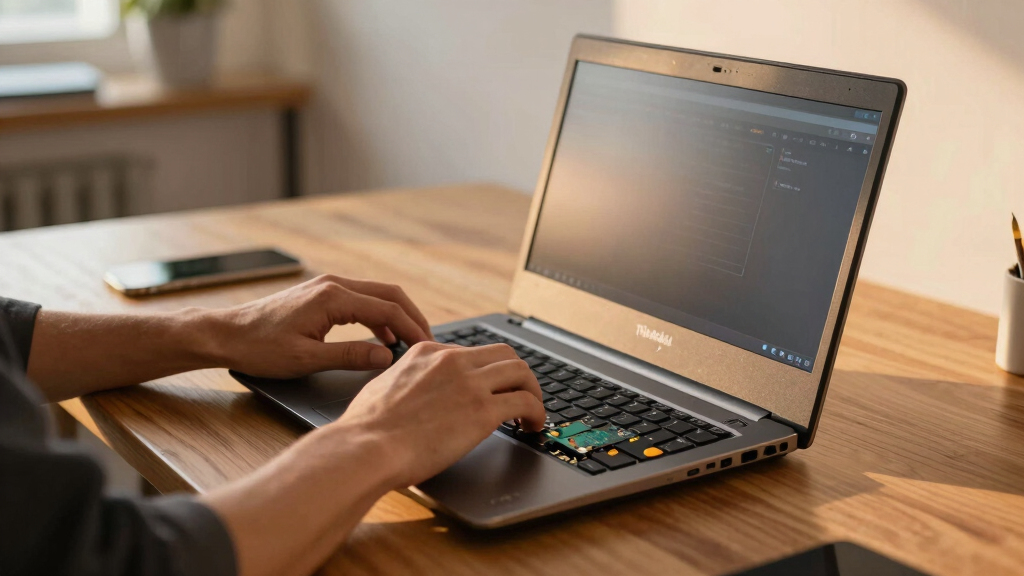
A developer has successfully ported the firmware of the ThinkPad X61 to Coreboot, leveraging AI tools for reverse engineering. This marks a significant step in open-source firmware development for older laptops.
A developer has successfully ported the firmware of the ThinkPad X61 to Coreboot, marking a significant milestone in open-source firmware efforts for legacy hardware. This achievement was made possible through the innovative use of AI-assisted reverse engineering tools, reducing the traditionally lengthy process to a matter of weeks.
The project involved reverse engineering the firmware of the IBM/Lenovo ThinkPad X61, which uses a Phoenix BIOS with a GM965 northbridge and ICH8 southbridge. The developer utilized AI tools, including Anthropic’s Claude Opus 4.6, to analyze and extract critical firmware components from vendor BIOS images. After dumping and analyzing the BIOS with tools like Ghidra and radare2, the developer employed AI prompts to accelerate understanding of the firmware’s structure.
Following the extraction of key initialization sequences, the developer wrote a coreboot port tailored to the X61’s hardware. The process involved identifying multiple versions of the raminit code, likely for recovery purposes, and adapting the firmware to run natively on coreboot. The port reportedly worked on the first attempt, significantly reducing the typical development timeline.
This effort represents a breakthrough in open-source firmware support for older laptops, especially those lacking existing coreboot ports. The developer emphasized that AI-assisted reverse engineering dramatically shortened what would normally be a 3-6 month process, demonstrating the potential for AI to transform firmware development workflows.
Implications for Open-Source Firmware Development
This development matters because it opens the door for more legacy laptops like the ThinkPad X61 to run fully open-source firmware, enhancing security, privacy, and user control. It also showcases how AI tools can accelerate reverse engineering tasks that traditionally require extensive manual effort, potentially transforming firmware hacking and customization.
By porting coreboot to the X61, the project demonstrates the feasibility of reviving older hardware with modern, open-source firmware, extending the lifespan and functionality of devices that otherwise rely on outdated or closed-source BIOS implementations. This could inspire similar efforts for other legacy platforms.
As an affiliate, we earn on qualifying purchases.
Background on Firmware Porting and AI Assistance
The ThinkPad X61, released in 2007, uses a Phoenix BIOS with proprietary firmware that lacks open-source support. Prior attempts to port coreboot to this platform failed due to the complexity of reverse engineering the firmware, especially without official documentation.
Recent advances in AI-assisted reverse engineering, including large language models like Claude and tools like Ghidra, have begun to change this landscape. Developers have experimented with AI prompts to analyze firmware images, extract initialization routines, and understand hardware configurations more rapidly than traditional methods.
This project builds on these innovations, applying AI to a legacy device that previously seemed inaccessible for open-source firmware porting, marking a notable milestone in the community’s efforts to extend open firmware support to older hardware.
“Using AI tools like Claude and Ghidra, I was able to extract and understand the firmware structure in a fraction of the usual time. The port worked on the first try, which was astonishing.”
— Developer behind the project
“This is a proof of concept that shows how AI can revolutionize reverse engineering, especially for older or poorly documented hardware.”
— Firmware expert
coreboot firmware for legacy laptops
As an affiliate, we earn on qualifying purchases.
As an affiliate, we earn on qualifying purchases.
Remaining Challenges and Unknowns in Firmware Porting
While the initial port appears successful, it is not yet clear how stable and complete the firmware implementation is across all hardware functions of the X61. Further testing is needed to confirm compatibility with all device components, such as Wi-Fi, audio, and power management.
Additionally, the long-term maintainability of the port and whether it can be easily updated or extended remains uncertain. The developer has not yet published detailed documentation or source code for the port, which could influence community adoption.
As an affiliate, we earn on qualifying purchases.
Next Steps for Community Adoption and Testing
The developer plans to release the port publicly, inviting community testing and feedback. Further work will focus on stabilizing the firmware, fixing bugs, and documenting the process to enable others to replicate or build upon it.
Meanwhile, efforts to port coreboot to other legacy hardware using AI tools are expected to accelerate, potentially broadening open-source firmware support for older laptops and desktops.
open-source firmware for old laptops
As an affiliate, we earn on qualifying purchases.
As an affiliate, we earn on qualifying purchases.
Key Questions
Is the port of the ThinkPad X61 to Coreboot complete?
The initial port has been successfully tested and appears functional, but comprehensive testing across all hardware features is ongoing. Full stability has not yet been confirmed.
How did AI assist in the reverse engineering process?
The developer used AI prompts with tools like Claude and Ghidra to analyze BIOS images, identify key routines, and understand firmware structure, significantly reducing manual effort and development time.
Will the port be available for others to use?
The developer intends to release the port publicly after further testing and refinement, enabling the community to adopt and improve it.
Can this approach be used for other legacy hardware?
Yes, the success of AI-assisted reverse engineering on the X61 suggests it could be applied to other unsupported or poorly documented legacy devices, opening new possibilities for open firmware support.
Source: Hacker News
Fall Picks
fall essentials
As an affiliate, we earn on qualifying purchases.