
TL;DR

Get the latest gadgets delivered free — and shop member deals
- Fast, free delivery on millions of items
- Access to Prime Big Deal Days deals on October 6–7
- Prime Video, Amazon Music and more included
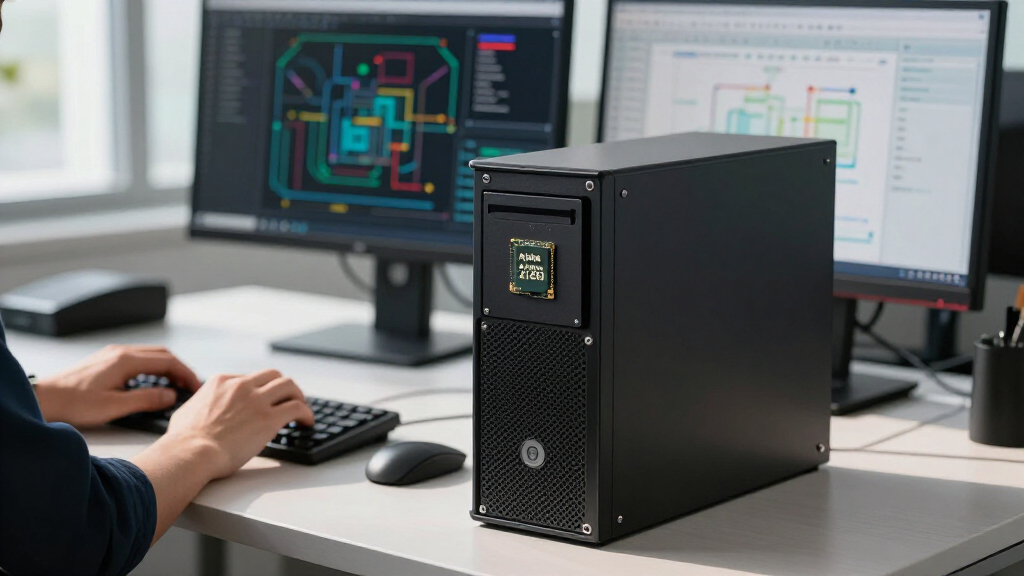
The Alpha 21264, released in 1998 by Digital Equipment Corporation, is a high-performance RISC CPU that set new standards for server and computing applications. This report examines its technical innovations and industry significance.
Digital Equipment Corporation introduced the Alpha 21264 CPU in 1998, claiming it to be their most advanced RISC processor designed for high-end servers and workstations. The chip’s launch marked a significant milestone in RISC architecture, aiming to deliver unprecedented performance and scalability.
The Alpha 21264 features a 64-bit architecture, out-of-order execution, and a superscalar design capable of executing multiple instructions per cycle. It incorporates a 0.35-micron process technology, with clock speeds reaching up to 833 MHz, and includes advanced features such as large on-chip caches, branch prediction, and speculative execution.
According to Digital, the Alpha 21264 offers more than double the performance of its predecessor, the Alpha 21164, with benchmarks indicating significant gains in throughput and efficiency. The processor is targeted primarily at enterprise servers, high-performance computing, and scientific applications, aiming to challenge rival architectures like MIPS and RISC-based SPARC processors.
Why the Alpha 21264 Represents a Major Step Forward
The Alpha 21264 is considered a major technological advancement because it pushes the boundaries of RISC design, offering higher performance and scalability for demanding enterprise applications. Its introduction signals Digital’s commitment to maintaining leadership in high-performance computing during a period of industry competition.
Industry analysts see this processor as a key development in the evolution of RISC architectures, potentially influencing future CPU designs and establishing new benchmarks for server performance. Its success could impact the competitive landscape, challenging established players like Sun Microsystems and MIPS Technologies.
As an affiliate, we earn on qualifying purchases.
The 1990s RISC Architecture Race and Digital’s Position
Throughout the 1990s, RISC architectures gained prominence due to their efficiency and performance advantages over traditional CISC processors. Companies like Digital, MIPS, Sun, and IBM developed high-performance RISC chips to meet the needs of enterprise and scientific computing.
Digital’s Alpha series was renowned for its performance and innovation, with the Alpha 21164 already established as a leading processor. The Alpha 21264’s development was driven by the need to sustain this leadership amid industry competition and rapid technological change, including advancements in fabrication processes and cache design.
high performance RISC server processor
As an affiliate, we earn on qualifying purchases.
As an affiliate, we earn on qualifying purchases.
Unconfirmed Aspects and Industry Reception of the Alpha 21264
While Digital claims significant performance improvements, independent benchmarks and evaluations are still emerging, and the full real-world impact of the Alpha 21264 remains to be seen. It is also unclear how well the processor will perform in diverse application environments and how it will compete against emerging architectures.
Industry acceptance and adoption rates are still developing, and some analysts question whether the advanced features will translate into widespread deployment outside early adopters.
As an affiliate, we earn on qualifying purchases.
Next Steps for the Alpha 21264 and Industry Adoption
Digital is expected to begin shipping the Alpha 21264 to select enterprise customers and partners in the coming months. Industry benchmarks and independent testing will provide clearer insights into its performance and competitiveness.
Further developments may include optimizations for specific workloads and integration into Digital’s broader product lineup. Industry analysts will closely monitor how the processor influences server and scientific computing markets in 1998 and beyond.
As an affiliate, we earn on qualifying purchases.
Key Questions
What are the key technical features of the Alpha 21264?
The Alpha 21264 features a 64-bit architecture, out-of-order execution, superscalar design, large caches, branch prediction, and clock speeds up to 833 MHz, representing a significant leap in RISC technology.
How does the Alpha 21264 compare to previous Digital processors?
It offers more than double the performance of the Alpha 21164, with improvements in throughput, cache efficiency, and scalability, aiming to meet the needs of high-end servers and scientific computing.
What is the industry significance of the Alpha 21264?
The processor is seen as a major step forward in RISC architecture, potentially influencing future CPU designs and challenging competitors in the enterprise server market.
When will the Alpha 21264 be available for commercial purchase?
Digital plans to begin shipping the Alpha 21264 to select customers and partners in the upcoming months, with broader availability expected shortly afterward.
Are there any concerns or uncertainties about the Alpha 21264?
Independent performance evaluations are still pending, and it remains uncertain how well the processor will perform outside early testing environments or how quickly it will be adopted industry-wide.
Source: hn
Evergreen bestsellers Picks
bestsellers
As an affiliate, we earn on qualifying purchases.