
TL;DR

Get the latest gadgets delivered free with Prime
- Fast, free delivery on millions of items
- Prime Video, Amazon Music and more included
- Member-only deals all year
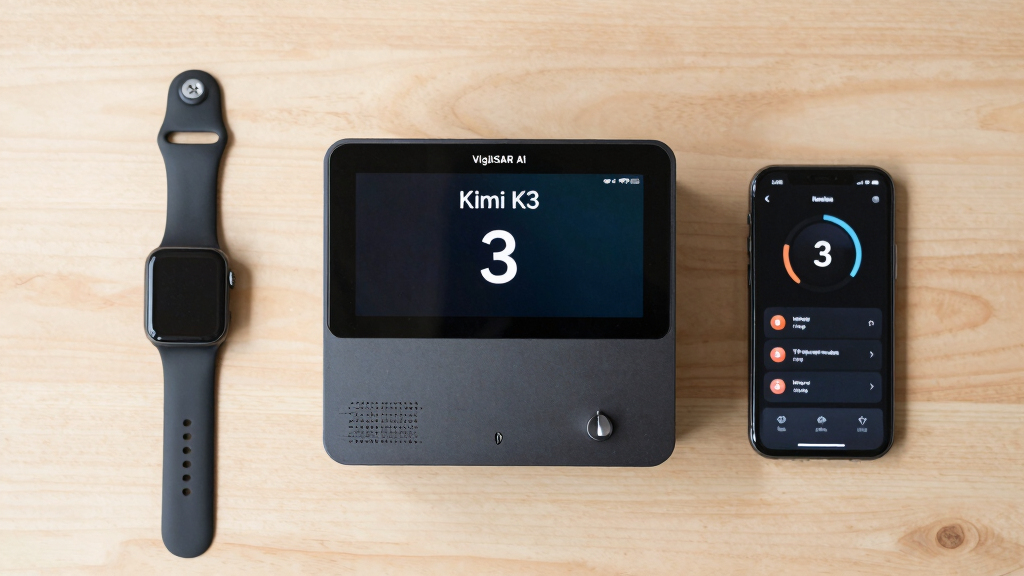
Moonshot’s Kimi K3 has made a notable debut at #3 on VigilSAR’s AI leaderboard, surpassing many well-known models. This marks a significant development in defense-ISR AI benchmarking.
Moonshot’s Kimi K3 has debuted at #3 on VigilSAR’s AI leaderboard, a notable achievement in defense-ISR AI benchmarking, surpassing several GPT and Gemini models. This development is confirmed by the publicly available leaderboard published on July 17, 2026, which ranks models based on their performance on a private, standardized set of 300 tasks designed to evaluate reasoning, reporting, and restraint in intelligence-surveillance-reconnaissance contexts. For more details, see VigilSAR’s benchmark report.
The VigilSAR benchmark, managed by Thorsten Meyer, evaluates 14 large language models (LLMs) across a private task set that measures their ability to perform reliably in intelligence and surveillance scenarios. This benchmark is discussed in the original analysis. The scores are presented in bands rather than precise ranks, with Kimi K3 scoring 64.65 in Band B, placing it ahead of all GPT and Gemini models on the leaderboard. The benchmark emphasizes transparency through confidence intervals, held-out set comparisons, and cost-per-correct-answer metrics, aiming to assess models’ real-world deployment potential.
According to the published results, Claude-Fable-5 leads with a score of 67.77 in Band A. Kimi K3’s placement in Band B indicates it is among the top-performing models in this specific evaluation, especially considering it is a debut entry. The benchmark explicitly states that vendor claims are not evidence of performance, and the models are evaluated on their ability to handle complex, sensitive tasks relevant to defense and surveillance work. The leaderboard is designed to compare capabilities without exposing the underlying evaluation data, ensuring integrity and fairness.
Implications of Kimi K3’s High Ranking in Defense AI
The debut of Kimi K3 at #3 on VigilSAR’s leaderboard signals a shift in the competitive landscape of defense and surveillance AI. Its performance surpassing many GPT and Gemini models suggests that Moonshot’s model is becoming a serious contender for deployment in critical intelligence applications. This development matters because it highlights the rapid progress of specialized models tailored for security and ISR tasks, which could influence procurement decisions and strategic AI investments in defense sectors.
Furthermore, the emphasis on transparency and economic metrics in the benchmark underscores the importance of practical deployment considerations, not just raw performance. As models like Kimi K3 demonstrate their capabilities, the industry may see increased adoption of locally deployable, cost-effective AI solutions for sensitive operations, potentially reshaping the landscape of defense AI technology.
As an affiliate, we earn on qualifying purchases.
Background on VigilSAR’s Benchmark and Model Evaluation
VigilSAR’s AI benchmark, launched with the goal of assessing trustworthiness and reasoning in LLMs for defense and ISR applications, is unique in its focus on task-specific performance rather than general trivia. The evaluation, conducted on July 17, 2026, involves 14 models tested on a private set of 300 tasks designed to simulate real-world intelligence scenarios. The results are publicly displayed in bands to prevent overinterpretation of rank precision, with confidence intervals and held-out set comparisons providing transparency.
Prior to Kimi K3’s debut, the leaderboard was led by Claude-Fable-5, with other models like GPT-5.x and Gemini variants occupying lower bands. The benchmark’s design aims to measure models’ readiness for deployment in sensitive environments, emphasizing both capability and economics. The evaluation is independent, with operators stating they are not paid by vendors and that the goal is objective measurement rather than promotional claims.
“The debut of Kimi K3 at #3 indicates a significant step forward in defense-specific AI capabilities, especially given its performance across complex tasks.”
— an anonymous researcher
intelligence surveillance reconnaissance AI tools
As an affiliate, we earn on qualifying purchases.
As an affiliate, we earn on qualifying purchases.
Uncertainties About Kimi K3’s Capabilities and Deployment
It is not yet clear how Kimi K3 performs outside the specific tasks included in the VigilSAR benchmark or how it compares in operational environments. Details about its training data, fine-tuning processes, and deployment readiness are still emerging. Additionally, the long-term stability of its performance and potential updates are unknown at this stage.
large language models for defense applications
As an affiliate, we earn on qualifying purchases.
As an affiliate, we earn on qualifying purchases.
Next Steps for VigilSAR Model Evaluation and Industry Impact
Further benchmarking and real-world testing are expected to follow, with potential updates to the leaderboard as models are refined. Industry watchers will be monitoring whether Kimi K3’s performance translates into deployment in defense and intelligence operations. Additionally, more models may enter the leaderboard, and transparency around evaluation methods could increase, influencing procurement and development strategies.
AI benchmarking tools for security
As an affiliate, we earn on qualifying purchases.
As an affiliate, we earn on qualifying purchases.
Key Questions
What does Kimi K3’s debut at #3 mean for AI in defense?
Kimi K3’s high ranking suggests it is a strong candidate for deployment in intelligence and surveillance tasks, potentially influencing defense AI procurement decisions.
How is the VigilSAR benchmark different from other AI evaluations?
VigilSAR focuses specifically on trustworthiness, reasoning, and restraint in defense-relevant scenarios, using private task sets and transparent scoring in bands rather than precise ranks.
Can Kimi K3 be used in operational environments now?
It is not yet confirmed whether Kimi K3 is deployment-ready; current scores are based on benchmarking data, and real-world performance needs further validation.
Will other models improve their standings soon?
It is likely, as ongoing development and testing in the AI community aim to enhance models’ capabilities for defense applications.
What are the implications for AI safety and trustworthiness?
The benchmark’s emphasis on restraint and reasoning highlights the importance of developing models that are safe and reliable in sensitive contexts.
Source: ThorstenMeyerAI.com
Halloween Picks
halloween
As an affiliate, we earn on qualifying purchases.