
TL;DR
A team led by Sébastien Fontaine found that sterilized soil continues to emit carbon dioxide for years, indicating possible non-biological biochemical reactions. This challenges the idea that such processes are exclusive to living organisms and may predate life on Earth.
Sébastien Fontaine and his team have demonstrated that sterile soil samples continue to emit carbon dioxide for over six years, indicating that certain biochemical reactions may occur independently of living organisms, challenging long-held assumptions in biology and geology.
Fontaine’s team sterilized soil samples using gamma radiation, eliminating microbial life, yet observed persistent carbon dioxide emissions. These emissions declined but did not cease over years, even after multiple sterilization attempts. When enzymes from yeast were added, emissions spiked, suggesting some ongoing chemical reactions. Microscopic analysis confirmed the absence of DNA or RNA, ruling out microbial contamination, but cells observed under electron microscopy were dead.
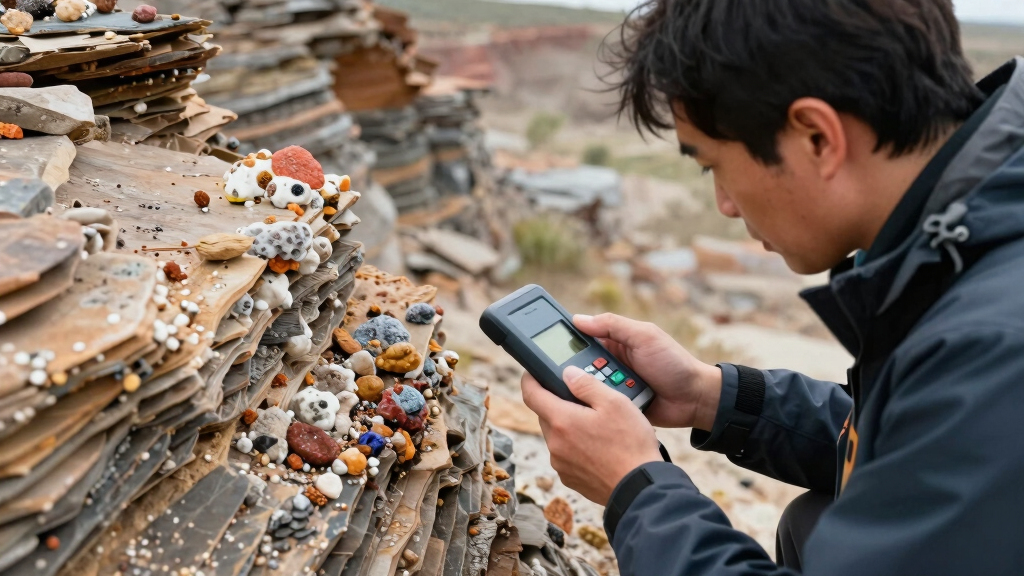
Further experiments involved measuring electron flow through the soil using a custom fuel cell, which detected currents indicative of metabolic-like electron transfer. The findings imply that certain reactions, akin to biological metabolism, can occur in non-living geologic material, powered by chemical catalysts present in soil.
Why It Matters
This discovery could redefine understanding of biochemical processes, suggesting that some reactions previously attributed solely to living cells might occur naturally in Earth’s geology. It raises questions about the origins of life and the potential for similar processes on other planets, impacting astrobiology and our comprehension of Earth’s early history.

MySoil Soil Test Kit, Unlock Your Lawn & Garden Potential, Complete & Accurate Nutrient and pH Analysis with Recommendations Tailored to Your Soil and Plant Needs
KNOW BEFORE YOU GROW | Grow the healthiest, sustainable lawn and garden with the most accurate and easy…
As an affiliate, we earn on qualifying purchases.
As an affiliate, we earn on qualifying purchases.
Background
For decades, scientists believed that complex metabolic reactions required living cells and enzymes. Fontaine’s research builds on earlier findings of microbial activity in soil but now shows that even in the absence of life, soil can exhibit biochemical-like reactions. The experiments challenge the notion that metabolism is exclusive to life and suggest that some reactions may be intrinsic to mineral and organic chemistry in the Earth’s crust.
“Our results suggest that some biochemical reactions may not be unique to living organisms but could be a natural feature of geological processes.”
— Sébastien Fontaine
“This research indicates that the chemistry of life is not solely biological but also a fundamental aspect of geology.”
— Joseph Moran, organic chemist at the University of Ottawa

Me Magnets Reaction Reflection Kit
Helps youth understand problem size, reaction size, and underlying factors
As an affiliate, we earn on qualifying purchases.
As an affiliate, we earn on qualifying purchases.
What Remains Unclear
It remains unclear whether these reactions are widespread in natural settings or limited to laboratory conditions. The precise chemical mechanisms and catalysts involved are still under investigation. Additionally, the implications for the origin of life and extraterrestrial biology require further study.

Thames & Kosmos Saltwater Fuel Cell Robot STEM Experiment Kit | Build a Walking Robot, No Batteries Required, Walks Up to 1 Hour on 1 Drop of Salt Water, Explore Non-Toxic, Renewable Energy, Ages 8+
BUILT TO MOVE! Kids ages 8 & up assemble a walking robot that’s powered by salt water and…
As an affiliate, we earn on qualifying purchases.
As an affiliate, we earn on qualifying purchases.
What’s Next
Further research will aim to identify specific chemical catalysts responsible for these reactions, explore their prevalence in natural environments, and assess their potential role in early Earth chemistry and astrobiology. Additional experiments will test whether similar processes occur in different types of soil and mineral compositions.

Duluth Labs Organic Chemistry Model Student Kit – MM-005 with Atom Configurations and Bonds for Students and Teachers
Includes multiple geometric configurations of carbon and orbitals to model free lone pairs of electrons
As an affiliate, we earn on qualifying purchases.
As an affiliate, we earn on qualifying purchases.
Key Questions
Could these reactions explain the origin of life?
While the findings suggest some biochemical-like reactions can occur without life, it is not yet clear if they played a role in the origin of life. Further research is needed to explore this possibility.
Do these reactions occur naturally in the Earth’s crust?
It is currently unknown whether such reactions are common in natural, unsterilized soil or geological formations. The laboratory conditions may differ from natural environments.
What implications does this have for extraterrestrial life?
The findings raise the possibility that similar biochemical processes could occur on other planets with mineral-rich surfaces, even without life, influencing the search for extraterrestrial life.
How do these reactions compare to biological metabolism?
They resemble biological metabolism in that they involve electron transfer and energy release, but they occur without enzymes or living cells, powered instead by chemical catalysts present in soil.
Source: Hacker News