
📊 Full opportunity report: When One Agent Isn’t Enough: Claude Now Builds Its Own Team Of Agents On The Fly on ThorstenMeyerAI.com — validation score, market gap, and execution plan.

Get the latest gadgets delivered free with Prime
- Fast, free delivery on millions of items
- Prime Video, Amazon Music and more included
- Member-only deals all year
TL;DR
Anthropic’s Claude has introduced a new feature called dynamic workflows, enabling it to create and manage its own team of subagents during task execution. This approach aims to improve handling of complex, high-value tasks by addressing limitations of single-agent operation.
Anthropic’s Claude has introduced a new capability called dynamic workflows, allowing it to build its own team of specialized agents on the fly for complex tasks. This development addresses key limitations of single-agent operation, such as partial work, bias, and goal drift, especially in high-value or long-term projects.
The feature enables Claude to write and execute small JavaScript programs that orchestrate multiple subagents, each with focused roles and isolated contexts. These subagents can be assigned different models based on task complexity, and they operate in parallel or sequentially, depending on the workflow design. The system can resume interrupted workflows, making it suitable for long or intricate tasks.
According to Anthropic, this approach is particularly useful for complex workflows such as deep research, fact-checking, or large-scale code refactoring, where a single agent often underperforms due to laziness, bias, or goal drift. The technology was demonstrated through examples like rewriting the Bun runtime and conducting multi-source research routines.
When one agent isn’t enough: Claude now builds its own team on the fly
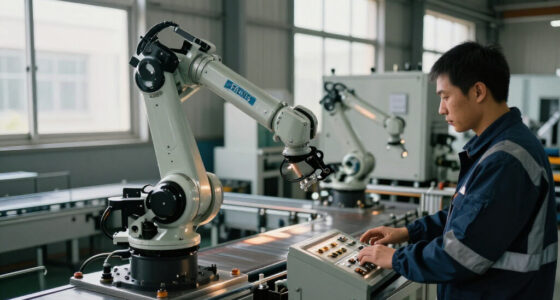
Skills package what you know; loops decide how far you delegate over time. Dynamic workflows are the third axis — within a single task, Claude writes its own harness and assembles a temporary team of subagents. Think of it as Claude drawing an org chart for one job.
The shift is from prompting a worker to commissioning a team — more output, more cost, and a manager’s judgment required. Reach for a workflow when a task is big, parallel, adversarial, or judgment-heavy — and when you can feel a single agent getting lazy, grading its own homework, or losing the plot. Bound it (token budgets, pilot first) — workflows can spawn hundreds of agents and burn far more tokens. For everything else, don’t hire five people to change a lightbulb.
Implications for AI Task Management and Workflow Automation
This development signifies a shift toward more autonomous, scalable AI systems capable of managing complex projects without constant human oversight. By dynamically assembling specialized agents, Claude can improve accuracy, reduce errors, and handle multi-faceted tasks more efficiently. This could influence how organizations deploy AI for research, development, and operational workflows, potentially reducing the need for manual orchestration and oversight.
AI multi-agent orchestration software
As an affiliate, we earn on qualifying purchases.
As an affiliate, we earn on qualifying purchases.
Evolution of Multi-Agent AI Systems and Workflow Techniques
Previous iterations of Claude focused on single-agent capabilities, which faced limitations in handling extensive or adversarial tasks. Anthropic’s work builds on earlier concepts like static multi-agent setups, but the new dynamic workflows enable real-time, tailored orchestration. The feature is part of a broader trend toward autonomous AI systems that can self-organize to improve performance on complex tasks.
This development follows earlier announcements of Claude’s modular skills and looping capabilities, which aimed to better delegate tasks over time. The move to dynamic workflows completes a trilogy of enhancements designed to make Claude more adaptable and efficient in high-stakes environments.
“Dynamic workflows allow Claude to write its own orchestration code, effectively assembling specialized teams for complex tasks in real-time.”
— Thorsten Meyer, AI researcher at Anthropic
As an affiliate, we earn on qualifying purchases.
Unanswered Questions About Deployment and Limitations
It is not yet clear how widely this feature will be adopted in production environments or how it performs outside controlled demonstrations. Details about cost, speed, and specific safety measures remain undisclosed. Additionally, the extent to which this approach can replace or augment human oversight in critical applications is still under evaluation.
As an affiliate, we earn on qualifying purchases.
Next Steps for Adoption and Further Development
Anthropic plans to continue refining dynamic workflows, including testing in real-world settings and expanding capabilities. Future updates may include more automation features, safety controls, and integration options. Industry observers expect broader deployment as the technology matures and demonstrates its value in operational contexts.
As an affiliate, we earn on qualifying purchases.
Key Questions
How does Claude build its own team of agents?
Claude writes and runs small JavaScript programs called workflows that spawn and coordinate multiple subagents, each with specific roles and isolated contexts, to handle complex tasks more effectively.
What types of tasks benefit most from dynamic workflows?
High-value, multi-step, or adversarial tasks such as deep research, code refactoring, fact-checking, and large-scale project management are most suited to this approach.
Are there any limitations or risks associated with this feature?
Since it is resource-intensive and more complex, potential limitations include higher token costs, possible safety concerns, and the need for careful management to prevent unintended goal drift or bias.
When will this feature be available for general use?
Anthropic has announced the feature, but it is currently in testing and limited deployment stages. Broader availability will depend on further development and safety validation.
Source: ThorstenMeyerAI.com
Columbus Day / Indigenous Peoples' Day Picks
long weekend sales
As an affiliate, we earn on qualifying purchases.