The best wireless mechanical keyboards pair a satisfying typing feel with connectivity and a layout that suit your desk. I’d make the Redragon K689 PRO my best overall pick for its full-size layout and gasket-mounted design, while the Logitech MX Mechanical stands out for quiet office typing and the AULA F75 Pro for a smaller footprint with a control knob. The main tradeoffs are full-size convenience versus desk space, mechanical switches versus membrane alternatives, and wireless flexibility versus features such as hot-swapping. Read on for how all 12 options compare and which one fits your setup.

Get the latest gadgets delivered free with Prime
- Fast, free delivery on millions of items
- Prime Video, Amazon Music and more included
- Member-only deals all year
Complete the kit



Key Takeaways
- The Redragon K689 PRO leads the mechanical options for general use: its full-size layout and gasket-mounted construction make it a versatile starting point, while its size may be excessive for compact desks.
- The Logitech MX Mechanical serves a different priority: its tactile-quiet switches and illuminated keys suit work-focused typing better than gaming-first models, but it is less about switch customization.
- Compact layouts make real desk-space tradeoffs: the AULA F75 Pro and Kisnt KN85 save room, but buyers who rely on a number pad should favor a larger board.
- Hot-swappable models offer room to change later: the Kisnt KN85 and AULA F99 let buyers replace compatible switches, a useful distinction from boards with a fixed switch setup.
- Not every wireless gaming keyboard here is mechanical: the AULA S99 and S99 Pro V2 are membrane models, so buyers seeking mechanical switches should rule them out despite their gaming-oriented positioning.
| Redragon K689 PRO Wireless 108-Key Gasket-Mounted Gaming Keyboard |  | Best Overall for Customizable Full-Size Typing | Layout: QWERTY, 108 keys | Connectivity: USB-C, Bluetooth, 2.4 GHz wireless | Mounting: Gasket-mounted | VIEW LATEST PRICE | See Our Full Breakdown |
| Redragon K745 PRO Wireless 108-Key Gasket-Mounted RGB Gaming Keyboard |  | Best for a Cushioned, Quieter Full-Size Build | Layout: QWERTY, 108 keys | Connectivity: USB-C, Bluetooth, 2.4 GHz wireless | Mounting: Gasket-mounted | VIEW LATEST PRICE | See Our Full Breakdown |
| Redragon Wireless Typewriter-Style Mechanical Gaming Keyboard, Black | 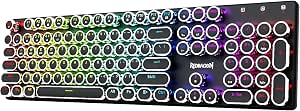 | Best for Clicky Typewriter-Style Feedback | Layout: QWERTY, 104 keys | Connectivity: USB-C wired, Bluetooth 3.0/5.0, 2.4 GHz wireless | Switches: Blue, clicky | VIEW LATEST PRICE | See Our Full Breakdown |
| Logitech MX Mechanical Wireless Illuminated Keyboard, Tactile Quiet, Graphite |  | Best for Multi-Device Work Setups | Layout: QWERTY, 104 keys | Switches: Tactile Quiet mechanical, low-profile | Connectivity: Bluetooth Low Energy or included Logi Bolt receiver | VIEW LATEST PRICE | See Our Full Breakdown |
| Kisnt KN85 75% Wireless Mechanical Keyboard, Tri-Mode Connectivity, Hot-Swappable Linear Switches, RGB Backlighting, Retro Beige |  | Best Compact Wireless Mechanical Pick | Layout: 75%, QWERTY, 85 keys | Dimensions: 13.68 × 5.51 × 1.77 in | Connectivity: USB-C, 2.4 GHz wireless, Bluetooth 5.0 | VIEW LATEST PRICE | See Our Full Breakdown |
| AULA S99 Tri-Mode Wireless 99-Key Membrane Gaming Keyboard |  | Best for Macro Controls on a Membrane Board | Keyboard type: Membrane | Layout: 96% QWERTY, 99 keys | Connectivity: Bluetooth 5.0, 2.4 GHz wireless, USB-C wired | VIEW LATEST PRICE | See Our Full Breakdown |
| Redragon K768 PRO Wireless 100-Key Gasket Gaming Keyboard |  | Best for Switch Swapping and a Softer Build | Layout: QWERTY, 100 keys | Connectivity: USB-C, Bluetooth, 2.4 GHz wireless | Switches: Custom linear | VIEW LATEST PRICE | See Our Full Breakdown |
| X9 Slim 107-Key Wireless Mechanical Keyboard with Low-Profile Red Switches |  | Best Full-Size Low-Profile Pick | Keyboard type: Low-profile mechanical | Layout: Full-size QWERTY, 107 keys | Switches: Linear red | VIEW LATEST PRICE | See Our Full Breakdown |
| Redragon K671KS Tri-Mode Wireless Mechanical Gaming Keyboard |  | Best for Multi-Device Pairing and Per-Key RGB | Layout: QWERTY, 81 keys | Connectivity: USB-C wired, Bluetooth 3.0/5.0, 2.4 GHz wireless | Device pairing: Up to five devices | VIEW LATEST PRICE | See Our Full Breakdown |
| AULA F99 Tri-Mode Wireless Mechanical Keyboard with Hot-Swappable Switches and RGB Backlighting | 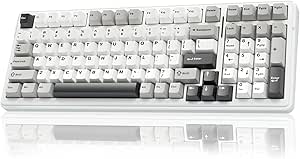 | Best Overall for a Compact Number-Pad Layout | Layout: 96%, 99 keys | Connectivity: Bluetooth 5.0, 2.4 GHz wireless, USB-C wired | Device support: Up to five devices | VIEW LATEST PRICE | See Our Full Breakdown |
| AULA S99 Pro V2 Wireless 99-Key Membrane Gaming Keyboard |  | Best for Quiet Shared Spaces | Key count and layout: 99 keys; 97% compact | Switch type: Silent membrane | Connectivity: Bluetooth 5.0, 2.4GHz wireless, USB wired | VIEW LATEST PRICE | See Our Full Breakdown |
| AULA F75 Pro 75% Wireless Mechanical Keyboard with Knob |  | Best for Switch Customization | Layout: 75%, 81 keys; QWERTZ | Switches: Pre-lubricated linear Reaper switches | Hot-swappable: Supports 3-pin and 5-pin switches | VIEW LATEST PRICE | See Our Full Breakdown |
| wireless mechanical keyboard | Connectivity | Layout | Switches | Backlighting |
|---|---|---|---|---|
| Redragon K689 PRO Wireless 108 | USB-C, Bluetooth, 2.4 GHz wireless | QWERTY, 108 keys | Custom linear; hot-swappable 3-pin and 5-pin | Adjustable RGB |
| Redragon K745 PRO Wireless 108 | USB-C, Bluetooth, 2.4 GHz wireless | QWERTY, 108 keys | Custom linear; hot-swappable 3-pin and 5-pin | RGB |
| Redragon Wireless Typewriter-S | USB-C wired, Bluetooth 3.0/5.0, 2.4 GHz wireless | QWERTY, 104 keys | Blue, clicky | RGB, up to 16 preset modes and per-key customization |
| Logitech MX Mechanical Wireles | Bluetooth Low Energy or included Logi Bolt receiver | QWERTY, 104 keys | Tactile Quiet mechanical, low-profile | Smart illumination with automatic adjustment |
| Kisnt KN85 75% Wireless Mechan | USB-C, 2.4 GHz wireless, Bluetooth 5.0 | 75%, QWERTY, 85 keys | Pre-lubed Bsun linear, 45–50 gf actuation force | — |
| AULA S99 Tri-Mode Wireless 99- | Bluetooth 5.0, 2.4 GHz wireless, USB-C wired | 96% QWERTY, 99 keys | — | RGB |
| Redragon K768 PRO Wireless 100 | USB-C, Bluetooth, 2.4 GHz wireless | QWERTY, 100 keys | Custom linear | Adjustable RGB |
| X9 Slim 107-Key Wireless Mecha | Bluetooth, 2.4GHz RF, USB | Full-size QWERTY, 107 keys | Linear red | Single-color white, three brightness levels |
| Redragon K671KS Tri-Mode Wirel | USB-C wired, Bluetooth 3.0/5.0, 2.4 GHz wireless | QWERTY, 81 keys | Hot-swappable linear switches | Per-key RGB with 16 preset effects |
| AULA F99 Tri-Mode Wireless Mec | Bluetooth 5.0, 2.4 GHz wireless, USB-C wired | 96%, 99 keys | Pre-lubed linear; hot-swappable 3-pin and 5-pin | RGB, 16 effects, 16.8 million colors |
| AULA S99 Pro V2 Wireless 99-Ke | Bluetooth 5.0, 2.4GHz wireless, USB wired | — | — | RGB, 16.8 million colors, 15 preset effects |
| AULA F75 Pro 75% Wireless Mech | Bluetooth 5.0, 2.4GHz wireless, USB-C | 75%, 81 keys; QWERTZ | Pre-lubricated linear Reaper switches | — |
More Details on Our Top Picks
Redragon K689 PRO Wireless 108-Key Gasket-Mounted Gaming Keyboard
The K689 PRO is my strongest all-around pick for buyers who want a full-size wireless mechanical keyboard with room to tune its feel. Its Bluetooth, 2.4 GHz, and USB-C connections suit a desk shared by a computer and mobile devices, while four customizable shortcut keys add quick access to common commands. A gasket mount and three-layer noise dampening aim for a cushioned, less sharp typing sound than the clicky Redragon K710. Hot-swap support for 3-pin and 5-pin switches gives it more scope for later changes than a fixed-switch keyboard. The tradeoff is a plastic enclosure, rather than the K710’s metal panel, and the listed power source is corded despite the wireless modes. I’d choose it for flexible everyday use, but verify power details if cable-free operation is a priority.
Pros:- USB-C, Bluetooth, and 2.4 GHz modes support wired use and several wireless setups.
- Gasket mounting and three-layer dampening are designed to soften keystrokes and reduce noise.
- Hot-swap sockets accept both 3-pin and 5-pin switches.
- PBT keycaps and four customizable hotkeys add durability and convenient shortcuts.
Cons:- Plastic enclosure lacks the metal-panel construction of the Redragon K710.
- The listed corded-electric power source leaves wireless power details unclear.
Best for: Full-size keyboard buyers who want wireless device flexibility, quieter-feeling typing, and the option to swap switches later.
Not ideal for: Shoppers seeking a metal-bodied board or clear, unambiguous battery details before buying.
- Layout:QWERTY, 108 keys
- Connectivity:USB-C, Bluetooth, 2.4 GHz wireless
- Mounting:Gasket-mounted
- Switches:Custom linear; hot-swappable 3-pin and 5-pin
- Keycaps:PBT
- Sound dampening:Three layers
- Backlighting:Adjustable RGB
- Enclosure:Plastic
Our verdict“Choose the K689 PRO for a full-size, adaptable wireless setup, unless a metal case or clearly specified battery is a must.”
Redragon K745 PRO Wireless 108-Key Gasket-Mounted RGB Gaming Keyboard
If a softer typing sound matters more than a compact footprint, the K745 PRO offers the most extensive dampening in this group: five layers, compared with three in the Redragon K689 PRO. Its gasket mount and linear switches are aimed at a cushioned feel, while tri-mode connectivity and four dedicated hotkeys keep it practical for a mixed work-and-gaming desk. The translucent PBT keycaps let RGB lighting show through without giving up the more durable keycap material. Hot-swap sockets also make it easier to change the feel later. The compromise is familiar for a full-size board: it takes more desk space than the 75% Kisnt KN85, and its plastic enclosure does not offer a metal-bodied feel. Water resistance is claimed, but the degree is not specified.
Pros:- Five-layer noise dampening exceeds the K689 PRO’s three-layer design.
- Tri-mode USB-C, Bluetooth, and 2.4 GHz connectivity covers wired and wireless setups.
- Hot-swap sockets support most 3-pin and 5-pin switches.
- Translucent PBT keycaps combine RGB visibility with a durable material.
Cons:- Full-size 108-key layout occupies more desk space than the Kisnt KN85.
- Plastic enclosure provides less of a metal-bodied feel.
- Water resistance level is not specified.
Best for: Full-size keyboard owners who prioritize a cushioned, dampened typing sound, visible RGB, and switch customization.
Not ideal for: Desk-space-conscious buyers, or anyone who needs a metal enclosure or a specific documented water-resistance rating.
- Layout:QWERTY, 108 keys
- Connectivity:USB-C, Bluetooth, 2.4 GHz wireless
- Mounting:Gasket-mounted
- Switches:Custom linear; hot-swappable 3-pin and 5-pin
- Keycaps:Translucent PBT
- Sound dampening:Five layers
- Backlighting:RGB
- Weight:0.88 kg
- Enclosure:Plastic
Our verdict“Pick the K745 PRO if you want a dampened full-size wireless board with RGB-friendly keycaps and can spare the desk space.”
Redragon Wireless Typewriter-Style Mechanical Gaming Keyboard, Black
The Redragon K710 takes a very different route from the quieter, hot-swappable K689 PRO and K745 PRO: it pairs clicky blue switches with round, retro-style keycaps. That combination gives each press a more pronounced sound and tactile signal, which can suit buyers who enjoy audible feedback while typing or gaming. A metal panel adds a sturdier construction detail than the plastic enclosures on both gasket-mounted Redragons. It also keeps wireless use flexible with Bluetooth and 2.4 GHz, plus USB-C when a cable is preferable. The tradeoffs are substantial for shared or quiet spaces: its switches are explicitly clicky, and it lacks the listed hot-swap flexibility of the K689 PRO and K745 PRO. Some lighting and key customization also depends on software.
Pros:- Clicky blue switches provide audible feedback that differs clearly from the linear K689 PRO.
- Metal panel offers a more substantial construction detail than the plastic K689 PRO and K745 PRO.
- USB-C, Bluetooth, and 2.4 GHz connections support varied devices and setups.
- RGB customization, macros, and 104-key anti-ghosting support gaming and personalized controls.
Cons:- Clicky switches can be disruptive in shared or quiet rooms.
- No hot-swap support is listed, unlike the K689 PRO and K745 PRO.
- Some custom modes and effects require software.
Best for: Buyers who want a distinctive retro appearance, audible clicky feedback, and multiple connection modes.
Not ideal for: People typing near others, users who prefer quiet linear switches, or buyers who want easy switch swapping.
- Layout:QWERTY, 104 keys
- Connectivity:USB-C wired, Bluetooth 3.0/5.0, 2.4 GHz wireless
- Switches:Blue, clicky
- Keycap style:Round, typewriter-style
- Panel:Metal
- Battery:Rechargeable, 4000 mAh
- Backlighting:RGB, up to 16 preset modes and per-key customization
- Anti-ghosting:104-key
Our verdict“Choose the K710 for retro styling and loud, tactile feedback, not for quiet typing or easy switch changes.”
Logitech MX Mechanical Wireless Illuminated Keyboard, Tactile Quiet, Graphite
The Logitech MX Mechanical is the work-focused choice here: its low-profile Tactile Quiet switches offer mechanical feedback without the clicky sound of the Redragon K710. It connects to up to three devices, making it a more direct fit for people who regularly move between a laptop, tablet, and desktop than the K689 PRO’s listed device flexibility alone suggests. Smart backlighting adjusts to room conditions and approaching hands, while USB-C charging and stated battery-life figures provide more defined power information than the K689 PRO listing. The tradeoff is less emphasis on DIY customization: no hot-swap support is listed, unlike the Kisnt KN85, and some controls require Logi Options+ on Windows or macOS. Buyers using FileVault on certain Macs may need the Logi Bolt receiver for startup password entry.
Pros:- Pairs with up to three devices for switching among a work computer and mobile devices.
- Tactile Quiet low-profile switches provide feedback with less noise than the K710’s clicky switches.
- Smart illumination adjusts to lighting conditions and approaching hands.
- USB-C charging and specified battery-life figures clarify ongoing wireless use.
Cons:- No hot-swappable switch support is listed, unlike the Kisnt KN85.
- Some customization features require Logi Options+ on Windows or macOS.
- Bluetooth may not support startup password entry on some FileVault-enabled Macs; the Logi Bolt receiver is recommended.
Best for: People who type across several computers or mobile devices and want low-profile mechanical keys with quieter feedback.
Not ideal for: Keyboard hobbyists who want hot-swappable switches, or users who need Bluetooth startup password entry on some FileVault-enabled Macs.
- Layout:QWERTY, 104 keys
- Switches:Tactile Quiet mechanical, low-profile
- Connectivity:Bluetooth Low Energy or included Logi Bolt receiver
- Multi-device pairing:Up to 3 devices
- Battery:Rechargeable Li-Po, 1500 mAh
- Battery life:Up to 15 days with backlighting; up to 10 months with it off
- Charging:USB-C
- Backlighting:Smart illumination with automatic adjustment
- Weight:828 g
Our verdict“Choose the MX Mechanical for low-profile typing and easy multi-device switching, rather than switch-modification flexibility.”
Kisnt KN85 75% Wireless Mechanical Keyboard, Tri-Mode Connectivity, Hot-Swappable Linear Switches, RGB Backlighting, Retro Beige
The Kisnt KN85 keeps the function row and arrow keys in a smaller 75% layout, making it the clearest space-saving alternative to the full-size Redragon K689 PRO and K745 PRO. Its 85 keys leave out the number pad, so buyers who enter figures often should weigh that loss against the extra room on a crowded desk. Tri-mode connectivity, three Bluetooth channels, and a rechargeable 4000 mAh battery suit a setup that moves between devices. Pre-lubed linear switches and a gasket mount aim for a smoother, cushioned feel, while hot-swap support accepts both 3-pin and 5-pin switches. Unlike the K745 PRO, its key-remapping software is limited to Windows and wired or 2.4 GHz mode. It is also explicitly not water resistant.
Pros:- 75% layout saves space while retaining function and arrow keys.
- USB-C, 2.4 GHz, and Bluetooth 5.0 provide three connection options.
- Hot-swap sockets support both 3-pin and 5-pin switches.
- Gasket mount and pre-lubed linear switches are designed for smoother, cushioned keystrokes.
Cons:- No number pad, unlike the full-size K689 PRO and K745 PRO.
- Not water resistant.
- Remapping and macro software is limited to Windows and wired or 2.4 GHz mode.
Best for: Laptop and small-desk users who want a compact mechanical board with arrow and function keys, wireless modes, and switch-swapping options.
Not ideal for: Number-heavy users, people who need water resistance, or Mac users seeking software-based remapping.
- Layout:75%, QWERTY, 85 keys
- Dimensions:13.68 × 5.51 × 1.77 in
- Connectivity:USB-C, 2.4 GHz wireless, Bluetooth 5.0
- Bluetooth channels:3
- Switches:Pre-lubed Bsun linear, 45–50 gf actuation force
- Hot-swap compatibility:3-pin and 5-pin switches
- Battery:Rechargeable, 4000 mAh
- Keycaps and lighting:PBT keycaps; RGB backlighting
- Water resistance:Not water resistant
Our verdict“Pick the KN85 when desk space and switch customization matter more than a number pad or water resistance.”
AULA S99 Tri-Mode Wireless 99-Key Membrane Gaming Keyboard
The AULA S99 earns a place for buyers who want wireless flexibility and a numeric keypad but do not need mechanical switches. Its 96% layout keeps number entry close at hand while taking less space than the X9’s full-size 107-key arrangement. Bluetooth, 2.4 GHz, and USB-C wired modes cover a mix of devices, and the programmable keys, shortcut keys, and dual-mode knob offer more control options than a basic membrane board. The tradeoff is central to this roundup: this is a membrane keyboard, not a mechanical one, so it does not offer switch swapping or a mechanical typing feel like the AULA F99. Battery capacity and runtime are also unspecified, making it harder to plan around wireless use.
Pros:- Bluetooth, 2.4 GHz wireless, and USB-C wired connectivity
- 96% layout includes a numeric keypad while saving space over a full-size board
- Full-key macro programming, three shortcut keys, and a dual-mode rotary knob
- Two-stage adjustable stand lets users change the typing angle
Cons:- Membrane switches do not provide a mechanical typing feel or hot-swap support
- Battery capacity and runtime are not provided
Best for: Office or gaming users who want a compact numeric keypad, macro controls, and three connection modes but prefer membrane keys.
Not ideal for: Buyers seeking a true mechanical switch feel, hot-swappable switches, or published battery runtime details.
- Keyboard type:Membrane
- Layout:96% QWERTY, 99 keys
- Connectivity:Bluetooth 5.0, 2.4 GHz wireless, USB-C wired
- Backlighting:RGB
- Controls:Dual-mode rotary knob; three shortcut keys
- Programming:Full-key macro programming
- Stand:Foldable two-stage adjustable stand
- Compatibility:Windows, Mac, Android, iOS
Our verdict“Choose the S99 for macro-rich controls and a space-saving number pad if membrane keys suit you better than the mechanical switches in the AULA F99.”
Redragon K768 PRO Wireless 100-Key Gasket Gaming Keyboard
The Redragon K768 PRO is a strong fit for buyers who want a gasket-mounted mechanical keyboard with room to customize its switches. Its 100-key layout keeps more keys than a compact 75% board, while hot-swap sockets accept both 3-pin and 5-pin switches, giving owners a path to change the feel later without soldering. The 8000mAh battery is a more explicit capacity claim than the AULA S99 provides, though it still does not tell you how long a charge lasts. Compared with the AULA F99, the K768 PRO shares tri-mode connectivity and hot-swap flexibility, but its described custom linear switches may be less appealing to anyone who wants tactile feedback. PBT keycaps and a knob add practical touches; the 100-key layout is not full-size, so check whether its key arrangement suits your routine.
Pros:- USB-C, Bluetooth, and 2.4 GHz connectivity
- Hot-swap support for 3-pin and 5-pin switches
- 8000mAh battery capacity
- PBT keycaps, adjustable RGB, and a knob for lighting and media
Cons:- Custom linear switches may not suit buyers who prefer tactile or clicky feedback
- 100-key layout may omit or rearrange keys expected on a full-size board
Best for: Wireless keyboard owners who want a gasket-style build, linear switches, and the option to try different 3-pin or 5-pin switches.
Not ideal for: Users who need a conventional full-size key arrangement or strongly prefer tactile or clicky switches.
- Layout:QWERTY, 100 keys
- Connectivity:USB-C, Bluetooth, 2.4 GHz wireless
- Switches:Custom linear
- Hot-swap support:3-pin and 5-pin switches
- Mount:Gasket mount
- Battery capacity:8000mAh
- Keycaps:PBT
- Backlighting:Adjustable RGB
Our verdict“Pick the K768 PRO if switch customization and a gasket design matter more than a full-size layout or tactile switch options.”
X9 Slim 107-Key Wireless Mechanical Keyboard with Low-Profile Red Switches
The X9 is the lineup’s clearest choice for buyers who want a full-size, low-profile wireless mechanical keyboard with a number pad and dedicated shortcuts. Its 107 keys, volume knob, and Copilot key put more controls within reach than the more compact AULA F99, while the linear red switches are intended to keep keystrokes smooth and relatively quiet. The aluminum top case adds a firmer platform, and the board can connect through Bluetooth, 2.4GHz RF, or USB while supporting up to four devices. Those extras come with compromises: its white-only backlighting lacks the color options offered by the Redragon K671KS, and the listed operating-system compatibility is Windows even though Mac appears among the compatible devices. The 2000mAh battery is specified, but no runtime is given.
Pros:- Full-size 107-key layout with number pad, 15 shortcut keys, Copilot key, and volume knob
- Low-profile linear red switches are designed for smooth, quieter typing
- Bluetooth, 2.4GHz RF, and USB connectivity with support for up to four devices
- Aluminum top case and three white-backlight brightness levels
Cons:- Backlighting is white only, unlike the customizable RGB on the Redragon K671KS
- Operating-system listing names Windows, leaving Mac support unclear
- 2000mAh battery capacity is listed without battery runtime
Best for: Windows users who want a full-size number pad, low-profile linear switches, and dedicated shortcut and volume controls.
Not ideal for: Buyers who want RGB lighting, a compact footprint, or clearly stated Mac operating-system support.
- Keyboard type:Low-profile mechanical
- Layout:Full-size QWERTY, 107 keys
- Switches:Linear red
- Connectivity:Bluetooth, 2.4GHz RF, USB
- Device capacity:Up to four devices
- Backlighting:Single-color white, three brightness levels
- Battery capacity:2000mAh
- Top case:Aluminum
Our verdict“Choose the X9 for a low-profile full-size layout and plentiful controls, but skip it if RGB or clearly documented Mac support is a priority.”
Redragon K671KS Tri-Mode Wireless Mechanical Gaming Keyboard
The Redragon K671KS stands out for users who rotate among several devices and want up to five pairings alongside wired, Bluetooth, and 2.4 GHz connections. Its 81-key layout is more compact than the 99-key AULA F99, which leaves more desk space but removes the number area many spreadsheet users rely on. The hot-swappable linear switches can be replaced, and per-key RGB customization, programmable macros, and double-shot PBT keycaps give it more tuning options than the X9’s simpler white lighting. A metal panel and included spare switches help make customization more practical. There is a notable limitation: the listed operating-system compatibility is Windows only, and battery runtime is not specified. The linear switch type also narrows its appeal for people who prefer tactile or clicky keys.
Pros:- USB-C, Bluetooth 3.0/5.0, and 2.4 GHz connectivity with pairing for up to five devices
- Hot-swappable linear switches with eight spare switches included
- Per-key RGB customization, 16 preset effects, and programmable macros
- Double-shot PBT keycaps and a metal panel
Cons:- Windows is the only listed compatible operating system
- 81-key layout has no dedicated number pad
- Battery runtime is not specified
Best for: Windows users who switch among several paired devices and want a compact board with hot-swap switches and per-key RGB controls.
Not ideal for: Mac-focused buyers, frequent number-pad users, or typists who prefer tactile or clicky switches.
- Layout:QWERTY, 81 keys
- Connectivity:USB-C wired, Bluetooth 3.0/5.0, 2.4 GHz wireless
- Device pairing:Up to five devices
- Switches:Hot-swappable linear switches
- Keycaps:Double-shot PBT
- Backlighting:Per-key RGB with 16 preset effects
- Panel:Metal
- Compatibility:Windows
Our verdict“The K671KS is a good match for Windows users who value five-device pairing and switch customization more than a number pad or non-linear switch options.”
AULA F99 Tri-Mode Wireless Mechanical Keyboard with Hot-Swappable Switches and RGB Backlighting
The AULA F99 is the most balanced pick here for buyers who want a true wireless mechanical keyboard with a number area but do not want a full-size footprint. Its 99-key, 96% layout preserves arrow keys and number-entry capability while taking less space than the X9’s 107-key board. Bluetooth 5.0, 2.4 GHz, and USB-C support up to five devices, and the hot-swappable 3-pin and 5-pin switches make future switch changes possible without soldering. Pre-lubed linear switches, double-shot PBT keycaps, gasket construction, and layered sound dampening give it a more feature-rich build than the membrane AULA S99. The tradeoffs are its linear-only included switch feel and the need for driver software for some lighting and macro controls. Its 8000mAh battery is a stated capacity, not a runtime guarantee.
Pros:- 96% 99-key layout retains a number area while saving space compared with the X9
- Bluetooth 5.0, 2.4 GHz, and USB-C connectivity with support for up to five devices
- Hot-swap sockets accept 3-pin and 5-pin switches
- Gasket structure, layered sound dampening, PBT keycaps, and an 8000mAh battery
Cons:- Compact layout is not a conventional full-size arrangement
- Some lighting and macro customization requires driver software
- Included pre-lubed linear switches may not suit tactile- or clicky-switch fans
Best for: Wireless mechanical keyboard buyers who want a compact number-pad layout, multi-device connections, and room to change switches.
Not ideal for: Users who need a full-size layout, prefer tactile or clicky switches out of the box, or want every lighting and macro setting without driver software.
- Layout:96%, 99 keys
- Connectivity:Bluetooth 5.0, 2.4 GHz wireless, USB-C wired
- Device support:Up to five devices
- Switches:Pre-lubed linear; hot-swappable 3-pin and 5-pin
- Backlighting:RGB, 16 effects, 16.8 million colors
- Keycaps:Double-shot PBT
- Battery capacity:8000mAh
- Structure:Gasket structure with layered sound-dampening materials
Our verdict“Choose the F99 if you want the lineup’s strongest blend of compact number-pad access, wireless flexibility, and mechanical switch customization.”
AULA S99 Pro V2 Wireless 99-Key Membrane Gaming Keyboard
The AULA S99 Pro V2 offers a compact 99-key layout and three connection options, but it is not a mechanical keyboard: its quiet membrane switches suit shared rooms better than buyers seeking the distinct feel or switch customization of a mechanical model. Compared with the mechanical AULA F75 Pro, it gives up hot-swappable switches in favor of quieter typing and a fuller key set with a number pad.
Bluetooth, 2.4GHz, and wired USB connections make it adaptable across a desk setup, while the status display shows battery and connection information at a glance. RGB effects and a two-stage stand add convenience, though they do not change the core membrane-versus-mechanical tradeoff. The product description also warns that the new keyboard’s surface may feel oily, so buyers may want to wipe it before use.
Pros:- Bluetooth, 2.4GHz wireless, and USB wired connectivity offer flexible setup options.
- Quiet membrane switches are better suited to shared spaces than louder mechanical styles.
- The 99-key layout retains a number pad while taking less space than a full-size board.
- Display, adjustable stand, and RGB lighting add useful at-a-glance and setup controls.
Cons:- Membrane switches do not provide the mechanical feel or switch replacement options of the AULA F75 Pro.
- The product description warns that the surface may feel oily and recommends wiping it before use.
Best for: People sharing a home office or gaming space who want quiet keys, a number pad, and wireless or wired connection choices.
Not ideal for: Buyers specifically seeking a mechanical keyboard’s switch feel, hot-swapping, or a more compact layout without a number pad.
- Key count and layout:99 keys; 97% compact
- Switch type:Silent membrane
- Connectivity:Bluetooth 5.0, 2.4GHz wireless, USB wired
- Multi-device support:Connects to multiple devices; switch using Fn key combinations
- Backlighting:RGB, 16.8 million colors, 15 preset effects
- Battery:4000mAh
- Display:Shows battery level, connection mode, lighting effects, and Num Lock status
- Stand and compatibility:Two-stage stand with three height levels; Windows and Mac
Our verdict“Choose the S99 Pro V2 if quiet typing and a number pad matter more than a genuine mechanical switch experience.”
AULA F75 Pro 75% Wireless Mechanical Keyboard with Knob
For buyers who want a real wireless mechanical keyboard they can customize, the AULA F75 Pro is the stronger match than the membrane S99 Pro V2. Its hot-swappable sockets accept 3-pin and 5-pin switches, letting owners change the typing feel without soldering. It also keeps arrow keys in its 75% layout and adds a multifunction knob, though a QWERTZ layout may frustrate anyone accustomed to another key arrangement.
Bluetooth, 2.4GHz, and USB-C support up to five connected devices, making it more adaptable across a multi-device setup than a single-connection board. Pre-lubricated linear switches, side-printed PBT keycaps, and five-layer dampening are aimed at a softer, quieter feel. The tradeoffs are a compact layout with fewer keys than larger options such as the Redragon K689 PRO, plus water-repellent construction that is not waterproof.
Pros:- Hot-swappable sockets support 3-pin and 5-pin switches without soldering.
- Tri-mode connectivity supports Bluetooth, 2.4GHz wireless, and USB-C wired use across up to five devices.
- The 75% layout retains arrow keys and adds a multifunction knob.
- Side-printed PBT keycaps and five-layer dampening are designed for durability and a softer typing sound.
Cons:- The QWERTZ layout may require adjustment or be unsuitable for buyers who need QWERTY.
- Water-repellent does not mean waterproof, so spills remain a concern.
- Its compact layout omits the number pad found on larger boards such as the Redragon K689 PRO.
Best for: Mechanical keyboard owners who want a compact board with arrow keys, a control knob, multi-device connectivity, and the option to swap switches without soldering.
Not ideal for: Buyers who require a QWERTY layout, a full-size number pad, or a keyboard safe from spills rather than merely water-repellent.
- Layout:75%, 81 keys; QWERTZ
- Switches:Pre-lubricated linear Reaper switches
- Hot-swappable:Supports 3-pin and 5-pin switches
- Connectivity:Bluetooth 5.0, 2.4GHz wireless, USB-C
- Multi-device support:Up to 5 devices
- Keycaps and dampening:Side-printed PBT keycaps; five-layer dampening structure
- Battery and lighting:4000mAh; RGB with 16.8 million colors
- Additional features:Multifunction knob, programmable keys, N-key rollover, Windows key lock
- Water resistance and OS:Water-repellent; Windows 7 or later
Our verdict“Pick the F75 Pro if switch customization and compact multi-device use matter more than a QWERTY layout or number pad.”

How We Picked
I ranked these keyboards by how well their wireless setup, typing experience, layout, and build serve a clear kind of buyer. I gave more weight to useful versatility—such as multi-device connectivity, a practical layout, or hot-swappable switches—than to lighting alone. For gaming-oriented models, I considered whether their design and connectivity make them plausible desk companions for play as well as everyday typing; for work-focused choices, I prioritized quieter operation and a layout suited to sustained use.
The order also reflects category fit and meaningful tradeoffs. Mechanical models rank ahead of the two AULA membrane keyboards for a roundup centered on wireless mechanical keyboards, though those membrane options may still suit buyers who prefer that feel. Full-size boards earn credit for number-pad access but lose ground for desk footprint, while compact boards gain portability at the cost of keys. Since the supplied product details do not establish comparable battery life, latency, or measured sound, I avoid treating those as settled differences and rank by the stated design and features instead.
Factors to Consider When Choosing Wireless Mechanical Keyboards
Before choosing, decide what you need the keyboard to do when it is not on a product page. Layout, switch feel, connectivity, and repairability affect daily comfort more than a long feature list. These broader checks can help you avoid paying for features you will not use—or buying a compact board that leaves an important key missing.
Pick a layout around your actual habits
A full-size layout keeps the number pad and familiar navigation keys within reach, which helps with spreadsheets, data entry, and workflows built around those keys. A 75% board such as the AULA F75 Pro keeps many navigation functions while reducing the keyboard’s width, but some keys may require combinations or a learning period. Before choosing smaller, note every key you use for work, gaming shortcuts, or accessibility. Buyers often focus on desk space and forget that frequently used keys can be harder to reach when relocated. If you switch between a laptop and a desktop, compare the keyboard layout with both systems’ shortcuts. Choose the smallest layout that still supports your routine comfortably.
Choose switch feel for the room and the task
Mechanical switches can differ in sound, force, and movement, so the label alone does not predict whether a keyboard will feel right. Tactile feedback can help mark a keypress, while linear switches move without a tactile bump; a quiet switch may be more considerate in a shared office. A model described as quiet is not necessarily silent, and the case and keycaps also affect the sound heard by others. Do not select a board on RGB lighting or a gaming label if the typing feel is your main concern. If possible, try comparable switches in person or check whether the seller provides switch details and return terms. The right choice is the one you can type on comfortably in your actual environment.
Treat wireless modes as a compatibility question
Wireless keyboards can connect in different ways, and a feature label does not guarantee that every mode works with every device. Check the connection methods listed for the exact model and confirm they suit your computer, tablet, or console before buying. Tri-mode can be useful if it supports the devices and switching pattern you need, but it may add little value for someone who uses one computer. Also check whether the keyboard can operate wired if you need a backup connection or prefer to avoid wireless during charging. Buyers sometimes confuse a multi-mode claim with universal compatibility. Verify both the supported operating systems and the included connection hardware rather than assuming a familiar port or protocol is present.
Decide whether hot-swapping is worth paying for
Hot-swappable sockets let owners replace compatible switches without soldering, making them useful for people who want to experiment with feel or replace a faulty switch. That flexibility does not mean every switch will fit: socket compatibility, pin count, and physical dimensions still matter. If you already know the switch type you prefer and are unlikely to change it, a fixed-switch keyboard may be simpler. Think about maintenance as well as customization; a replaceable switch can extend the useful life of a board, but only if compatible parts remain available. Do not assume hot-swapping also means easy keycap replacement, since keycap compatibility is a separate issue. Check the product’s supported switch specifications before planning an upgrade.
Balance footprint against comfort and portability
A smaller keyboard can leave more room for a mouse and make a desk feel less crowded, but a compact footprint is not automatically more comfortable. If you use the number pad, arrow keys, or function row constantly, losing dedicated keys may slow routine tasks. A heavier or larger board may be steadier on a permanent desk, while compact models are easier to fit into a tighter setup. Consider where the keyboard will live and whether you will carry it, rather than treating portability as a universal benefit. Also check the dimensions and layout diagram: percentage labels do not tell you exactly where every key sits. The best compromise preserves the keys you use most without occupying space you need elsewhere.
Separate the mechanical label from marketing language
Gaming positioning, RGB lighting, and a mechanical-style appearance do not establish that a keyboard uses mechanical switches. This roundup includes two AULA S99 models identified as membrane keyboards, which may suit buyers who prefer a membrane feel but do not meet a strict mechanical-switch requirement. Read the stated switch type and construction before comparing features or adding a keyboard to a mechanical shortlist. The same care applies to claims about wireless performance, battery duration, and sound: seek specific, model-level details rather than inferring them from a product family name. A clear match to your needs is more useful than the longest feature list. If you require mechanical switches, treat that as a first filter, not a bonus.
Frequently Asked Questions
Which of these keyboards should I choose if I need a number pad?
Start with the full-size Redragon K689 PRO or K745 PRO, or compare the 100-key Redragon K768 PRO and 99-key AULA models against their layout diagrams. A compact keyboard may still include a number pad, but key placement and spacing can differ from a conventional full-size board. If your work depends on repeated numeric entry, prioritize a dedicated pad over saving a few inches of width. The AULA S99 and S99 Pro V2 are membrane keyboards, so they are not the match for someone who requires mechanical switches. Confirm the exact layout before ordering, since key count alone does not reveal every key’s position.
Are the AULA S99 and S99 Pro V2 mechanical keyboards?
No. The product details identify both as membrane gaming keyboards, which distinguishes them from the mechanical models in this roundup. Their wireless and gaming-oriented features do not change the underlying switch type. If you want mechanical switch feedback or a board with mechanical switch replacement options, choose a model explicitly described as mechanical, such as the AULA F99 or F75 Pro. If you prefer a membrane feel, the S99 models may still be worth comparing for their layout and connectivity. Check the exact listing before purchase, since similarly named products can have different specifications.
Is hot-swapping useful if I have never changed keyboard switches?
It can be useful, but it is not a requirement for a good first keyboard. Hot-swapping on models such as the Kisnt KN85 and AULA F99 gives you the option to try compatible switches or replace one without soldering. That flexibility matters most if your preferred feel is still uncertain or you expect to maintain the keyboard over time. Beginners should still check which switches fit the sockets and whether the required tools are included or sold separately. If you want a straightforward setup and expect to keep the original switches, prioritize layout and comfort instead.
Should I choose a compact 75% keyboard or a full-size wireless model?
Choose based on the keys you use every day, not on the percentage label alone. A 75% model such as the AULA F75 Pro takes up less width while keeping many commonly used keys, but it does not provide the same dedicated number-pad access as a full-size board. Full-size options make more sense for regular spreadsheet work, numeric entry, or workflows that depend on a separate number pad. Compact boards can leave more room for mouse movement and may suit smaller desks better. Check the key layout and dimensions before deciding, especially if you rely on navigation keys or function-row shortcuts.
What should I verify before buying a multi-mode wireless keyboard?
Confirm which connection methods the exact model supports and whether your computer or other devices can use them. Also check how device switching works, whether a receiver or cable is included, and whether wired operation is available as a backup. A tri-mode label is valuable only if its modes match your setup; it does not automatically mean the keyboard works with every device. Look for model-specific information about operating-system support and charging before relying on it for daily work. If you only plan to connect one computer, a simpler wireless setup may serve you just as well.
Conclusion
For the best overall balance, I’d start with the Redragon K689 PRO, which combines a full-size layout with a gasket-mounted design. The best value direction is the Redragon K671KS if its stated tri-mode connectivity and mechanical setup meet your needs, though buyers should verify the exact layout and included connection hardware. For a premium, work-focused pick, the Logitech MX Mechanical stands apart with tactile-quiet switches and illuminated keys. Beginners who want flexibility can compare the hot-swappable Kisnt KN85 with the more compact AULA F75 Pro, while anyone who needs a number pad should favor a larger layout. For a specific need, choose the F75 Pro for a smaller board with a knob, the AULA F99 for hot-swappable switches in a larger layout, and the MX Mechanical for quieter office-oriented typing; skip the S99 models if mechanical switches are a requirement.
Black Friday Picks

Bose QuietComfort Headphones (2nd Gen) Wireless Noise-Cancelling Headphones, Black
As an affiliate, we earn on qualifying purchases.