
The best Apple Mac for most people is the 14-inch MacBook Pro with M5: it pairs a capable chip, 16GB of memory, and a 1TB SSD in a portable design. For a lighter everyday laptop, the 13-inch MacBook Air with M5 is a strong alternative, while the Mac mini with M5 Pro suits buyers who want desktop performance without an all-in-one display. The main tradeoffs are portability versus sustained performance, laptop convenience versus desktop flexibility, and how much memory and storage your work actually needs. This lineup also includes older M4 systems that may fit buyers who do not need the latest chip generation. Read on for the full breakdown of all 15 Apple Macs and which one best fits your work, space, and upgrade needs.

Get the latest gadgets delivered free — and shop member deals
- Fast, free delivery on millions of items
- Access to Prime Big Deal Days deals on October 6–7
- Prime Video, Amazon Music and more included
Complete the kit



Key Takeaways
- The 14-inch M5 MacBook Pro is the most balanced pick: its 16GB of memory and 1TB SSD provide a more generous starting configuration than the listed M5 Air models.
- The M5 MacBook Airs favor everyday portability: the 13-inch model is easier to carry, while the 15-inch version gives more screen room without moving to a Pro.
- M5 Max configurations serve specialized workloads: 48GB, 64GB, and 128GB memory options suit different levels of demanding creative or technical work, but most everyday buyers will not need them.
- The two M4 iMacs differ in headroom, not basic format: the 10-core, 24GB, 512GB version offers more room for heavier multitasking than the 8-core, 16GB, 256GB version.
- Desktop and laptop Macs solve different problems: the Mac mini leaves display and peripherals to you, while the iMac bundles a screen; a MacBook provides a built-in display and battery for working away from a desk.





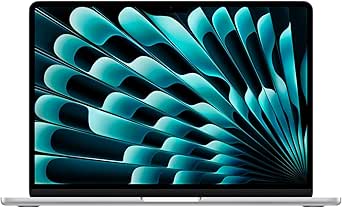
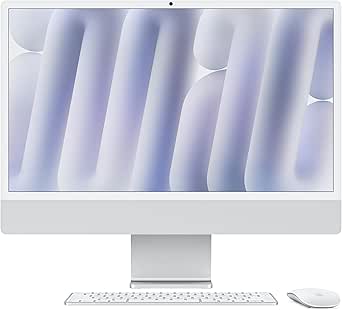

| Apple Mac | Memory | Storage | Display | Processor |
|---|---|---|---|---|
| Apple 14.2-inch MacBook Pro wi | 16GB unified memory | 1TB SSD | 14.2-inch Liquid Retina XDR, up to 1600 nits peak brightness | — |
| Apple MacBook Pro 14.2-inch La | 64GB unified memory | 2TB SSD | 14.2-inch Liquid Retina XDR | — |
| Apple Mac mini | — | — | — | — |
| MacBook Neo 13-inch Laptop wit | 8GB unified memory | 512GB SSD | 13-inch Liquid Retina, one billion colors | Apple A18 Pro |
| Apple 14-inch MacBook Pro with | 64GB unified memory | 2TB SSD | 14.2-inch Liquid Retina XDR, up to 1600 nits peak brightness | — |
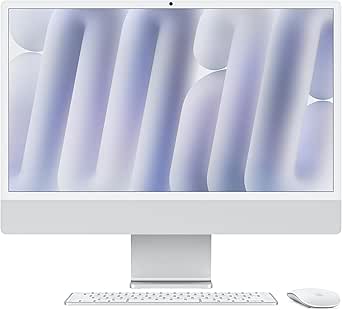
| Apple 2024 iMac 24-inch All-in | 16GB unified memory | 256GB SSD | 24-inch 4.5K Retina, 500 nits, up to 1 billion colors | Apple M4, 8-core CPU |
| Apple 16-inch MacBook Pro with | 48GB unified memory | 1TB SSD stated in title and key features; additional details state 256GB | 16.2-inch Liquid Retina XDR, 3456 x 2234, 120Hz, up to 1600 nits peak brightness | — |
| Apple 16.2-inch MacBook Pro wi | 48GB unified memory | 2TB SSD | 16.2-inch Liquid Retina XDR | — |
| Apple MacBook Air 15-inch Lapt | 16GB unified memory | 512GB SSD | 15.3-inch Liquid Retina | Apple M5 chip |
| Apple 16-inch MacBook Pro with | 128GB unified memory | 2TB SSD | 16.2-inch Liquid Retina XDR | Apple M5 Max, 18-core CPU |
| MacBook Pro Laptop with M5 Max | 64GB unified memory | 2TB SSD | 16.2-inch Liquid Retina XDR Nano-Texture Glass; 1600 nits peak, 1000 nits sustained | Apple M5 Max, 18-core CPU |
| MacBook Air | 16GB unified memory | 256GB SSD | 13.6-inch Liquid Retina, one billion colors | Apple M4 |
| Apple MacBook Air 13-inch Lapt | 16GB unified memory | 512GB SSD | 13.6-inch Liquid Retina | Apple M5 chip |
| Apple 2024 iMac 24-inch All-in | 24GB unified memory | 512GB SSD | 24-inch 4.5K Retina, 500 nits, supports up to one billion colors | Apple M4, 10-core CPU |
| Apple 16-inch MacBook Pro | 128GB unified DDR5 | 2TB SSD | 16-inch Retina | Apple M5 Max, 18-core CPU |
More Details on Our Top Picks
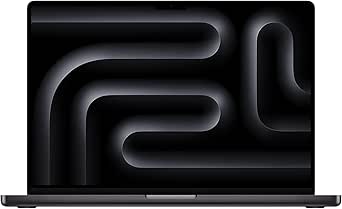
Apple 14.2-inch MacBook Pro with M5, 10-core CPU and GPU, 16GB Memory, 1TB SSD, Space Black
This 14.2-inch MacBook Pro is my strongest all-round pick for buyers who want a capable Mac laptop without stepping up to the M5 Max models. Its M5 chip, 16GB of unified memory, and 1TB SSD suit everyday work, photo editing, and multitasking, while the Liquid Retina XDR display is a meaningful upgrade for bright rooms and HDR content. Compared with the lighter MacBook Neo, it offers a broader port selection and a more performance-focused screen, but it is a larger, more specialized machine. The tradeoff is that its 10-core GPU and 16GB memory are not aimed at the heaviest graphics, AI, or video workloads; the M5 Max models have much more headroom. I’d choose this when versatility matters more than maximum power.
Pros:- M5 chip balances everyday responsiveness with capable creative performance
- 1TB SSD provides useful space for projects and media
- Liquid Retina XDR display reaches up to 1600 nits peak brightness
- Three Thunderbolt 4 ports, HDMI, SDXC, and MagSafe reduce reliance on adapters
Cons:- 16GB unified memory and 10-core GPU offer less headroom than the M5 Max configurations
- At 3.41 pounds, it is heavier than the MacBook Neo and MacBook Air options
Best for: Students, office professionals, and creative users who want a portable Mac with a strong display, useful built-in ports, and room for substantial files.
Not ideal for: People running demanding 3D, AI, or complex video workflows who need the M5 Max’s higher GPU capacity and 64GB memory.
- Chip:Apple M5 with 10-core CPU
- GPU:10-core GPU
- Memory:16GB unified memory
- Storage:1TB SSD
- Display:14.2-inch Liquid Retina XDR, up to 1600 nits peak brightness
- Camera:12MP Center Stage
- Ports:Three Thunderbolt 4, MagSafe 3, SDXC, HDMI, headphone jack
- External displays:Supports up to two displays
- Weight:3.41 pounds
Our verdict“Choose this MacBook Pro if you want a well-equipped everyday workhorse, but move to an M5 Max model for sustained high-end creative workloads.”
Apple MacBook Pro 14.2-inch Laptop with M5 Max, 18-core CPU, 40-core GPU, 64GB Unified Memory, 2TB SSD, Space Black
This configuration packs an unusually capable workstation into a 14.2-inch MacBook Pro: M5 Max, an 18-core CPU, a 40-core GPU, and 64GB of unified memory. That combination is better suited than the standard M5 MacBook Pro to demanding graphics, AI, and multitasking work, while its 2TB SSD leaves more room for active projects. Compared with the larger-screen M5 Max MacBook Pro options in this roundup, the 14-inch format takes up less desk and bag space, though the listed 7-pound weight undercuts its portability advantage. Thunderbolt 5, HDMI, and SDXC also make it easier to connect displays and media without a hub. I’d pick it for power in a smaller footprint, not for buyers prioritizing a lightweight daily carry.
Pros:- M5 Max combines an 18-core CPU with a 40-core GPU for demanding workloads
- 64GB unified memory supports larger projects and heavy multitasking
- 2TB SSD gives substantial built-in project storage
- Thunderbolt 5, HDMI, and SDXC provide flexible connectivity
Cons:- Listed weight of 7 pounds is substantial for a 14.2-inch laptop
- Its high-end processing and graphics capacity is more than most everyday users need
Best for: Video editors, developers, and AI-focused professionals who need high GPU capacity and 64GB memory in a 14.2-inch display format.
Not ideal for: Frequent travelers seeking a genuinely light laptop, or casual users whose workloads do not benefit from M5 Max-class graphics and memory.
- Chip:Apple M5 Max
- CPU:18-core
- GPU:40-core
- Memory:64GB unified memory
- Storage:2TB SSD
- Display:14.2-inch Liquid Retina XDR
- Connectivity:Wi-Fi 7, Bluetooth 6, Thunderbolt 5, MagSafe 3, HDMI, SDXC
- Weight:7 pounds
Our verdict“Choose this 14.2-inch M5 Max MacBook Pro when demanding work needs 64GB memory and strong graphics, and its listed weight is acceptable.”
Apple Mac mini (2026) with M5 Pro chip
The Mac mini is my compact desktop pick for a workspace that needs serious capability without a tower taking over the desk. Its M5 Pro chip is positioned for demanding creative and technical work, while the roughly five-inch-square enclosure can tuck beneath a monitor. Compared with the 14.2-inch M5 MacBook Pro, this is a desktop-only choice: you supply the display and peripherals, but gain three Thunderbolt 5 ports, HDMI, 2.5Gb Ethernet, and support for up to three external displays. Wi-Fi 7 and Bluetooth 6 add flexibility for a clean setup. The main compromise is limited user upgrades to memory and storage, so buyers need to select a configuration that fits their needs from the start. This makes most sense for a fixed desk, not mobile work.
Pros:- Five-by-five-inch footprint fits easily on crowded desks
- M5 Pro chip targets demanding creative and technical workflows
- Three Thunderbolt 5 ports, HDMI, and 2.5Gb Ethernet offer broad desktop connectivity
- Supports up to three external displays
Cons:- Requires a separate monitor, keyboard, and pointing device
- Limited user-upgradable memory and storage can restrict later expansion
Best for: Home-office users, developers, and compact-workspace creators who already have a monitor and peripherals and want a small desktop with multi-display support.
Not ideal for: People who need a complete computer in one purchase, regularly work away from a desk, or want to upgrade memory and storage themselves.
- Chip:Apple M5 Pro
- Dimensions:5 x 5 x 1.97 inches
- Weight:1.61 pounds
- Thunderbolt:Three Thunderbolt 5 ports
- Other connections:HDMI, 2.5Gb Ethernet, USB-C
- Wireless:Wi-Fi 7 and Bluetooth 6
- External displays:Supports up to three displays
Our verdict“Choose the Mac mini for a powerful, space-saving fixed workstation if you already have a display and can commit to its configuration.”
MacBook Neo 13-inch Laptop with A18 Pro chip, 8GB Unified Memory, 512GB SSD, Liquid Retina Display, Touch ID – Silver
The MacBook Neo is the most approachable fit here for everyday laptop tasks: its 13-inch display, 2.71-pound weight, and up-to-16-hour battery life suit students and general users who move between classes, home, and work. The A18 Pro chip brings Apple Intelligence support, and Touch ID adds convenient secure sign-in. Compared with the 14.2-inch M5 MacBook Pro, the Neo is lighter and simpler to carry, but its 8GB of unified memory makes it a less convincing choice for heavier creative apps and sustained multitasking. Its 512GB SSD is a useful starting capacity, though storage is not expandable. I’d choose this for web, documents, video calls, and light everyday use; buyers who expect demanding workloads should step up to a MacBook Pro.
Pros:- Light 2.71-pound design is easy to carry
- Up to 16 hours of battery life supports long days away from an outlet
- 13-inch Liquid Retina display supports one billion colors
- Touch ID and a 1080p camera suit secure sign-ins and video calls
Cons:- 8GB unified memory limits headroom for demanding apps and heavier multitasking
- 512GB SSD cannot be expanded, and the listed description does not specify the port selection
Best for: Students and first-time Mac buyers who mainly handle documents, browsing, video calls, and light Apple Intelligence tasks while carrying their laptop daily.
Not ideal for: Creative professionals or heavy multitaskers who need more than 8GB of memory, greater graphics capacity, or a wider selection of ports.
- Processor:Apple A18 Pro
- Memory:8GB unified memory
- Storage:512GB SSD
- Display:13-inch Liquid Retina, one billion colors
- Camera:1080p FaceTime HD
- Battery life:Up to 16 hours
- Weight:2.71 pounds
- Dimensions:8.12 x 11.71 x 0.5 inches
Our verdict“Choose the MacBook Neo for portable everyday computing and long battery life, but opt for a MacBook Pro if your work is memory- or graphics-intensive.”
Apple 14-inch MacBook Pro with M5 Max chip, 18-core CPU, 40-core GPU, 64GB RAM, 2TB SSD, Space Black
This M5 Max MacBook Pro is aimed at professionals who need substantial performance and storage in a 14-inch system. Its 18-core CPU, 40-core GPU, and 64GB of unified memory give demanding creative and AI workloads far more room than the standard M5 MacBook Pro, while the 2TB SSD can keep large working files on the machine. The listed battery life of up to 24 hours is a notable advantage for extended work away from a desk. Compared with the other 14.2-inch M5 Max configuration in this batch, it presents the same core chip, memory, and storage capacity, but specifies peak display brightness and the 96W adapter. The tradeoff is a heavy form factor and adapter, making it a poor fit for buyers who prize a light carry.
Pros:- M5 Max pairs an 18-core CPU with a 40-core GPU for demanding creative work
- 64GB unified memory supports demanding multitasking and large projects
- 2TB SSD provides ample built-in storage for active files
- Listed battery life reaches up to 24 hours
Cons:- Heavy form factor and 96W power adapter reduce carry convenience
- M5 Max performance and 64GB memory are excessive for routine everyday computing
Best for: Video, graphics, and AI professionals who want M5 Max performance, 64GB memory, 2TB storage, and long stated battery life in a 14-inch MacBook Pro.
Not ideal for: People who mostly browse, write, or handle basic office tasks, or who prioritize a lightweight laptop over high-end processing capacity.
- Model:MacBook Pro 14-inch
- Chip:Apple M5 Max with 18-core CPU and 40-core GPU
- Memory:64GB unified memory
- Storage:2TB SSD
- Display:14.2-inch Liquid Retina XDR, up to 1600 nits peak brightness
- Battery life:Up to 24 hours
- Power adapter:96W USB-C power adapter with 2m MagSafe 3 cable
- Operating system:macOS
Our verdict“Choose this MacBook Pro for demanding creative workloads and long sessions away from a desk, provided its weight is not a concern.”
Apple 2024 iMac 24-inch All-in-One Desktop with M4, 8-Core CPU and GPU, 16GB Memory, 256GB SSD, Silver
The 24-inch iMac with M4 is my pick for buyers who want a complete desktop setup without choosing a separate monitor, camera, and speakers. Its 4.5K Retina display gives photos, documents, and video plenty of detail, while the built-in 12MP Center Stage camera and six-speaker audio make it ready for video calls and entertainment. Compared with the 15-inch MacBook Air with M5, the iMac gives you a larger fixed workspace and richer integrated audio, but it cannot travel with you. The 8-core M4 is suited to everyday work, creative projects, and casual gaming; it is not the performance-focused choice beside the MacBook Pro models. The main compromises are 256GB of storage and limited upgrade flexibility: this is a tidy, integrated setup, not a desktop to reconfigure component by component.
Pros:- 24-inch 4.5K Retina display supports up to 1 billion colors and reaches 500 nits
- M4 chip handles everyday productivity, presentations, photo editing, and casual gaming
- 12MP Center Stage camera, three microphones, and six speakers with Spatial Audio are built in
- Supports up to two external 6K displays and includes up to four Thunderbolt 4 ports
Cons:- 256GB SSD can fill quickly with large media libraries and creative files
- All-in-one design limits component upgrades and replacement flexibility
- Fixed desktop form factor cannot serve buyers who need to work away from a desk
Best for: Home-office users and families who want a sharp large-screen Mac with a built-in camera, speakers, and simple desk setup.
Not ideal for: People who need a portable Mac, substantial local storage, or the stronger graphics and memory options available in MacBook Pro models.
- Processor:Apple M4, 8-core CPU
- Graphics:8-core GPU
- Display:24-inch 4.5K Retina, 500 nits, up to 1 billion colors
- Memory:16GB unified memory
- Storage:256GB SSD
- Camera and audio:12MP Center Stage camera; three microphones; six speakers with Spatial Audio
- Connectivity:Up to four Thunderbolt 4 ports, Wi-Fi 6E, Bluetooth 5.3
- Dimensions and weight:21.54 x 5.79 x 18.15 inches; 9.72 pounds
Our verdict“Choose the iMac if you want a polished, ready-to-use desktop with a high-resolution screen, and skip it if portability or ample built-in storage matters more.”
Apple 16-inch MacBook Pro with M4 Max, 16-Core CPU, 40-Core GPU, 48GB RAM, and 1TB SSD (Late 2024, Space Black)
The 16-inch MacBook Pro with M4 Max suits creators and developers who need powerful graphics and a large, high-refresh display in one portable workstation. Its 40-core GPU and 48GB of unified memory are better matched to demanding editing, rendering, and development tasks than the M5 MacBook Air, while the Liquid Retina XDR screen adds a 120Hz refresh rate and up to 1600 nits peak brightness. The tradeoff is size: at 2.15kg, it is less convenient to carry than the 15-inch MacBook Air, and its substantial capability may be unnecessary for everyday office work. There is also a material listing inconsistency: the title and key features specify a 1TB SSD, but additional details reportedly state 256GB. I would confirm the delivered configuration before buying, since storage changes how well it fits media-heavy workflows.
Pros:- M4 Max with a 16-core CPU and 40-core GPU targets demanding creative and development workloads
- 48GB unified memory supports larger projects and memory-intensive applications
- 16.2-inch Liquid Retina XDR display has 120Hz refresh and up to 1600 nits peak brightness
- Thunderbolt 5, HDMI, SDXC, and MagSafe 3 reduce dependence on adapters
Cons:- At 2.15kg, it is less convenient to carry than the 15-inch MacBook Air
- Storage details conflict between the stated 1TB SSD and an additional-details listing of 256GB
- M4 Max capability may be excessive for routine browsing, documents, and calls
Best for: Video editors, 3D artists, and developers who need M4 Max graphics, substantial memory, and a large HDR screen for demanding work.
Not ideal for: Frequent commuters prioritizing a light laptop, or buyers who do not need workstation-level graphics and want a confirmed storage configuration.
- Chip:Apple M4 Max
- CPU and GPU:16-core CPU; 40-core GPU
- Memory:48GB unified memory
- Storage:1TB SSD stated in title and key features; additional details state 256GB
- Display:16.2-inch Liquid Retina XDR, 3456 x 2234, 120Hz, up to 1600 nits peak brightness
- Camera and audio:12MP Center Stage camera; six-speaker audio
- Ports:Three Thunderbolt 5, MagSafe 3, SDXC, HDMI, headphone jack
- Wireless and weight:Wi-Fi 6E, Bluetooth 5.3; 2.15kg
Our verdict“Pick this M4 Max MacBook Pro for demanding creative work on a large built-in display, but verify its storage configuration before committing.”
Apple 16.2-inch MacBook Pro with M5 Max, 18-core CPU, 40-core GPU, 48GB Memory, and 2TB SSD
This M5 Max MacBook Pro stands out for professionals who want strong graphics, generous local storage, and room to build a multi-screen workstation. Its 2TB SSD gives large projects more breathing room than the 1TB configuration listed for the M4 Max MacBook Pro, while support for up to four external displays can suit complex editing, development, or production setups. Wi-Fi 7 and Bluetooth 6 also distinguish it from that M4-generation model. With 48GB of unified memory and a 40-core GPU, it is aimed at sustained professional work rather than basic laptop duties. The same capability brings a clear compromise: the 16.2-inch chassis weighs 4.73 pounds, making it less appealing for daily travel than the 15-inch MacBook Air. Buyers who need more memory still have a 128GB M5 Max option in this roundup.
Pros:- M5 Max combines an 18-core CPU and 40-core GPU for demanding work
- 2TB SSD provides more room for active projects than the listed 1TB M4 Max configuration
- Supports up to four external displays for a broad workstation layout
- Includes Thunderbolt 5, HDMI, SDXC, Wi-Fi 7, and Bluetooth 6
Cons:- At 4.73 pounds, it is a substantial carry compared with the MacBook Air
- 48GB memory is less suited to unusually large memory-heavy projects than the 128GB M5 Max configuration
- Its professional graphics and display setup may be unnecessary for routine computing
Best for: Creative professionals and developers who need a large project drive, M5 Max graphics, and support for up to four external displays.
Not ideal for: Frequent travelers who want a lighter everyday laptop, or users whose workflows need more than 48GB of unified memory.
- Chip:Apple M5 Max
- CPU and GPU:18-core CPU; 40-core GPU
- Memory:48GB unified memory
- Storage:2TB SSD
- Display:16.2-inch Liquid Retina XDR
- External displays:Supports up to four
- Ports:Three Thunderbolt 5, MagSafe 3, SDXC card slot, HDMI, headphone jack
- Wireless and weight:Wi-Fi 7, Bluetooth 6; 4.73 pounds
Our verdict“Choose this model for M5 Max performance, 2TB of storage, and a multi-display desk setup; look elsewhere if lighter travel or 128GB memory is the priority.”
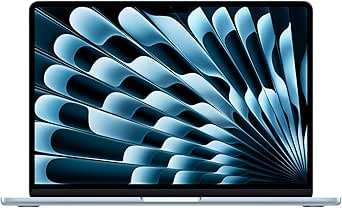
Apple MacBook Air 15-inch Laptop with M5 Chip, 16GB Memory, 512GB SSD, 12MP Center Stage Camera, Wi-Fi 7, Midnight
The 15-inch MacBook Air with M5 is the everyday laptop pick for buyers who want generous screen space without stepping up to a heavier MacBook Pro. Its 15.3-inch Liquid Retina display makes split-screen work, reading, and media more comfortable than on the smaller 13-inch Air, while its 3.32-pound weight and stated battery life of up to 18 hours keep it suited to moving between rooms or taking it on the go. Compared with the 16-inch M5 Max MacBook Pro, it is lighter and better matched to general productivity, but its two Thunderbolt 4 ports and 16GB of memory are a narrower fit for intensive creative workflows. The 512GB SSD offers more working space than the 256GB iMac configuration, though this Air trades the iMac’s built-in 4.5K desktop display and speakers for portability.
Pros:- 15.3-inch Liquid Retina display supports up to 1 billion colors
- 3.32-pound design is lighter than the 16-inch MacBook Pro models
- Battery life is stated at up to 18 hours
- 512GB SSD, 12MP Center Stage camera, and Wi-Fi 7 suit a modern mobile setup
Cons:- Two Thunderbolt 4 ports limit direct connections to accessories and displays
- 16GB unified memory is less suited to demanding creative work than MacBook Pro configurations
- A 15.3-inch screen is less compact for travel than the 13-inch MacBook Air
Best for: Students, consultants, and home-office users who want a roomy laptop screen for everyday work and regular travel.
Not ideal for: Video editors, 3D professionals, or users who need workstation graphics, extensive ports, or more than 16GB of memory.
- Processor:Apple M5 chip
- Display:15.3-inch Liquid Retina
- Memory:16GB unified memory
- Storage:512GB SSD
- Battery life:Up to 18 hours
- Camera:12MP Center Stage
- Ports:Two Thunderbolt 4 ports, MagSafe charging port, headphone jack
- Wireless and weight:Wi-Fi 7, Bluetooth 6; 3.32 pounds
Our verdict“Choose the 15-inch Air for a light, large-screen Mac for everyday work, and choose a MacBook Pro if your workload needs stronger graphics or more memory.”
Apple 16-inch MacBook Pro with M5 Max chip, 18‑core CPU, 40‑core GPU, 128 GB memory, 2 TB SSD, Space Black, 140W
For workflows that need to keep unusually large datasets, timelines, or creative projects in memory, this 16-inch MacBook Pro with M5 Max is the most specialized choice in this group. Its 128GB unified memory doubles the 64GB listed for another 16-inch M5 Max configuration and greatly exceeds the 48GB M5 Max model, making it a better fit for unusually demanding multitasking and professional applications. It pairs that headroom with an 18-core CPU, 40-core GPU, and 2TB SSD. The 16.2-inch Liquid Retina XDR display and stated all-day battery life keep it usable as a standalone workstation, but the supplied details do not list weight, ports, or wireless specifications. Compared with the 48GB M5 Max MacBook Pro, this configuration is harder to justify for routine creative work; its memory capacity matters most to buyers whose software and projects can use it.
Pros:- 128GB unified memory is suited to unusually large, memory-intensive workloads
- M5 Max combines an 18-core CPU and 40-core GPU for professional computing and graphics
- 2TB SSD provides substantial internal project storage
- 16.2-inch Liquid Retina XDR display and stated all-day battery life support workstation use away from a desk
Cons:- The supplied product details do not specify weight, limiting portability comparisons
- Ports and wireless connectivity are not listed in the provided specifications
- Memory capacity may be unnecessary for buyers whose workloads fit the 48GB M5 Max model
Best for: AI, visual-effects, software, and data professionals whose active workloads can benefit from 128GB unified memory and a 2TB internal drive.
Not ideal for: Students, general office users, and creators with moderate projects who would not benefit from 128GB memory or who need detailed portability and port specifications before choosing.
- Display:16.2-inch Liquid Retina XDR
- Processor:Apple M5 Max, 18-core CPU
- Graphics:40-core GPU
- Memory:128GB unified memory
- Storage:2TB SSD
- Power adapter:140W USB-C power adapter
- Battery life:All-day, as stated in product details
- Color and operating system:Space Black; macOS
Our verdict“Choose this configuration when your professional workload can use 128GB of memory; for ordinary creative work, the 48GB M5 Max model is a more proportionate fit.”
MacBook Pro Laptop with M5 Max, 18-core CPU, 40-core GPU, 16.2-inch Nano-Texture Glass Display, 64GB Unified Memory, 2TB SSD, Space Black
I’d choose this 16.2-inch MacBook Pro for demanding creative work when a large, high-brightness screen and strong graphics performance matter as much as portability. The M5 Max with a 40-core GPU and 64GB of unified memory is suited to heavy video, graphics, and AI workloads, while the Nano-Texture XDR display is designed to reduce distracting reflections. Compared with the MacBook Air M5, it brings a more capable graphics setup, a bigger screen, and a broader selection of ports; the Air is the more sensible fit for everyday tasks and frequent travel. This Pro’s tradeoff is its 7.4-pound weight, which makes regular carrying less appealing. Its listed battery life is up to seven hours, so I wouldn’t pick it over an Air when unplugged endurance is the priority.
Pros:- M5 Max 40-core GPU and 64GB unified memory suit demanding creative and AI workloads.
- 16.2-inch XDR Nano-Texture display combines high brightness with reduced reflections.
- Three Thunderbolt 5 ports plus HDMI, SDXC, and MagSafe support varied desk and studio setups.
- Wi-Fi 7 and a 12MP Center Stage camera add modern wireless and video-call capabilities.
Cons:- At 7.4 pounds, it is substantially less convenient to carry than the MacBook Air models.
- Listed battery life is up to seven hours, shorter than the Air models’ stated up-to-18-hour figure.
Best for: Video editors, 3D artists, and AI developers who need high graphics capability, substantial memory, a reflection-reducing large display, and built-in professional connections.
Not ideal for: Students and frequent travelers who value a lightweight laptop and longer stated battery life more than M5 Max graphics performance.
- Processor:Apple M5 Max, 18-core CPU
- Graphics:Integrated 40-core GPU
- Display:16.2-inch Liquid Retina XDR Nano-Texture Glass; 1600 nits peak, 1000 nits sustained
- Memory:64GB unified memory
- Storage:2TB SSD
- Weight:7.4 pounds
- Ports:Three Thunderbolt 5, MagSafe 3, SDXC card slot, HDMI, headphone jack
- Wireless:Wi-Fi 7, Bluetooth 6
- Camera and audio:12MP Center Stage camera; six speakers with Spatial Audio and Dolby Atmos support
Our verdict“Choose this MacBook Pro for demanding graphics work and a reflection-reducing large screen, not for a lightweight everyday laptop.”
MacBook Air (2025) 13.6-inch M4, 16GB Unified Memory, 256GB SSD, Sky Blue
I’d point first-time Mac buyers toward this 13.6-inch MacBook Air if they want a light, straightforward laptop for school, home, and general multitasking. Its M4 chip and 16GB of unified memory offer more headroom than a basic browsing machine, while the stated up-to-18-hour battery life suits days spent moving between classes or meetings. Against the M5 MacBook Air in this roundup, this version has a smaller 256GB SSD and an older chip; the M5 model’s 512GB storage gives growing photo, video, and app libraries more breathing room. The M4 Air’s strengths are its portable 2.73-pound build and familiar everyday format, rather than maximum performance. Its limited selection of ports can also mean relying on adapters for accessories, and its storage may feel tight for buyers who keep large files locally.
Pros:- M4 chip and 16GB unified memory support everyday multitasking and more demanding applications.
- Up to 18 hours of stated battery life suits long days away from a charger.
- At 2.73 pounds, it is easy to carry between home, work, and school.
- 13.6-inch Liquid Retina display supports one billion colors.
Cons:- The 256GB SSD offers less storage than the 512GB M5 MacBook Air in this roundup.
- Two Thunderbolt 4 ports, MagSafe, and a headphone jack limit wired connection options.
Best for: First-time Mac buyers, students, and home users who want a portable laptop for everyday tasks and don’t expect to store a large library of files.
Not ideal for: Creative professionals with large local media libraries, or buyers who need several wired peripherals and more than two Thunderbolt ports.
- Processor:Apple M4
- Memory:16GB unified memory
- Storage:256GB SSD
- Display:13.6-inch Liquid Retina, one billion colors
- Battery life:Up to 18 hours
- Weight:2.73 pounds
- Ports:Two Thunderbolt 4, MagSafe, headphone jack
- Camera:12MP Center Stage
- Color:Sky Blue
Our verdict“Pick this M4 Air as a portable everyday Mac if its 256GB storage is enough and you don’t need the newer M5 Air’s larger SSD.”
Apple MacBook Air 13-inch Laptop with M5 Chip, 16GB Memory, 512GB SSD, 12MP Center Stage Camera, Touch ID, Wi-Fi 7, Silver
This M5 MacBook Air is my pick for a portable everyday Mac that has more built-in storage than the M4 Air configuration in this roundup. Its 512GB SSD gives apps, documents, and personal media more room than that model’s 256GB drive, while the M5 chip and 16GB memory suit routine multitasking and mobile creative work. At 2.71 pounds, it remains easy to carry, and the stated up-to-18-hour battery life makes it a better travel companion than the heavy MacBook Pro M5 Max. The tradeoff is capability: the Pro adds a larger XDR screen, stronger graphics, and more ports for specialized workflows. This Air’s two Thunderbolt 4 ports also limit direct connections, so buyers with several wired accessories may need a hub.
Pros:- M5 chip paired with 16GB unified memory for everyday multitasking.
- 512GB SSD provides twice the listed storage of the M4 Air option in this roundup.
- Light 2.71-pound design and up-to-18-hour stated battery life suit mobile use.
- 12MP Center Stage camera, Wi-Fi 7, and support for up to two external displays.
Cons:- Two Thunderbolt 4 ports may require a hub for multiple wired accessories.
- Its integrated design and everyday-focused configuration are less suited to demanding graphics work than the M5 Max MacBook Pro.
Best for: Students, remote workers, and frequent travelers who want a light MacBook with M5 performance, 512GB of storage, and long stated battery life.
Not ideal for: Video editors, 3D professionals, or desk-based users who need the MacBook Pro’s stronger graphics, XDR display, or wider port selection.
- Processor:Apple M5 chip
- Display:13.6-inch Liquid Retina
- Memory:16GB unified memory
- Storage:512GB SSD
- Weight:2.71 pounds
- Battery life:Up to 18 hours
- Ports:Two Thunderbolt 4, MagSafe charging, headphone jack
- Wireless:Wi-Fi 7, Bluetooth 6
- Camera:12MP Center Stage
Our verdict“Choose this M5 Air for a light, capable daily laptop with 512GB of storage, unless your work calls for the MacBook Pro’s graphics and connections.”
Apple 2024 iMac 24-inch All-in-One Desktop, M4 10-Core CPU and GPU, 24GB Memory, 512GB SSD, Silver
I’d choose this iMac for a fixed home or office setup where a sharp built-in screen and a tidy desktop matter more than portability. The 24-inch 4.5K Retina display, M4 chip, and 24GB of unified memory make it a stronger multitasking desktop configuration than the 8-core, 16GB iMac listed elsewhere in this roundup. Its Center Stage camera and six-speaker system also bring video calls and media playback into one integrated workstation. Compared with the MacBook Air M5, the iMac gives you a much larger display without requiring a separate monitor, but it can’t follow you between rooms or workspaces. The all-in-one design also means less flexibility to replace or upgrade individual components. I’d check the exact port configuration before buying, since the supplied data describes up to four Thunderbolt 4 ports.
Pros:- 24-inch 4.5K Retina display provides a spacious, detailed workspace.
- M4 chip and 24GB unified memory offer more multitasking headroom than the listed 8-core iMac configuration.
- 12MP Center Stage camera and six speakers with Spatial Audio are built in.
- Supports up to two external 6K displays.
Cons:- All-in-one construction offers less flexibility to upgrade individual components.
- It is a stationary desktop and cannot match the MacBook Air’s portability.
- The listed port specification says up to four Thunderbolt 4 ports, so the exact configuration should be checked.
Best for: Home-office workers, families, and students who want a stationary Mac with a large high-resolution screen, built-in camera, and speakers.
Not ideal for: People who need a portable Mac, want to upgrade individual desktop components, or require a specified high port count without confirming the configuration.
- Processor:Apple M4, 10-core CPU
- Graphics:10-core GPU
- Display:24-inch 4.5K Retina, 500 nits, supports up to one billion colors
- Memory:24GB unified memory
- Storage:512GB SSD
- Camera and audio:12MP Center Stage camera; three microphones and six speakers with Spatial Audio
- Connectivity:Up to four Thunderbolt 4 ports, Wi-Fi 6E, Bluetooth 5.3
- External displays:Supports up to two 6K displays
- Dimensions and weight:21.54 x 5.79 x 18.15 inches; 9.77 pounds
Our verdict“Choose this iMac for a shared or home-office desktop with a high-resolution built-in screen, and skip it if portability or component upgrades matter.”
Apple 16-inch MacBook Pro (Early 2026) – M5 Max, 18-core CPU, 40-core GPU, 128GB Unified Memory, 2TB SSD, Space Black
This 16-inch MacBook Pro stands apart from the 64GB M5 Max model through its 128GB of unified memory, making it the specialist choice for enormous project files and memory-heavy professional workloads. The M5 Max 18-core CPU and 40-core GPU match the other high-end Pro configuration in this lineup, so the extra memory—not a different chip—is the reason to choose it. Compared with the Nano-Texture 16.2-inch MacBook Pro, the supplied details list a standard 16-inch Retina display and don’t specify its brightness or reflection treatment. Both are large, performance-focused laptops, but this model’s standout is its capacity for extensive multitasking. I’d reserve it for workflows that can use that memory; other buyers may find the 64GB model a closer fit. Its large chassis also makes it less appealing for frequent travel.
Pros:- 128GB unified memory supports unusually large, memory-intensive workloads.
- M5 Max combines an 18-core CPU with a 40-core GPU for demanding professional tasks.
- 2TB SSD provides substantial fast local storage.
- Included 140W USB-C adapter supports rapid charging.
Cons:- The 16-inch standard Retina display is less fully specified than the Nano-Texture XDR display on the other large M5 Max MacBook Pro.
- Its large chassis is less convenient for frequent travel than either MacBook Air.
- The 128GB memory configuration is unnecessary for buyers with ordinary productivity workloads.
Best for: Professional creators and technical users who run memory-intensive workflows with exceptionally large files or many demanding applications at once.
Not ideal for: General users, frequent travelers, and buyers whose workloads do not need more than the 64GB offered by the other M5 Max MacBook Pro in this roundup.
- Processor:Apple M5 Max, 18-core CPU
- Graphics:Integrated 40-core GPU
- Memory:128GB unified DDR5
- Storage:2TB SSD
- Display:16-inch Retina
- Power adapter:140W USB-C
- Connectivity:Bluetooth, Wi-Fi, HDMI, Thunderbolt
- Dimensions:14.01 x 0.66 x 9.77 inches
- Color:Space Black
Our verdict“Choose this MacBook Pro only when your professional workload can use 128GB of memory; otherwise, the 64GB M5 Max model is the more measured fit.”

How We Picked
I compared these 15 Macs by the job each configuration can handle, how practical it is for everyday use, and what its design asks the buyer to supply or give up. The main criteria were chip tier, memory and storage capacity, screen size and type, portability, and whether the system includes a display. I treated memory and storage as part of performance, not just spec-sheet details: they affect multitasking headroom and how soon a buyer may need external drives or a new machine.
The ranking gives priority to balanced configurations with broad appeal, then separates lightweight everyday Macs, desktops, and high-end specialist laptops by their distinct strengths. M5 Max models rank as specialist choices rather than automatic upgrades for everyone, since their added capability matters most for sustained GPU-heavy work and large projects. Where products share nearly the same core configuration, I distinguish them by screen size, display finish, or intended buyer; duplicate listings do not receive extra credit simply for appearing more than once.
| Apple Mac | Processor |
|---|---|
| Apple 14.2-inch MacBook Pro wi | — |
| Apple MacBook Pro 14.2-inch La | — |
| Apple Mac mini | — |
| MacBook Neo 13-inch Laptop wit | Apple A18 Pro |
| Apple 14-inch MacBook Pro with | — |
| Apple 2024 iMac 24-inch All-in | Apple M4, 8-core CPU |
| Apple 16-inch MacBook Pro with | — |
| Apple 16.2-inch MacBook Pro wi | — |
| Apple MacBook Air 15-inch Lapt | Apple M5 chip |
| Apple 16-inch MacBook Pro with | Apple M5 Max, 18-core CPU |
| MacBook Pro Laptop with M5 Max | Apple M5 Max, 18-core CPU |
| MacBook Air | Apple M4 |
| Apple MacBook Air 13-inch Lapt | Apple M5 chip |
| Apple 2024 iMac 24-inch All-in | Apple M4, 10-core CPU |
| Apple 16-inch MacBook Pro | Apple M5 Max, 18-core CPU |
Factors to Consider When Choosing Best Apple Macs
Choosing among these Macs is less about finding one universally fastest computer and more about matching the machine to your daily workload and setup. I would start with how you work, then check memory, storage, screen needs, and how long you expect to keep the computer.
Match the chip tier to the work you actually do
For browsing, office work, school, and routine photo editing, an Air or a standard M-series MacBook Pro is usually a better fit than an M5 Max system. Max-tier graphics and larger memory configurations matter when your regular tasks include demanding video effects, 3D work, large code builds, or several intensive apps at once. A common mistake is choosing the biggest chip because it sounds more future-proof, even when the workload cannot make use of it. That can mean carrying a heavier laptop and paying for capability that sits idle. I would pay for the higher tier when your work repeatedly pushes the current machine, not just for the occasional complex project. If your needs are mixed, prioritize sufficient memory and storage before moving to an extreme chip tier.
Choose memory for your workload and ownership horizon
Memory affects how comfortably a Mac handles many open apps, large creative files, virtual machines, or demanding development tools. The listed Air models have 16GB, while the Neo has 8GB; the Pro and iMac configurations offer higher capacities for buyers with heavier workloads. A lower-memory model can remain perfectly usable for focused everyday tasks, but it gives less room for workload growth over several years. Avoid treating memory as a simple status upgrade: the right amount depends on what you run concurrently and how large your projects are. Since memory is not a practical later upgrade on these systems, decide before buying rather than expecting to add it when your needs change. If you are uncertain, compare your heaviest typical workday with your lightest one and choose for the former without overbuying for a rare outlier.
Think about storage as a workflow choice
The lineup ranges from 256GB SSD configurations to 2TB, a difference that changes how much work can stay on the Mac itself. A 256GB model can suit cloud-first use, documents, and a modest app collection, but large photo libraries, video footage, and local project files fill it faster. External drives can expand a desktop workflow cheaply and simply, while carrying extra storage is less convenient for a laptop used on the move. Cloud storage helps with access and backup, but it is not a complete substitute for local space when working with large files or limited internet. Buyers often underestimate the space taken by apps, caches, and system data alongside their personal files. Pick a capacity around your real local workflow, leaving room for growth rather than planning to run the drive nearly full.
Decide how much display and portability you need
A 13-inch Air keeps weight and footprint down, while a 15-inch Air or 16-inch Pro gives more space for timelines, spreadsheets, and side-by-side windows. The larger display can reduce reliance on an external monitor, but it also makes a laptop less convenient to carry every day. The 14-inch Pro sits between those choices and adds a more performance-oriented configuration, making it a useful compromise for buyers who need more than an Air but do not want the largest chassis. If you mostly work at one desk, an external monitor may be a more flexible way to add screen area than buying a larger laptop. For frequent travel, measure the actual bag and desk space you use rather than choosing by screen size alone. Screen finish also affects the decision: a nano-texture option is a specialized display choice, not a reason by itself to buy a high-end configuration.
Choose a desktop around your existing setup
The Mac mini, iMac, and MacBook each place different demands on your workspace. The mini gives you freedom to select a monitor, keyboard, and pointing device, but those are extra decisions and components to manage. The iMac combines computer and display in one setup, which keeps a home or office desk visually simple but limits your flexibility to replace its screen independently. A MacBook has the built-in display and battery for changing locations, though that portability adds little value if it will stay docked all year. Before choosing a desktop, check monitor compatibility, available desk space, ports, and whether you already own suitable peripherals. The common mistake is comparing only the computer itself instead of the complete setup you will need to use it.
Pay for headroom only when it has a clear purpose
More memory, storage, and GPU capacity can extend a Mac’s usefulness, but each upgrade should solve a specific problem in your workflow. The 48GB, 64GB, and 128GB M5 Max configurations are aimed at increasingly demanding projects, not routine browsing or document work. A 1TB or 2TB SSD may be worthwhile for someone who keeps active media projects local, while an external drive can be sensible for archived files. Buyers sometimes spend on the highest configuration while overlooking a better display, a larger screen, or a dock that would improve daily work more. Consider how often your tasks hit current limits and whether the added headroom saves time or avoids a real constraint. If you cannot name the workload that benefits from an upgrade, a balanced configuration is the safer choice.
Frequently Asked Questions
Should I choose an M5 MacBook Air or the 14-inch M5 MacBook Pro?
I would choose the Air if low weight and everyday portability matter more than extra performance headroom. The 13-inch Air is the easiest of these options to carry, while the 15-inch model gives you a roomier screen without moving to a Pro. The 14-inch M5 MacBook Pro is a better fit if you want its 1TB SSD configuration and expect longer or more demanding workloads. Check the memory and storage you need before focusing on the model name, since those limits affect daily use too. If your work is mostly documents, browser tabs, and calls, the Air is likely the more sensible match.
Is 8GB of memory enough for the MacBook Neo?
The Neo’s 8GB configuration is best suited to focused everyday use, such as web browsing, email, streaming, and light productivity. Buyers who keep many apps and browser tabs open, handle large creative files, or use demanding professional software should look toward a 16GB Air or a higher-memory Pro. Memory is not something to plan on adding later, so your expected workload over the computer’s life matters as much as your current one. Consider whether you regularly multitask across several resource-heavy apps, rather than judging by how many tabs you open occasionally. If you want a computer for more varied or growing work, the 8GB ceiling makes the Neo a more limited choice.
Do I need an M5 Max MacBook Pro for video editing or 3D work?
Not automatically: the right choice depends on project size, effects, render demands, and how often you do that work. M5 Max configurations are aimed at sustained, demanding graphics and compute workloads, with memory options from 48GB to 128GB in this lineup. A buyer editing shorter or less complex projects may get a better-balanced fit from the standard M5 Pro-class or Air options, depending on software needs. Look at your current bottleneck: slow effects and exports point to different needs than a nearly full drive or memory pressure. Choose the Max when its extra capability addresses recurring work, not because professional software appears on your app list.
Should I buy the Mac mini or the 24-inch iMac for a home desk?
The Mac mini makes more sense if you already have a monitor and peripherals you like, or want to choose each part of your desktop setup. The iMac is a more contained choice because its display and computer come together, reducing setup decisions and desk clutter. Compare the iMac configurations carefully: the 10-core model with 24GB memory and 512GB storage has more headroom than the 8-core model with 16GB and 256GB. With the mini, remember to account for the screen, keyboard, and pointing device you will need. Pick based on the whole workspace and your upgrade preferences, not only the computer’s chip.
How much SSD storage should I choose if I use cloud storage?
Cloud storage can reduce the need to keep every document and photo on the Mac, but it does not remove the need for working space. Apps, downloaded files, system data, and active media projects still use local capacity, and large video or photo workflows can grow quickly. The 256GB configurations suit buyers with modest local files and a willingness to manage storage, while 512GB or more offers more breathing room. External drives are a practical option at a desk, though they add something to carry with a laptop and are not a backup by themselves. Estimate the size of your current local library and active projects, then leave spare capacity for new work.
Conclusion
I recommend the 14-inch MacBook Pro with M5 as the best overall choice for buyers who want a balanced laptop, 16GB of memory, and a 1TB SSD without stepping up to a specialist Max configuration. For best value in everyday portability, the 13-inch MacBook Air with M5 is the most straightforward fit; choose the M4 Air if its listed configuration better matches your needs and you do not require the newer chip generation. Beginners should look first at an Air for a simple, portable general-purpose Mac, or the iMac if they want a desktop with its display included. The best premium options are the M5 Max MacBook Pros, with memory and screen size chosen to match demanding work rather than status. For a compact custom desktop, select the Mac mini with M5 Pro; for a tidy all-in-one desk, pick the 24-inch iMac, favoring its 10-core, 24GB, 512GB configuration when you need extra room to multitask. Choose by workload, setup, and portability first, then select the configuration that gives those needs enough headroom.
Halloween Picks
halloween
As an affiliate, we earn on qualifying purchases.