📊 Full opportunity report: Youth Sports Training Tech For Form Grading on IdeaNavigator AI — validation score, market gap, and execution plan.

Get the latest gadgets delivered free with Prime
- Fast, free delivery on millions of items
- Prime Video, Amazon Music and more included
- Member-only deals all year
TL;DR
A product proposal describes a phone app that would compare a young athlete’s filmed movements with pro-derived reference mechanics and suggest one corrective drill per session. The idea has not been shown to be a launched or validated product; its proposed first test is a baseball pilot in which certified coaches review grades for 100 children.
A product proposal for youth sports training technology calls for testing a phone app that grades young athletes’ movements against reference mechanics, beginning with baseball hitting. The proposed pilot would have certified coaches compare the app’s assessments with their own judgments for 100 children; no completed trial, released app or performance results are described.
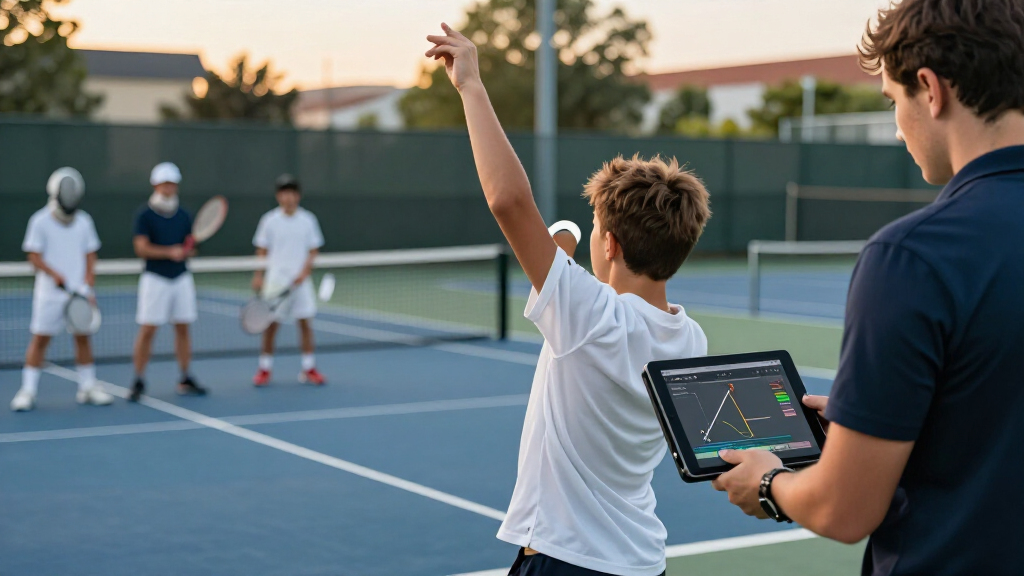
The proposed app is aimed at parents of young athletes practicing without a private coach. A parent would film a movement, such as a swing, and the app would use phone-based pose estimation to compare the athlete’s motion with a reference profile. The planned feedback would grade selected checkpoints, including hip rotation, release angle and stride, depending on the skill being assessed.
Rather than provide a long list of corrections, the concept calls for the app to prescribe one drill per session, chosen to address the largest identified gap. The proposal says phone-based pose-estimation models have advanced enough to make this type of comparison feasible on mobile devices, but it supplies no independent accuracy data or test results for a youth-sports application.
The proposed business model is a family subscription for each sport, with a separate coach tier for team use. The suggested initial validation is limited to one sport: certified coaches would audit the app’s grades against their assessments across 100 children. No subscription prices, launch date, participating coaches or trial protocol are provided.
A Lower-Cost Option for Practice Feedback
The concept targets a practical gap for families: young athletes may repeat movements during practice without a coach watching each attempt. IdeaNavigator AI’s proposal says private sessions can cost $75 to $150, presenting app-based feedback as a possible lower-cost supplement for families that do not have regular access to individual coaching. That price range is part of the proposal, not a documented survey of coaching fees.
If the grades are reliable and the drills useful, a tool like this could give parents and athletes more structured feedback between lessons or team practices. The same features could also make movement analysis more accessible to coaches working with teams. Those benefits remain potential outcomes, not demonstrated results: the proposed 100-child review is intended to test whether the app’s judgments align with certified coaches’ assessments.
The injury-related rationale also needs careful handling. The proposal argues that uncorrected movement flaws can become habits and raise injury risk, but it presents no clinical evidence that this app, its grading method or the suggested drills prevent injuries. Any claims about health outcomes would require evidence beyond agreement between an app and coaches.
As an affiliate, we earn on qualifying purchases.
The Proposed Baseball Pilot
The development described is a product opportunity and validation plan, rather than an announcement of a finished service. Its intended first customer is not a sports organization or professional team, but a parent whose child trains without a private coach. That focus shapes the proposed design: filming should happen on a phone, feedback should be understandable to a family, and each session should offer a single practical drill.
The suggested workflow has three parts: record a repetition, compare the child’s movement with pro-derived reference mechanics, then grade selected checkpoints and recommend a drill. The proposal does not explain how those reference profiles would be created, how they would account for differences in age or physical development, or whether the app would support different camera angles and recording conditions.
Baseball hitting is proposed as the first test because it gives the team a defined skill to assess before expanding to other sports or movements such as throwing and running. The plan calls for coach review across 100 children, but does not identify where the pilot would take place or how the children would be recruited. No results from such a test are reported.
As an affiliate, we earn on qualifying purchases.
Accuracy and Safety Still Need Testing
The proposal does not provide measured grading accuracy, results from coaches, or evidence that the app can distinguish meaningful technique differences from ordinary variation in a child’s movement. It also does not specify how many repetitions each child would submit, what counts as agreement between the app and a coach, or how disagreement would be resolved.
Other details remain open, including which ages and skill levels the system would cover, how reference mechanics would be adapted to children, and what safeguards would prevent a grade from being mistaken for a medical or injury-risk assessment. The proposal also does not explain how video would be stored, who could view it, or how parental consent and children’s privacy would be handled.
There is no confirmed launch schedule, pricing, product name or evidence that the family subscription and coach tier have been built. Until a pilot is completed and its methods and findings are disclosed, claims about affordability, accuracy, coaching value or injury prevention should be treated as unverified.
As an affiliate, we earn on qualifying purchases.
Coach Review Is the Proposed Next Test
The next step described is a baseball-hitting pilot involving 100 children, with certified coaches checking the app’s grades against their own assessments. To judge the concept, readers would need details about the participating coaches, children’s ages and experience, scoring criteria, recording conditions and the results of those comparisons.
Further development would also need to clarify how the app presents uncertainty, what happens when its assessment differs from a coach’s, and whether its recommended drills are reviewed by qualified coaches. No timetable for the pilot or public release is given. For now, the proposal outlines a possible product and a way to test it, not a validated training tool.
Source: IdeaNavigator AI
kids baseball training video analysis
As an affiliate, we earn on qualifying purchases.
As an affiliate, we earn on qualifying purchases.
Key Questions
Has the youth form-grading app launched?
No launch is reported. The available information describes a product concept and a proposed validation pilot, not a released app.
What would the app assess?
The proposed app would compare a filmed movement with reference mechanics and grade selected checkpoints, such as hip rotation, release angle or stride, depending on the sport and skill.
How would the idea be tested?
The suggested initial test is a baseball-hitting pilot with 100 children. Certified coaches would compare the app’s grades with their own assessments. No pilot results or schedule have been provided.
Would the app prove that a child is less likely to get injured?
No such evidence is presented. The proposal raises injury risk as a concern but does not report clinical testing or show that the app or its drills prevent injuries.
Source: IdeaNavigator AI
Fall Picks
fall essentials
As an affiliate, we earn on qualifying purchases.