📊 Full opportunity report: See Your Pickleball Rallies Again And Review Your Rating on IdeaNavigator AI — validation score, market gap, and execution plan.

Get the latest gadgets delivered free with Prime
- Fast, free delivery on millions of items
- Prime Video, Amazon Music and more included
- Member-only deals all year
TL;DR
A product concept proposes an app that uses a phone mounted by the court to replay pickleball rallies, tag shots and errors, and track skill metrics. The plan calls for testing at three clubs, but no trial results, product launch, or evidence of subscription demand are provided.
A proposed pickleball app would use a phone mounted near the court to record play, separate individual rallies, and give recreational players replays and performance feedback. The concept also calls for session highlight reels and skill trends, but it remains a product proposal: no launch, club trial results, or measured subscription demand have been reported.
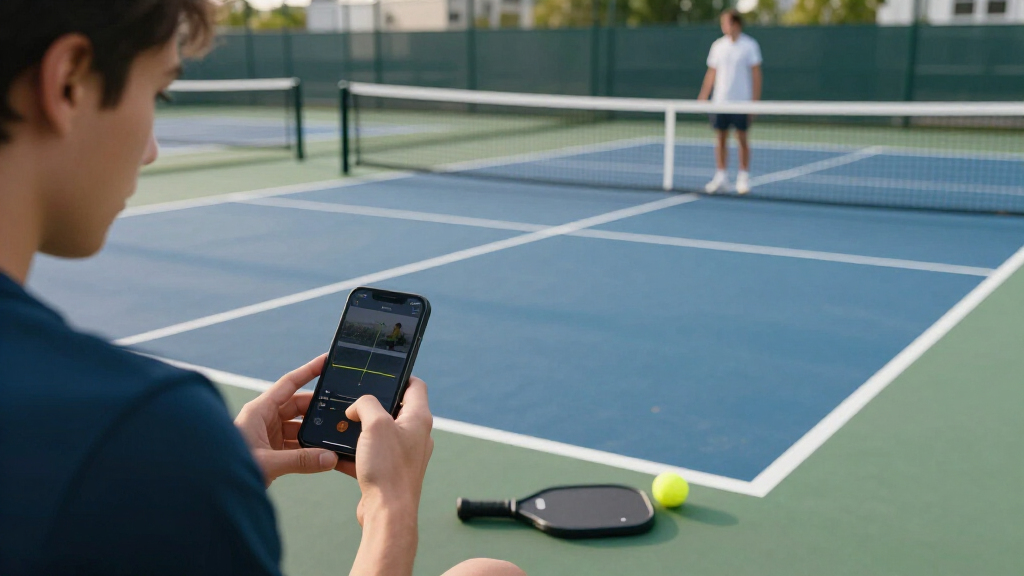
The proposed workflow begins with a player or facility mounting a phone at the court fence. The app would then use video analysis to segment rallies, identify shot types and errors, and assign a rating to rally quality. After play, users could review a session highlight reel and follow skill metrics over time.
The stated audience is a recreational player who wants to improve and revisit memorable points. The concept identifies limited feedback during practice and difficulty understanding changes in a DUPR rating as problems the product might address. It does not provide evidence that its proposed ratings would correspond to DUPR scores or explain actual rating changes.
The suggested business model combines a consumer subscription with partnerships for courts that install mounted cameras. To test the idea, the plan proposes working with three clubs, processing 200 sessions, and measuring repeat use and subscription conversion among club members. Those figures are proposed validation targets, not completed results.
Turning Court Video Into Feedback
For recreational players, ordinary phone recordings can preserve a point but may not make it easy to review a whole session or identify recurring patterns. If the proposed system can reliably separate rallies and label shots, it could make existing court video more useful for self-review and practice. The concept’s value would depend on whether its feedback is accurate enough to help players decide what to work on.
The approach also has implications for clubs. A mounted-camera service could offer members a replay feature without asking each player to film and sort footage manually. But a subscription and facility partnership model would need to show that players use the feature repeatedly and that clubs see a reason to support the equipment and service. No demand or financial results have been reported.
The proposed rating feature makes the product’s claims especially important to test. A score for rally quality is not necessarily the same as a formal player rating, and the concept does not explain how its scores would be calculated or validated. Clear distinctions between video-based feedback and DUPR ratings would matter to users deciding how much weight to give the app’s assessment.
As an affiliate, we earn on qualifying purchases.
The Proposed Three-Club Trial
The proposal frames the product as a narrow first test for a specific audience: recreational pickleball players interested in improvement and replay. Instead of proposing a broad sports-video platform, it focuses on a short sequence: record court play, process rallies, and provide feedback after a session. The suggested setup uses a phone mounted at the fence, rather than requiring a dedicated camera system in the initial workflow.
Its rationale is that growing interest in pickleball and advances in video analysis may make automated rally review practical. These are presented as reasons to explore the product, not proof that an app is already working or that automated shot recognition will perform reliably on busy courts. The proposal does not supply model details, accuracy figures, pricing, or comparisons with existing recording options.
The planned validation would process 200 sessions across three clubs and examine repeat usage and subscription conversion among members. These measures could indicate whether players return to the feature and whether some are willing to pay. The proposal does not state a timeline, trial protocol, success threshold, or whether the clubs have agreed to participate.
As an affiliate, we earn on qualifying purchases.
Accuracy, Demand and Trial Status
Several core details remain unreported. There is no named developer, working app, release date, or confirmation that any club trial has begun. The proposed 200 sessions are a testing plan, not a reported dataset, and there are no repeat-use or conversion results.
The concept also does not explain how the app would determine rally boundaries, recognize shot types, or distinguish errors under different lighting, camera angles, and court conditions. It gives no accuracy benchmarks or method for validating its rally-quality scores. Nor does it specify how the app would measure skill trends or explain movement in a player’s DUPR rating. Those capabilities remain proposed features, rather than demonstrated outcomes.
Pricing, privacy practices, video storage, and access controls are also unspecified. Because court footage can capture other players, a real deployment would need to clarify consent and how recordings are handled. It is not yet clear whether the intended product would be an app available to individual players, a service offered through participating facilities, or both.
As an affiliate, we earn on qualifying purchases.
Evidence Needed Before Launch
The next stated step is to run a test at three pickleball clubs, process 200 play sessions, and track whether members return to the feature and convert to subscriptions. No schedule or club commitments are provided, so it is not clear when or whether that test will take place.
Before the concept can be judged as a useful coaching aid, results would need to show how well the system segments rallies and identifies shots and errors across real court conditions. Reporting should also distinguish the app’s own rally scores from formal player ratings, and explain what evidence supports any claimed link between skill metrics and DUPR movement.
For readers and potential club partners, the key milestone is not the feature list alone but evidence from actual sessions: whether the recordings are usable, whether feedback is trusted, and whether players use it again or pay for it. Until those findings are available, the idea remains an unvalidated product opportunity rather than a launched service with demonstrated results.
Source: IdeaNavigator AI
mounted phone pickleball recording
As an affiliate, we earn on qualifying purchases.
As an affiliate, we earn on qualifying purchases.
Key Questions
Is the pickleball rally replay app available now?
No launch or public availability is reported. The proposal describes a product idea and a potential club test, not a released app.
What would the app do?
It is proposed to use a court-side phone video to separate rallies, tag shot types and errors, rate rally quality, create session highlights, and track skill metrics.
Would its rating be the same as a DUPR rating?
That is not established. The proposal suggests tracking skill metrics that could help explain rating movement, but it does not describe a validated connection to DUPR or say the app would calculate an official rating.
How would the idea be tested?
The proposed validation is to work with three clubs, process 200 sessions, and measure repeat usage and subscription conversion among club members. No trial results or dates are reported.
Source: IdeaNavigator AI
Fall Picks
fall essentials
As an affiliate, we earn on qualifying purchases.