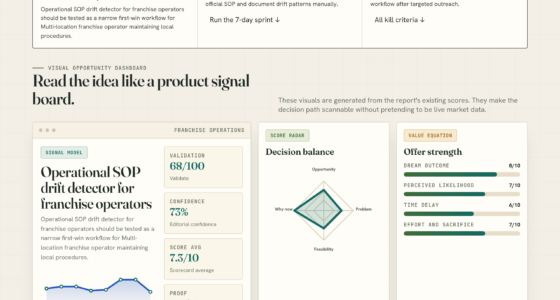
📊 Full opportunity report: The Small Office Guide To Auto-Filing Scanned Paperwork on IdeaNavigator AI — validation score, market gap, and execution plan.
TL;DR
IdeaNavigator AI has outlined a proposed auto-filing scanner for small nonprofits, clinics and law offices, designed to turn photographed paperwork into searchable, organized PDFs. The concept calls for a five-office, one-week pilot, but no test results, product launch or pricing have been reported.
IdeaNavigator AI has outlined a proposed document-scanning app for small nonprofits, clinics and law offices that would use optical character recognition to classify paperwork, suggest filenames and save searchable PDFs to a shared folder. The proposal recommends testing the service with five offices, but does not report a working product, completed pilot or measured accuracy.
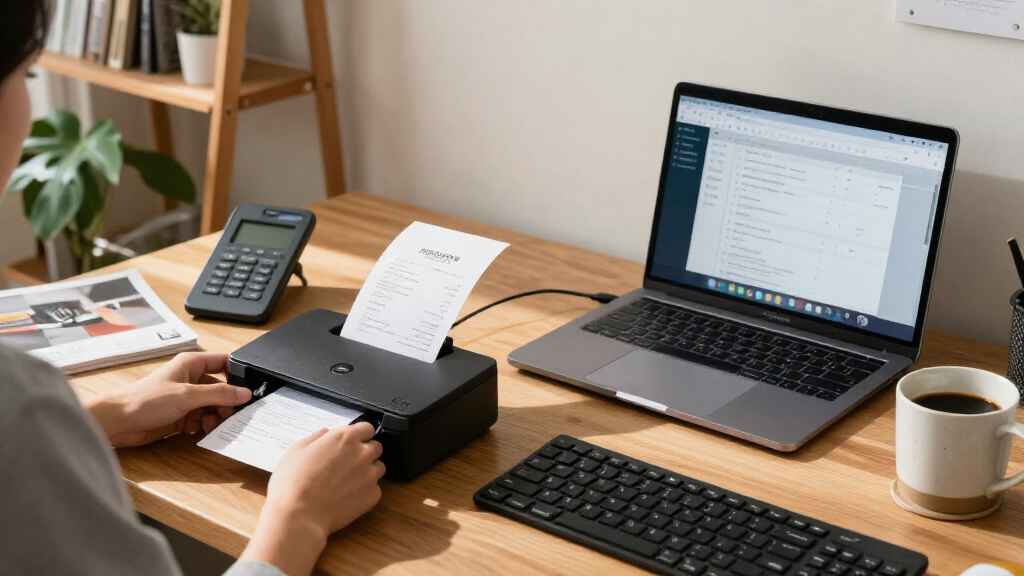
According to IdeaNavigator AI’s proposal, the suggested workflow starts with an office worker photographing a stack of documents on a phone. The app would then use optical character recognition (OCR) to read the pages, propose a document category and filename, and place searchable PDF copies in a shared folder. An example filename would combine a document type, date and vendor for an invoice.
The proposal identifies office managers at small nonprofits, clinics and law firms as intended users, citing paper intake forms, invoices and records as examples. It describes a common operational difficulty: filing cabinets can accumulate records that staff cannot readily search, while basic scanning tools may save images without meaningful names or extracted information.
For validation, IdeaNavigator AI proposes a one-week pilot with five small offices. Each office would scan a real backlog of 200 documents. The test would measure how often the app classifies documents correctly and whether offices would pay per seat. The proposal suggests a monthly subscription per user, with a page-volume cap and charges for use above it; no price is specified.
Less Manual Filing for Small Teams
If the proposed workflow proves accurate and easy to use, it could reduce the time staff spend naming, sorting and retrieving routine paperwork. That may matter especially to offices without dedicated IT teams, where administrative work competes with service delivery and existing filing systems can be difficult to search.
The practical value depends on more than whether software can read text. Offices would need to trust its document categories, filenames and extracted details, and be able to find and correct mistakes. Incorrectly filed clinical, legal or financial documents could create additional work or cause records to be missed. The accuracy and willingness-to-pay measures in IdeaNavigator AI’s proposed pilot are therefore central to deciding whether the idea is useful, not just technically feasible.
document scanning app for small offices
As an affiliate, we earn on qualifying purchases.
As an affiliate, we earn on qualifying purchases.
The Proposed Scan-to-File Workflow
The concept is aimed at the gap between capturing a digital image and making a record usable later. A generic scan may preserve a page, but staff still have to identify what it is, choose a name and place it in an appropriate location. IdeaNavigator AI’s proposal describes combining those steps in a phone-based process, using OCR and document-layout analysis to suggest both a category and identifying fields.
IdeaNavigator AI presents current on-device and API-based OCR, alongside layout-aware models, as a reason the approach may now be affordable for smaller organizations. That is the proposal’s rationale, not a reported performance result. The proposal does not identify a technology provider, compare systems or provide cost and accuracy figures. It frames the initial test as a narrow workflow trial rather than a claim that the software can manage every kind of office record.
As an affiliate, we earn on qualifying purchases.
Accuracy, Privacy and Pricing
No pilot findings are available in IdeaNavigator AI’s proposal, so the app’s classification accuracy, error rate and ability to handle varied document layouts remain unknown. The proposal also does not state whether the product has been built, when testing might begin or what minimum performance would count as success.
The proposal does not provide other practical details, including how the app would protect sensitive records, where files would be stored, which shared-folder services it would support, or how staff could review and correct suggestions. Those questions may be especially relevant for clinics and law offices. The suggested subscription model has no published seat price, page allowance or overage rate, and no evidence is given about how many offices would pay.
searchable PDF scanner for law offices
As an affiliate, we earn on qualifying purchases.
As an affiliate, we earn on qualifying purchases.
A Five-Office Pilot Would Test Demand
IdeaNavigator AI’s proposal sets out a next step of recruiting five small offices for a one-week test, with each scanning 200 documents from an existing backlog. Results on correct auto-classification and stated willingness to pay per seat would offer an initial indication of both workflow performance and commercial interest.
The proposal provides no schedule or names of participating organizations, and no results have been announced. Any follow-up would need to show how accuracy was measured, what types of documents were included and how errors were handled. Until those details or a product release are reported, the scanner remains a proposed small-office workflow rather than a verified service.
Source: IdeaNavigator AI
As an affiliate, we earn on qualifying purchases.
Key Questions
Has the auto-filing scanner launched?
No launch is reported. The material describes a product proposal and a suggested pilot, not a released app.
Who is the proposed app for?
It is aimed at office managers in small nonprofits, clinics and law offices with substantial paper records.
How would the proposed workflow work?
A user would photograph documents on a phone. The app would use OCR to suggest a type and filename, then save searchable PDFs to a shared folder.
How would the concept be tested?
The proposal calls for a one-week pilot at five offices, with each office scanning 200 documents. The test would track correct classification and willingness to pay per seat.
What would it cost?
No price is given. The proposed model is a monthly per-seat subscription with a page cap and additional charges above that limit.
Source: IdeaNavigator AI