
TL;DR

Get the latest gadgets delivered free with Prime
- Fast, free delivery on millions of items
- Prime Video, Amazon Music and more included
- Member-only deals all year
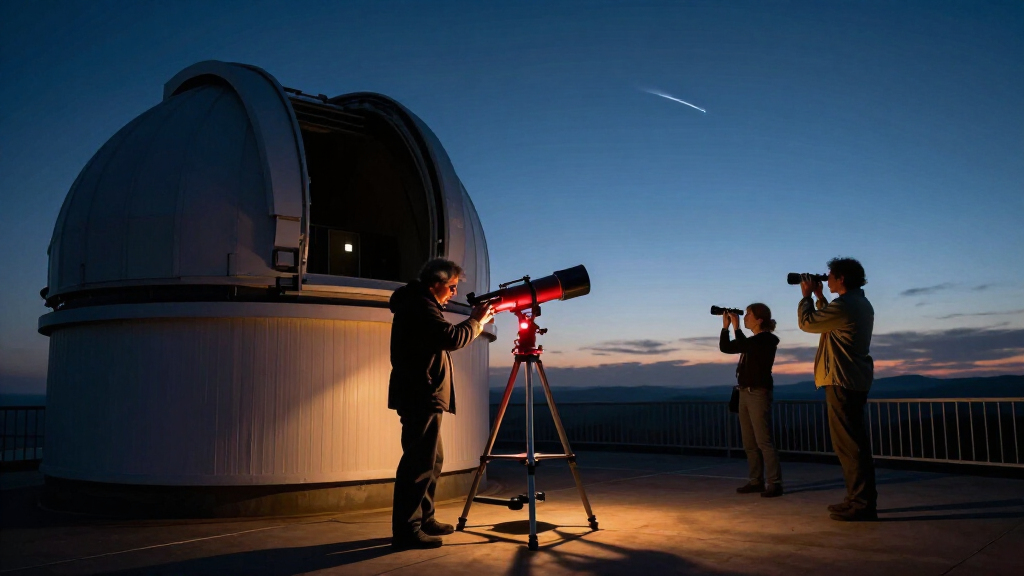
OORT is an AI-built exhibition about a fictional observatory watching the fictional comet P/2043 K1 Vesper. Its star trails accumulate as visitors stay, making elapsed time part of the artwork; the site does not claim the comet or its observations are real.
OORT is an AI-built exhibition piece centered on an imagined observatory and the fictional comet P/2043 K1 Vesper. The site describes a community keeping watch over decades. Its main visual is a seeded field of stars that traces curved paths across a canvas; as seconds pass, the trails grow. The same local sky can resume when a visitor returns, with elapsed time preserved in local storage on that device.
The interface uses motion and scrolling as instruments. A separate inline SVG moves the comet down the page, showing an ion tail directed away from the sun and a dust tail that bends along the imagined orbit. Both respond to a shared progress value, keeping the displayed geometry, distance and year synchronized within the fiction. A range control adjusts a defocus view and its associated brightness estimate.
Visitors can briefly hold a control to open a simulated shutter. The site records a timestamp but says the comet remains unseen and in transit. That interaction presents the record as evidence of a visitor’s attention, not as a claimed astronomical sighting. The animation stops when the page is hidden, and the site provides a still version for people who have enabled reduced motion.
Why Held Light Sets the Mood in “OORT — Comet Vigil for P/2043 K1 Vesper”
A browser exhibition makes waiting visible. As visitors stay, star trails gather across the screen, turning time and attention into part of the artwork. The comet and its observing community are fictional.
A visit becomes part of the exposure
In a conventional exhibition, time spent looking is usually invisible. OORT gives duration a visible form: curved star trails lengthen while the visitor remains, so staying feels like participation in the observatory’s vigil.
Light keeps a trace
A seeded star field draws repeatable arcs. Their gradual growth makes time on the page part of the image.
The sky remembers locally
The site says the same local sky can resume on return, preserving elapsed time in storage on that device.
No reveal is promised
The simulated shutter records a timestamp, while the exhibition says the comet remains unseen and in transit.
Observation becomes the instrument
Scrolling and controls connect the imagined sky to the visitor’s actions. The experience is organized around gradual movement and patient attention rather than a countdown or a discovery.
Watch
Stay with the seeded star field as its trails lengthen.
Scroll
Move through an inline SVG comet diagram tied to page progress.
Adjust
Change the defocus view and its associated brightness estimate.
Record attention
Hold the shutter control to create a timestamp, not a sighting.
Science-shaped detail, clearly framed
The exhibition borrows astronomy’s visual language—coordinates, readings and orbital geometry—to build its fiction. The distinction between evocative detail and real-world evidence is central to reading the work.
One progress value, two tails
As the page moves, the comet illustration changes with a shared progress value, keeping its displayed geometry, distance and year synchronized within the fiction.
These are described as imagined orbital details, not measurements of a real observing campaign.
A provenance detail inside the fictional observatory’s story; no historical basis is established in the supplied material.
The shutter interaction marks a visitor’s attention. The page says the comet remains unseen.
The cited art direction describes a self-contained HTML, CSS and JavaScript showcase without external image assets.
The brief describes deep dark tones, cyan readings, amber-red instructions and pale text.
Fictional details, open questions
The supplied description identifies P/2043 K1 Vesper and its observing community as fictional. It offers no independent performance or accessibility test results, and does not explain how long visit data remains stored.
Is P/2043 K1 Vesper a real comet?
The exhibition material describes it as fictional and does not establish that the designation refers to a real comet.
What changes during a visit?
Curved trails lengthen over time. The site says the local sky can resume on the same device.
Does the shutter record a sighting?
No. It records a timestamp as a mark of attention; the comet remains unseen and in transit.
What motion features are described?
Animation pauses when the page is hidden, and a still version is provided for reduced-motion settings. Independent test results are not supplied.
A Visit Becomes Part of the Exposure
The defining choice is to make time spent viewing leave a visible trace. In a conventional exhibit, a visitor’s duration is usually invisible; here, the growing arcs make staying feel like participation in the observatory’s vigil. Returning to the page can continue that sense of accumulated time on the same device.
The design also gives waiting a more specific form than a countdown or progress bar. The changing comet diagram and star field ask visitors to observe gradual movement, while the shutter interaction acknowledges that attention does not produce a discovery. The result is an artwork organized around patient observation rather than a reveal.
That distinction matters when presenting fictional science. The page borrows the visual language of astronomy, including coordinates, readings and orbital geometry, but frames its subject as invented. Its simulated record is a mark of presence, not evidence about a real comet or a real observing campaign.
As an affiliate, we earn on qualifying purchases.
A Fictional Observatory in the Browser
The project is identified as room 170 of 175 in an exhibition series, and the source material links to a live site. It also says the room’s footer includes a “Prompt” link exposing the art-direction brief behind the work. That brief describes a self-contained showcase built with HTML, CSS and JavaScript, with visuals drawn in code rather than external image assets.
The brief calls for a dark-adapted observatory palette: deep black, cyan for the ion tail and readings, amber-red for instructions, and pale text for longer passages. Display lettering is intended to feel engineered; monospaced labels evoke a logbook. The supplied material also describes invented observer notes, an ephemeris table, magnitude-estimation material and a “last seen 1608” provenance within the fictional setting.
The star field uses a repeatable seed so its arrangement remains consistent on a device. Its growth follows a logarithmic curve, according to the source, making early changes visible while allowing the image to keep developing over a longer visit. The source does not provide independent technical measurements of performance or accessibility.
““A room where waiting leaves a trace.””
— The exhibition’s description
As an affiliate, we earn on qualifying purchases.
Fictional Details and Open Questions
P/2043 K1 Vesper is identified as fictional in the supplied material, as is the observatory community. The source provides no evidence that the designation corresponds to a real comet, that the displayed readings describe real observations, or that the “last seen 1608” detail has a historical basis. Those elements should be read as parts of the work’s imagined setting.
The material does not give a publication date, the names of individual creators beyond attribution of the original brief to Claude Fable 5, or independent evaluation of the site’s operation across devices. It describes local persistence and reduced-motion behavior, but does not provide test results or explain how long visit data remains stored. The source also truncates its final description of the accompanying field guide, so its full contents are unclear.
As an affiliate, we earn on qualifying purchases.
Where to Explore the Vigil
The source invites readers to visit the live OORT site and describes a field guide accompanying the room. Visitors can follow the page’s star trails, scroll through the comet diagram, adjust the defocus control and try the simulated shutter. The source gives no dates for future updates, additional rooms or changes to the site.
For readers assessing the work, the next useful step is to distinguish the exhibition’s fictional observing records from real astronomical data. The page’s interaction is presented as an artwork about attention and waiting; no real-world observing event or comet milestone is announced.
LED light strips for mood lighting
As an affiliate, we earn on qualifying purchases.
As an affiliate, we earn on qualifying purchases.
Key Questions
Is P/2043 K1 Vesper a real comet?
The supplied exhibition material describes P/2043 K1 Vesper as fictional. It does not establish that the designation refers to a real comet.
What changes as a visitor stays on the page?
A seeded star field draws curved trails that lengthen over time. The site says it can resume the same local sky when a visitor returns on the same device.
Does the shutter interaction record a comet sighting?
No. It records a timestamp as a record of attention. The exhibition says the comet remains unseen and in transit.
How does the comet illustration move?
Scrolling changes an inline SVG diagram. The described ion tail points away from the sun, while the dust tail curves along the imagined orbit; both respond to the same progress value.
What accessibility and motion features are described?
The source says the animation pauses when the page is hidden and a still version is shown for visitors with reduced-motion settings enabled. It does not include independent accessibility or performance test results.
Source: Thorsten Meyer AI
Halloween Picks
halloween
As an affiliate, we earn on qualifying purchases.