
📊 Full opportunity report: Route-Based Audio Stories For Curious Walkers on IdeaNavigator AI — validation score, market gap, and execution plan.

Get the latest gadgets delivered free with Prime
- Fast, free delivery on millions of items
- Prime Video, Amazon Music and more included
- Member-only deals all year
TL;DR
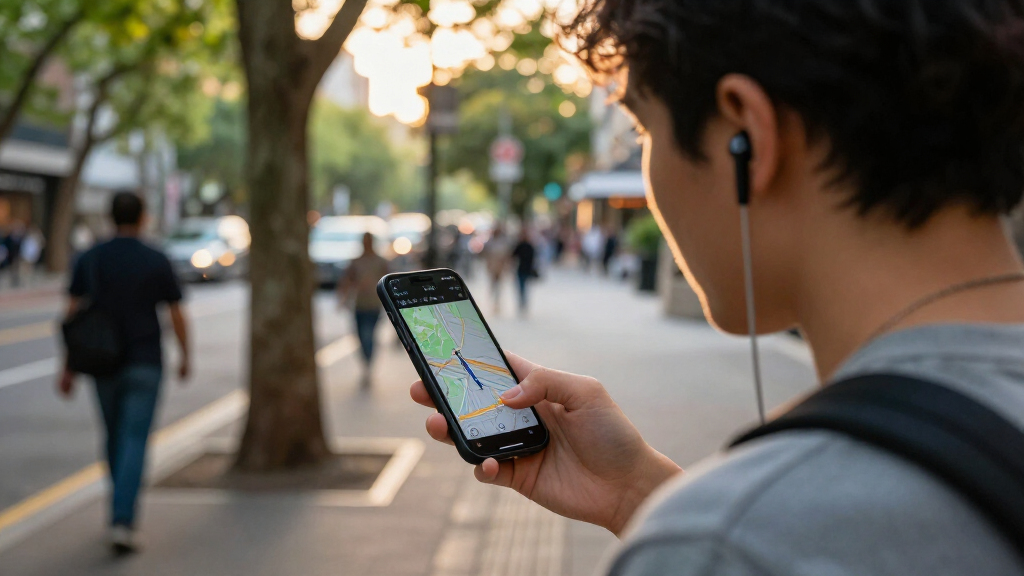
IdeaNavigator AI has outlined a proposed audio walking app that generates narration based on a user’s route, drawing on open data about local history, buildings and places. The proposal recommends testing it in two cities and measuring repeat use and factual accuracy; no product launch or test results are reported.
IdeaNavigator AI has proposed testing a route-based audio walking app that generates stories about nearby history, architecture and other local details as users walk. The concept is aimed at people who want their neighborhoods and travel routes narrated, but it remains a product proposal: no app launch, operating cities or test results are reported.
The proposed app would use a walker’s live route to shape narration, with audio responding as the person reaches corners and landmarks. Suggested themes include history, architecture and nature, and users could save favorite routes. The proposal does not specify a technical design, data providers, pricing or how narration would work when location or internet access is limited.
IdeaNavigator AI identifies a gap between general audio content and conventional tour apps: podcasts are not usually tied to a listener’s location, while established audio tours often focus on landmark districts. The concept argues that ordinary streets also contain stories, but does not provide market research or user evidence to quantify demand.
For validation, the proposal recommends launching in two cities, then tracking walks per week among users at week four and auditing narration accuracy across a sample of routes. It also suggests a consumer subscription and a licensing tier for tourism boards. These are proposed business and testing choices, not confirmed arrangements or results.
Testing Audio Beyond Tourist Districts
If the concept works, it could make location-aware audio useful for everyday neighborhood walks as well as trips to established attractions. That would shift the product premise from a fixed, professionally produced tour to narration that follows an individual route and can cover places with no dedicated audio guide.
The proposed use of language models to generate route-specific material may reduce the need to record a separate tour for every street. But lower production costs would not by themselves establish that the narration is reliable, engaging or worth paying for. The suggested two-city test focuses on two practical questions: whether people return to take walks and whether the stories remain accurate.
The business proposal also has two different potential customers. A subscription would depend on individual walkers finding recurring value, while tourism-board licensing would require organizations to see the app as a useful way to interpret local places. Neither willingness to pay nor institutional interest has been demonstrated in the information available.
Products Worth Considering

Jackery Explorer 2000 v2 Portable Power Station with Two 200W Solar Panels

Jackery Explorer 300 Portable Power Station, 292Wh

Bose SoundLink Plus Portable Bluetooth Speaker, Black
As an affiliate, we earn on qualifying purchases.
From Fixed Tours to Live Routes
Most audio tours are assembled around a defined itinerary, often covering a set of well-known sites. The proposed app instead begins with the user’s route and generates narration from information about nearby places. Its intended scope includes streets people already walk, not only destinations with existing tour content.
IdeaNavigator AI presents recent language-model capabilities and open data about history, architecture and place records as the reason this approach may now be possible at lower per-route production cost. That is the proposal’s rationale, not an independently verified finding about cost, model performance or the availability of complete local records.
The suggested first step is deliberately limited: test in two cities, assess use at week four and review a sample of generated stories for accuracy. No cities are named, and no schedule, sample size or evaluation standard is supplied.
Accuracy, Demand and Launch Plans
No operating product or pilot is confirmed, and the proposal gives no launch date, city names, development team or funding details. It is also unclear whether any tourism board has expressed interest in licensing the service or whether a subscription price has been tested with potential users.
The central technical and editorial question is how the app would keep generated stories grounded in reliable information. The concept calls for an accuracy audit but does not describe how errors would be identified, how uncertain claims would be handled, or what sources would be used for each route. Coverage gaps, outdated records and the possibility of inaccurate details are not addressed in the proposal.
There are also no reported figures for user demand, retention, route coverage or costs. The suggested week-four measure could show whether early users return, but without a stated benchmark or pilot results it does not yet establish whether the idea is viable.
A Two-City Pilot Would Test Use
The next proposed milestone is a two-city launch, followed by measurement of walks per week at week four and an accuracy review of a sample of routes. The proposal does not say when such a test might begin or who would run it.
If a pilot proceeds, useful reporting would include the cities and routes covered, the size of the user group, how repeat use is defined, and the method used to check narration. Until those details or results are available, the app should be understood as a product opportunity under consideration rather than a service already available to walkers.
Source: IdeaNavigator AI
Key Questions
Has the audio walking app launched?
No launch is reported. IdeaNavigator AI presents the app as a product opportunity and recommends a pilot, but provides no release date or evidence that a version is available to the public.
How would the app create its stories?
The proposal suggests using language models to generate narration from open data about local history, architecture and places, with content shaped by a user’s live route. It does not identify specific data sources or explain its accuracy checks.
What features are proposed?
The suggested minimum product would narrate a walk, respond at corners and landmarks, offer history, architecture and nature themes, and let users save favorite routes.
How would the idea be tested?
The proposal recommends a two-city test, measuring walks per week at week four and auditing narration accuracy on a sample of routes. No cities, timetable or results are provided.
How might the app make money?
IdeaNavigator AI suggests a consumer subscription and a separate licensing tier for tourism boards. These are proposed revenue options, not confirmed sales or agreements.
Source: IdeaNavigator AI